Memory, Knowledge, Identity, Technology

Memory, knowledge, identity, technology — these are intimately bound together and it would be difficult to disentangle one from the others.  What is it to know something if not to remember it?  Beyond the biological facts of my existence what constitutes my identity more significantly than my memory?  What could I remember without technologies including writing, books, pictures, videos, and more?  Or to put it in a more practical way, what degree of panic might ensue if your Facebook profile were suddenly and irrevocably deleted?  Or if your smart phone were to pass into the hands of another?  Of if you lost your flash drive?  Pushing the clock back just a little, we might have similarly asked about the loss of a diary or photo albums.

The connection among these four, particularly memory and technology, is established as early as the Platonic dialogs, most famously the Phaedrus in which Socrates criticizes writing for its harmful effects on internal memory and knowledge.  What we store in written texts (or hard drives, or “the cloud”) we do not remember ourselves and thus do not truly know it.  The form of this debate recurs throughout the subsequent history of technology all the way to the present debates over the relative merits of computers and the Internet for learning and education.  And in these debates it is almost de rigueur to begin by citing Plato’s Phaedrus either the reinstall or dismiss the Socratic critique.  Neil Postman began his book, Technopoly: The Surrender of Culture to Technology, with reference to Phaedrus, and Phaedrus appears as well in Nicholas Carr’s now (in)famous Atlantic essay, “Is Google Making Us Stupid?”.

The rejoinder comes quickly though:  Surely Socrates failed to appreciate the gains in knowledge that writing would make possible.  And what if I offload information to external memory, this simply frees my mind for more significant tasks. There is, of course, an implicit denigration of mere memory in this rebuttal to Socrates.

Yet some tension, some uneasiness remains.  Otherwise the critique would not continue resurfacing and it wouldn’t elicit such strong push back when it did.  In other words, the critique seems to strike at a nerve, a sensitive one at that, and when again we consider the intimate interrelationship of memory with our ideas about knowledge and education and with the formation and maintenance of our identities it is not surprising at all.  A few posts down I cited Illich’s claim that

What anthropologists distinguish as ‘cultures’ the historian of mental spaces might distinguish as different ‘memories.’  The way to recall, to remember, has a history which is, to some degree, distinct from the history of the substance that is remembered.

I’m wondering now whether it might also be true that a history of personal identity or of individuality could be told through a history of memory and its external supports.  Might we be able to argue that individualism is a function of technologies of memory that allow a person to create and sustain his own history apart from that of the larger society?

In any case, memory has captured my attention and fascinating questions are following hard.  What is memory anyway, what is it to remember a name, a look, a person, a fact, a feeling, where something is, how to do something, or simply to do something?  What do we remember when we remember?  How do we remember?  Why do we remember?  And, of course, how have the answers to all of these questions evolved along with the development of technology from the written word to the external hard drive?

On that last note, I wonder if our choice to call a computer’s capacity to store data “memory” has not in turn affected how we think of our own memory.  I’m especially thinking of a flash drive that we hold in hand and equate with stored memory.  In this device I keep my pictures, my documents, my videos, my memories — memory, or a certain conception of it, is objectified, reified.  Is memory merely mental storage?  Or has this metaphor atrophied our understanding of memory?

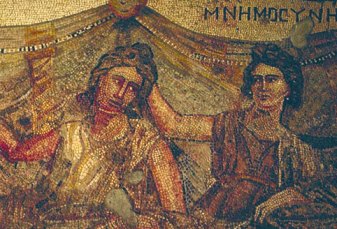
Of course, metaphors for memory are nothing new.  I’m beginning to explore some of these ideas with Paul Ricoeur’s Memory, History, Forgetting, and Ricoeur reminds us that in another Platonic dialog, the Theaetetus, Socrates offers the block of wax in our souls as a metaphor for our memory.  And Socrates suggests, “We may look at it, then, as a gift of Mnemosyne [Memory], the mother of the Muses.” I’ll keep you posted as the Muses urge.


Social Media: Good for Groups, Bad for Individuals?

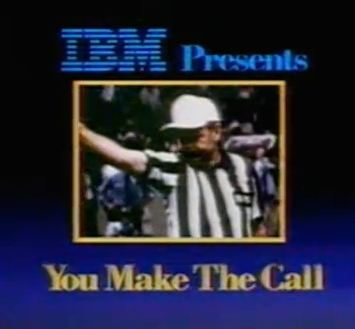
Remember those IBM “You Make the Call” spots during NFL games that used to show you a controversial play and then ask you to make the call before revealing what was in fact the right call?

Well, here’s a variation:

A recent Pew survey has been widely taken to suggest that Internet use doesn’t kill healthy social life after all.

A recent Stanford study suggests to some that social media, Facebook in particular, is making us sad.

You make the call!

Admittedly, this is not exactly an either/or situation, it may even be both/and, I just felt like alluding to the vintage commercial.  (Follow that last link and you’ll also see some vintage Tandy and IBM computers.)

Here’s a little more from each.  Regarding the Pew survey:

Pew found that 80 percent of Internet users participate in groups, as compared with 56 percent of non-Internet users.

Twitter users were the most social. 85 percent of them were involved in group activity offline, followed by 82 percent of social networking users. The results from the survey identify the use of social media and online activities as helpful in the process of disseminating information and engaging group members.

“The virtual world is no longer a separate world from our daily life and lots of Americans are involved in more kinds of groups,” said Rainie.

From the Slate story about the Stanford study:

Facebook is “like being in a play. You make a character,” one teenager tells MIT professor Sherry Turkle in her new book on technology, Alone Together. Turkle writes about the exhaustion felt by teenagers as they constantly tweak their Facebook profiles for maximum cool. She calls this “presentation anxiety,” and suggests that the site’s element of constant performance makes people feel alienated from themselves. (The book’s broader theory is that technology, despite its promises of social connectivity, actually makes us lonelier by preventing true intimacy.)

With that excerpt I’m killing two birds with one stone by pointing you to Sherry Turkle’s most recent work which has drawn considerable attention over the last month or so. See Johah Lehrer’s review here and, in a lighter vein, watch Turkle on The Colbert Report here.

Also of interest in the Slate article is the differentiation between male and female use of Facebook:

Facebook oneupsmanship may have particular implications for women. As Meghan O’Rourke has noted here in Slate, women’s happiness has been at an all-time low in recent years. O’Rourke and two University of Pennsylvania economists who have studied the male-female happiness gap argue that women’s collective discontent may be due to too much choice and second-guessing–unforeseen fallout, they speculate, of the way our roles have evolved over the last half-century. As the economists put it, “The increased opportunity to succeed in many dimensions may have led to an increased likelihood in believing that one’s life is not measuring up.”

If you’re already inclined to compare your own decisions to those of other women and to find yours wanting, believing that others are happier with their choices than they actually are is likely to increase your own sense of inadequacy. And women may be particularly susceptible to the Facebook illusion. For one thing, the site is inhabited by more women than men, and women users tend to be more active on the site, as Forbes has reported. According to a recent study out of the University of Texas at Austin, while men are more likely to use the site to share items related to the news or current events, women tend to use it to engage in personal communication (posting photos, sharing content “related to friends and family”). This may make it especially hard for women to avoid comparisons that make them miserable. (Last fall, for example, the Washington Post ran a piece about the difficulties of infertile women in shielding themselves from the Facebook crowings of pregnant friends.)

Regarding the Pew survey, I’m wondering if it says as much as its proponents take it to say.  I’m not sure it necessarily says much about the quality of the social interaction involved, but more significantly, dividing the population between Internet users and non-Internet users seems less than helpful and may give us nothing deeper than mere correlation.

Regarding the Slate story, find the strong push back in the comment section from the woman who benefited from Facebook during a time of deep depression.  Generalizations will never be without exceptions, of course, and it may be more helpful to think of social media exacerbating rather than causing certain dispositions or emotional states.

Ong’s Orality and Literacy Visualized

I’ve mentioned Walter Ong more than a few times in previous posts.  He’s best known for a little book titled Orality and Literacy in which he argues that transitions from oral to literate to secondary oral cultures (marked respectively by the development of alphabetic technology and electronic communication) have effected transformations in human consciousness. It is something of a testament to Ong’s enduring influence, he passed away in 2003, that I’ve been assigned his work in three separate graduate courses.
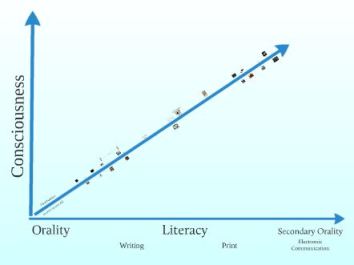
In the event that it may be of interest to someone out there, here is a visualization I put together using Prezi of Ong’s argument (supplemented by some additional information).  Once you’ve clicked over to the site, click the forward arrow to move through the presentation.

The Kings’ Speeches

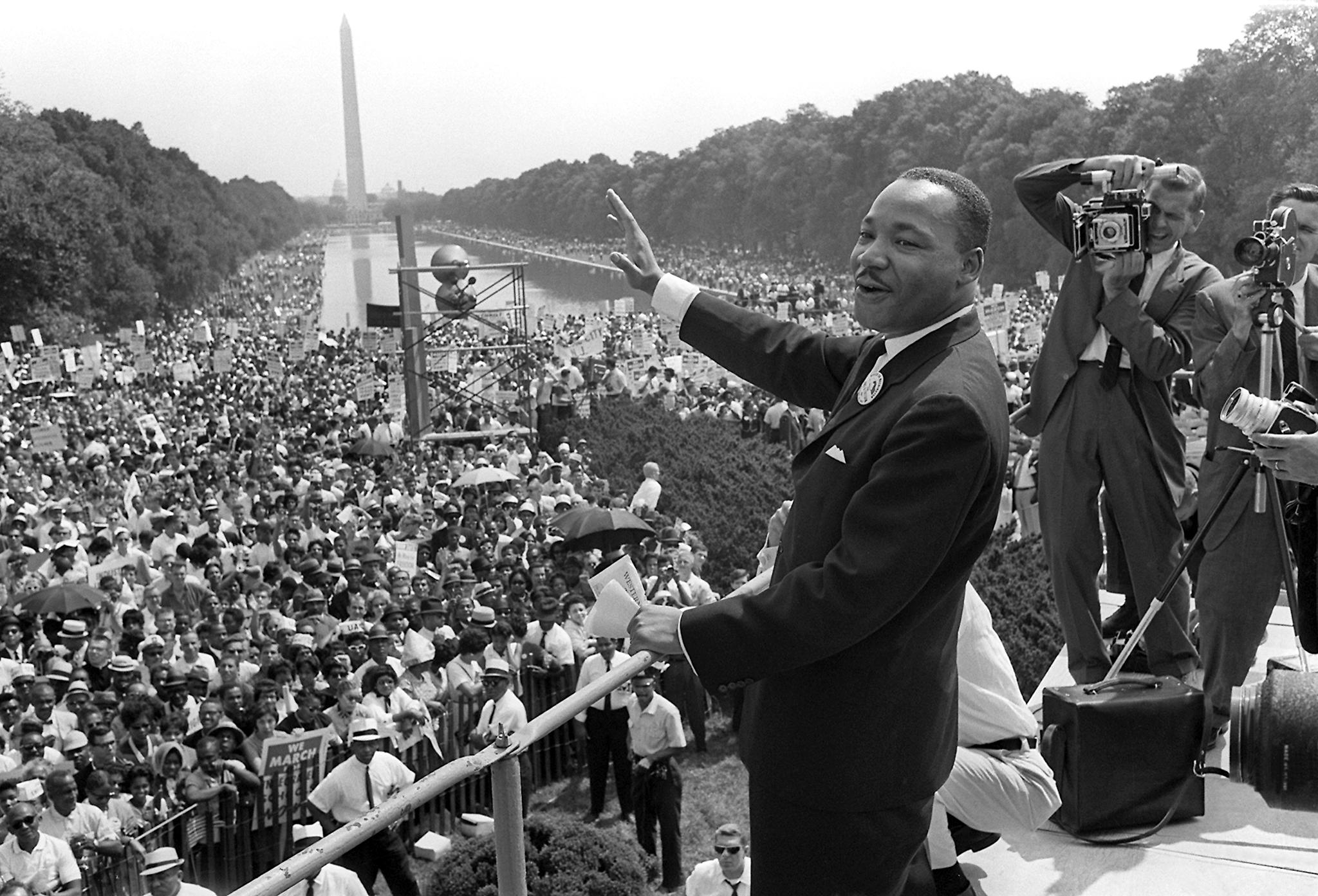
Driving home yesterday I caught Martin Luther King Jr.’s “I Have a Dream Speech” being replayed on NPR.  It is, as everyone who has listened to the speech knows, a moving experience.  It is also an experience that is mostly lost to our time.  It is relic of a different age, a different world.  One can hardly imagine a contemporary public speaker, particularly in a political context, striking the same cadence and intonation as Dr. King.

Two reasons initially came to mind.  On the one hand, we make a virtue out of ironic detachment and we have internalized the hermeneutic of suspicion.  We cannot take seriously anyone who takes themselves seriously enough to speak with moral authority.  On the other hand, and this is just the other side of the same coin, there appear to be no public figures who in fact have the requisite moral authority.  Chicken and the egg, Catch-22 …

I was also reminded that upon the passing of Senator Robert C. Byrd not long ago it was noted that a rhetorical style died with him.  Different in so many ways, Dr. King and Senator Byrd came from a shared rhetorical world, one that united them and separates both of them from us.

Serendipitously, I also watched The King’s Speech later that evening — a felicitous coincidence given the thoughts I was already entertaining about speeches and notably another King’s speech.   The film features Colin Firth brilliantly playing King George VI of England who must struggle to overcome a stammer in his speech on the eve of the Second World War with the help of a speech therapist played by Geoffrey Rush.  It was impossible to miss the significance given to oratory, and the film makes a point of connecting this significance with the advent of radio.  The film reminds us of this visually by prominently and frequently drawing our eyes to the microphones, receivers, and other accouterments of radio from the era.  But the connection is made explicit by the King George V, the imposing father figure, who notes that in times past the nobility and royalty could get by by merely looking the part.  Thanks to the wireless, they must now speak the part too.

Thinking about both K/kings and their speeches also coincided with rereading Walter Ong’s Orality and Literacy in which Ong lays out the momentous cultural consequences of literacy.  Ong argues that the introduction of alphabet technology radically restructured consciousness and society.  He goes on to identify three related transitions: from oral to literate culture with the invention of the alphabet, the amplification of that transition with the coming of the printing press, and the onset of what Ong calls secondary orality resulting from the appearance of electronic media that immerses us again in an economy of sound. Ong died before he could extend his analysis into the digital age, but his work certainly helps us think more clearly about our present media developments.

Noting the transitions from orality to literacy and then on to secondary orality also helps us make sense of the rhetorical worlds inhabited by MLK, George VI, and Robert C. Byrd.  Each was shaped by rhetorical traditions that were in turn formed by cultural, religious, political, and technological factors that placed great store by the spoken word and the word spoken in a particular style.  There are differences among them, no doubt, but those differences pale in comparison to the difference between all of them and those for whom they are all just pictures in a history book or images/sounds on Youtube.

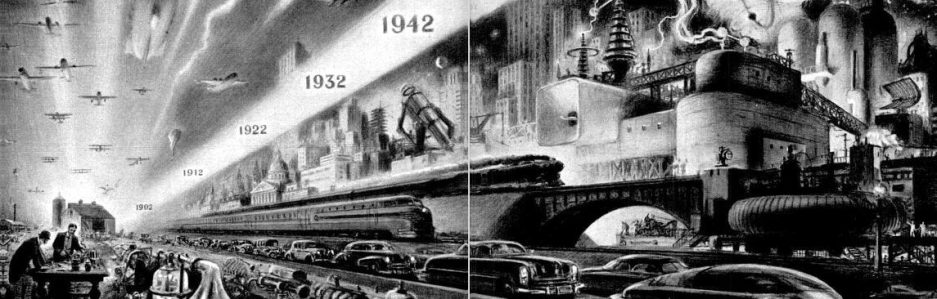
Finally, and at the expense of oversimplifying matters, it is always interesting to ask what different media require from public figures.  The age of the photograph required one to look a certain way, the age of radio required one to sound a certain way, the age of television required one to both look and sound a certain way (but both were different from what was expected in the age of photographs and radios).

The photograph and radio still traded in the dominant visual and oral norms of the culture into which they were introduced.  Television appears to begin shaping these norms to its own constraints and demands; demands that arise not only from the medium, but also from its dominant revenue model.  Most notably the distance between the public and the public figure is shrinking all the while.  And with this shrinking distance comes the great difficulty we have in investing our public figures with either heroic stature or moral authority.  The digital age seems to proceed along this same trajectory, so that accessibility, informality, immediacy, and ordinariness become for the public figures of our age what high flung oratory and dignified, aloof composure were for an earlier time.

“Sealed in the tombs of their revealed preferences”

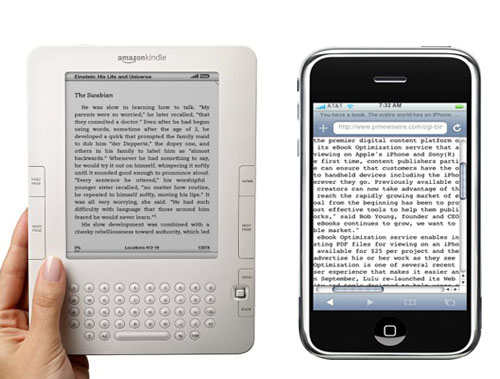
I’ve recently been emailed two interesting posts that intersect nicely with my reading of Illich’s In the Vineyard of the Text.  Illich is looking back at a transition in reading technologies and practices in the 12th century in order to gain perspective on the transformation taking  place when he is writing in the early 1990’s.  Illich’s analysis may be even more timely now, 15+ years after he wrote, as e-readers seem to have finally caught on and secured widespread acceptance and use.

The first post, “Bye, Bye, Borders?” by Megan McArdle at The Atlantic, considers recent rumors about the imminent demise of Borders (rumors which most likely are not, as in the case of Mark Twain, greatly exaggerated).  Here is her main point:

Personally I hope they’re wrong, too; like most writers, I like bookshops.  I suspect most of us had our destiny shaped while we were sandwiched behind the bookshelves at our local dealer.

On the other hand, like most of the writers I know, I rarely go into bookshops anymore.  Instead, the UPS truck stops at our house at least once a week, thanks to Prime, and more and more, I order Kindle books straight from my iPad.  I know that I am missing something–the serendipity of browsing through the bookshelves–which I have never replaced at Amazon; much as I love the convenience of online shopping, I never find anything that I am not looking for.

This is when the communitarians start looking for a government rule that will make it harder for people to buy books online; the environmentalists complain about all the energy wasted on shipping; and the moderate nostalgists start urging people to support their local bookstore.  But I’ll go by a combination of revealed preference and introspection:  the world may be better off without Borders, even though I (and everyone else who has stopped shopping there) likes the idea of its existence.

There is a certain irony here since it was not that long ago that Borders and Barnes & Noble were the villains, not the victims, in the story we told about the demise of small, independent books shops.  You remember You’ve Got Mail, no?

The second post, “Open Books:  The E-Reader Reads You” by Rob Horning at The New Inquiry, considers the wealth of data about the user that becomes available to publishers and distributors through E-Readers like Amazon’s Kindle.  Horning makes a number of observations that pair up suggestively with themes in Illich.  Consider this paragraph, for example, in which Horning cites literary critic Franco Moretti:

That is, the truth about them for publishers will be no different from what it is for distant-reading critics like Moretti — a matter of tabulated, graphable data. “Distance, let me repeat it, is a condition of knowledge: it allows you to focus on units that are much smaller or much larger than the text,” Moretti argues. “And if, between the very small and the very large, the text itself disappears, well, it is one of those cases when one can justifiably say, Less is more.”

Moretti’s advocacy of distance appears a ways down a road tread by Hugh of Saint Victor’s when he advocated a pilgrim ethic for scholars summarized as follows by Illich:

With the spirit of self-definition, estrangement acquires a new positive meaning.  Hugh’s call away from the ‘sweetness of one’s native soil’ and to a journey of self-discovery is but one instance of the new ethos . . Hugh’s insistence on the need that the scholar be an exile-in-spirit echoes this mood.

Like McArdle, Horning explores the loss of the physical bookstore (or library) as a place of serendipitous discovery in light of increasingly sophisticated recommendation algorithms used by online booksellers.

Thanks to these innovations, publishers will know what books you’ve read; when you read them; what you chose to read next, or simultaneously; how long it took you; and what other books people read when they read what you have. The potential data mine this all represents may eventually divest readers of their need to discover anything. Instead, recommendation engines can take over, manufacturing serendipity for users as is already the case on Amazon’s website, only now with the not necessarily solicited advice being ported directly into the scene of reading. And if you shop through Google’s new bookstore, all that information and be joined with all the data derived from your search and browsing histories to further refine recommendations and circumscribe the scope of what is readily offered to you.

Horning, however, is slightly less sanguine than McArdle:

But perhaps more important, publishers will be able to draw from trends in this rich data for its editorial decision making, exploiting connections this information reveals among various demographics in the reading public, calibrating their lists to actual reader behavior with more precision that dumb sales data once allowed. Such rapid responsiveness can trigger a feedback loop that precludes the possibility of spontaneous, unexpected desires, fashioning a smoothly functioning market sealed off from vital disruptions. Readers will be sealed in the tombs of their revealed preferences. To capture the feeling of discovery and possibility again, they will have to look somewhere other than books.

The most startling contrast is clearly between McArdle’s somewhat begrudging embrace of “revealed preference” and Horning’s characterization of the same as “tombs” into which readers will be sealed.  Horning’s concerns also echo those of Jaron Lanier which we noted here a couple of months ago:

Students spend a lot of time acting as trivialized relays in giant schemes designed for the purposes of advertising and other revenue-minded manipulations. They are prompted to create databases about themselves and then trust algorithms to assemble streams of songs and movies and stories for their consumption . . . . The problem is that students could come to conceive of themselves as relays in a transpersonal digital structure.

The title of Horning’s post is interesting in this regard:  “Open Books:  The E-Reader Reads You.”  There was also a sense in which the book read the reader in twelfth century.   The book presented the reader with an external standard to which the reader, depending on the text,  may need to conform.  This is why Hugh believed reading and learning required humility.  Without humility the reader would fail to subject his own views and practices to the order of things that a text may reveal.  In other words, the book read the reader by illuminating where the reader must change; the reader read to discover an order to which they must align their inner world.  The technology bundled with the E-reader, and the economic models it participates in, reads the user and precisely the opposite sense.  It reads the reader in order to bring external realities into conformity with the existing internal dispositions of the user.

What reading is and is for, what counts for knowledge and wisdom, the rise and fall of social hierarchies — these have been transformed over the course of time as new technologies for representing and communicating human thought have emerged .  With Illich, I’m hopeful that understanding past developments in these areas will give us some guideposts to steer by as we experience these types of transformations in the present.

_______________________________

Thanks to Mr. Ridenhour and Mr. Greenwald for the links.