 “Social” is big, in case you missed it.
The most noticeable and significant development in our media environment over the last decade or so has been the emergence of social elements across digital media platforms and the subsequent migration of social media into traditional media fields. We might, to borrow a phrase, call this the triumph of the social. Whatever we call it, this development marks a significant departure from the trend toward individualism that characterized the modern era.
Modernity, according to the standard storyline, was characterized by the individual’s liberation from the constraints of place, tradition, institutions, and, to some degree, biology. The Renaissance, the Reformation, the Enlightenment — each is an episode in the rise of the individual. Protestantism, democracy, capitalism — each features the individual and his soul, his rights, his property prominently. From this angle, postmodernity is, in fact, hyper-modernity; it is not a break with the trajectory of modernity with respect to identity, it is its consummation. The individual is liberated even from the notion of the persistent or essential self. Identity, according to the usual suspect theorists, is constructed all the way down (except, of course, that it is not).
I can reasonably follow this story through to the early Internet age, but then something changes. Social media reasserts the social self. This could be read as a further development of the individualist trajectory – the liberated individual is simply given a larger stage from which to pursue the project of creating their identity free of constraints. If so, then what we might analyze is the new mode of identity construction. For example, we might note that we now perform our identity by sharing. The “Like” button becomes the instrument of identity construction. The bands, television shows, websites, products, news stories, movies, clothes, cars, companies, causes, etc. that we “Like” signal to our social network who we “are”.
Whatever truth there may be too that, and there is some, there is one other way to read the rise of the social. In a recent blog post, sociologist Peter Berger offered some reflections on the July 2011 issue of The Annals of the American Academy of Political and Social Science devoted to the topic of “Patrimonial Power in the Modern World.” In Berger’s summary, patrimonial power is “is power on the basis of kinship and other patron-client relationships. It is the most common form of political authority in traditional societies before the rise of centralized states and empires. Such authority is exercised by way of personal loyalties rather than formal rules. The tribal chief is the prototypical leader in patrimonial regimes.” Patrimonial power functioned within traditional societies grounded in personal ties and relationships.
Modernity, on the other hand, is characterized by other forms of power and authority. Berger continues:
The counter-type is the bureaucrat … In a patrimonial system one trusts the chief because he belongs to one’s tribe and embodies its tradition. In what Weber called a “legal-rational” system one trusts the bureaucrat because he occupies an office established by proper procedures; indeed one trusts these procedures rather than the particular individual they have placed in the office.
Bureaucracy, however, not only abstracts power, it abstracts the personal. In a bureaucracy the person is reduced to a number or an algorithm. So one of the ironies of modernity is that the rise of the individual was accompanied by the rise of institutions that de-faced the individual.
What’s more, the rise of the individual throughout the modern period was coupled with the simultaneous rise of modern notions of privacy. The extreme end of the privacy spectrum is complete anonymity, and here too the individual is de-faced, left without personal connection.
Just to be clear, this move toward individualism and privacy was not all bad. In many respects it was a healthy corrective. But the pendulum may have swung too far, and Berger does a nice job of explaining where the problem lies:
Robert Musil, in his great novel The Man Without Qualities, recounts an incident when Ulrich, the central character, is arrested and processed in a police station. He experiences what he calls a “statistical disaggregation” of his person. He is reduced to the minimal characteristics relevant to the police investigation, while all the characteristics essential to his self-esteem are ignored. In one way or another, we experience something like this depersonalization in many situations. We are abstract objects of the juridical system in court, abstract patients in a hospital, abstract consumers in the marketplace. Everything we cherish most about ourselves is strictly irrelevant—our intellectual achievements, our sense of humor or capacity for affection, not to mention the prerogatives of age. In such situations we instinctively reach out for “tribal” connections—for someone who knows who we are, with whom we share an ethnic or religious identity, or even someone who laughs at a joke we tell: in sum, someone who recognizes us in a personal way.
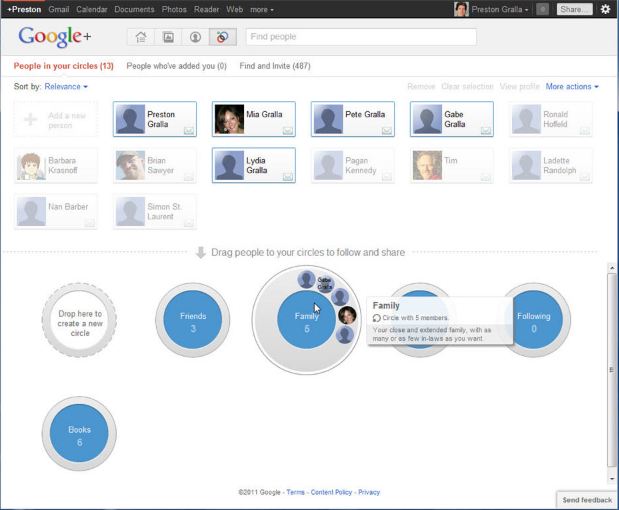
Berger goes on to recall the term he coined with Richard Neuhaus, “mediating structures,” to describe neighborhood, family, church and voluntary associations. These mediating structures buffered the individual from the impersonal, bureaucratic power of the state, but these structures have themselves been severely compromised leaving the individual isolated and disconnected. This state of affairs, along with the the presumption that we are indeed political, which is to say social, animals helps explain, in part at least, the triumph of the social. Social media functions as a mediating structure, a realm in which we are addressed by name and find our individual self publicly acknowledged.
This is not the whole story, of course. Social media in its own way also reduces us to numbers or algorithms, and it cannot provide the all that traditional mediating structures, at their best, are able to offer. There are also temptations to narcissism and worse. But, the risks notwithstanding, social media owes its success to the way it addresses a fundamental dimension of being human.
______________________________________________________
Related post: The (Un)Naturalness of Privacy.
 , as the inelegant subtitle more than suggests, explores the role of the brain in the experience of pleasure.

 L.M. Sacasas