“It was impossible to hate”: Presence, Absence, and Graham Greene’s Whiskey Priest

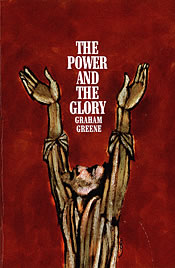
“When you visualize a man or woman carefully, you could always begin to feel pity.”  Or so the nameless priest in Graham Greene’s 1940 novel, The Power and the Glorythought to himself as he sat in a dark, dank, crowded jail cell accosted by a self-righteous woman intent on exposing his unworthiness.

The unnamed priest, however, needed no convincing.  Earlier in the novel we read that,

He was a bad priest, he knew it:  they had a word for his kind — a whiskey priest — but every failure dropped out of his sight and out of mind:  somewhere they accumulated in secret — the rubble of his failures.  One day they would choke up, he supposed, altogether the source of grace.  Until then he carried on, with spells of fear, weariness, with a shamefaced lightness of heart.

The Power and the Glory is set in the Mexican state of Tabasco during the 1930’s when the Red Shirts, a rabidly anti-clerical paramilitary organization, came to power and brutally suppressed the Catholic Church.  Greene’s protagonist, along with Padre Jose, a priest who agreed to marry and forsake his calling in exchange for his life, are the last vestiges of the Church in the state.

Throughout the story the whiskey priest eludes a fanatical police lieutenant who is hell bent on eradicating each and every reminder of the state’s religious past.  “He wanted to destroy everything,” the narrator’s voice explains, “to be alone without any memories at all.”  While evading capture, the nameless priest reluctantly and with an ever-present sense of his worthlessness ministers the sacraments in secret.  He hears confession in the darkness before dawn, he holds a Mass with illicit wine — the Red Shirts also banned alcohol — in dingy jungle huts, and finally he forsakes the promise of safety across the state border to attend to an American convict dying of a gun shot wound that he might be absolved.

Through it all, as author Scott Turrow recently put it, “he emerges as a figure of intense humility and faith, willing to sacrifice himself to attend in secret to the devoted and utterly unaware of his own goodness.”  Not unlike Christ, who in John’s Gospel returns to Jerusalem fully aware that it will cost him his life in order to attend to the dying Lazarus, the priest returns to attend to the dying American knowing that he is to be betrayed to the police and most likely executed.  And indeed, that is the path marked out for him.

In the concluding pages of the novel, after the priest has been unceremoniously executed, an event we witness through the eyes of an English dentist with whom the story had begun, we revisit a number of the families and individuals who along the way had harbored or otherwise interacted with the nameless priest.  In each case, we discover that the priest’s presence among them had been consequential — perhaps ambiguously so, but felt and remembered nonetheless.  This was particularly evident in the case of a young boy whose family had early on sheltered the whiskey priest.  At various points in the novel we listen in as the mother reads to the boy and his sisters an account of the death of a famous Mexican martyr.  The boy had been distracted, unimpressed.  But in the end, when he learns that the shabby priest with the “funny smell” who had been in their very house was also put to death, had now also become a martyr, he has a change of heart.

It brought it home to one — to have had a hero in the house, though it had only been for twenty-four hours.  And he was the last.  There were no more priests and no more heroes.

The priest’s presence, in retrospect, had made the difference.  This appears, from one perspective, to be the central premise of the novel.  By contrast, the oppressive quality of the setting is early on described as a “huge abandonment,” and the antagonist, the hell-bent lieutenant, was marked by the experience of a “vacancy,” and absence.  The priest, tortured by his own failures — often drunk and father of an illegitimate child — cannot quite see the significance of his presence.  He is in his own eyes merely a “fool” who “loves all the wrong things.”  But it is his presence we learn that has made all the difference, that has given hope and sustained faith.

In that prison with which we began, in the darkness, the priest gives profound expression to the significance of presence.

When you visualized a man or woman carefully, you could always begin to feel pity … that was a quality God’s image carried with it … when you saw the lines at the corners of the eyes, the shape of the mouth, how the hair grew, it was impossible to hate.

Greene considered The Power and the Glory to be his best novel.  Critics including John Updike, who wrote the Introduction to the 50th Anniversary Edition, agreed.  It is frequently listed among the best novels of the 20th century.  I read The Power and the Glory while also reflecting on the theme of presence along the lines suggested by Jaron Lanier.  Lanier drew attention to what we might call our presence to ourselves, that is our full engagement in our own experience that was threatened whenever our desire to record and publish our lives through social media led us to fragment our focus and our attention, to become spectators of our own lives.

Reflecting on Greene’s novel provided yet another angle from which to think of presence.  It suggested that our presence to one another may be the most significant gift we can offer.  Alienation and loneliness are still with us.  We speak incessantly of our living in a “connected” age, and indeed it has never been easier to make and maintain connection.  But connection is not presence.   It is true that very often, especially where great distance separates us, a connection is all we can offer — it is better than nothing.  But how often do we fail to give our whole presence to one another when we are separated by feet and inches?  How often do we fail not only to give our own, but to perceive the other’s presence so that we may notice “the lines at the corners of the eyes, the shape of the mouth, how the hair grew”?

Like the unnamed whiskey priest, we may never know what difference our presence will make in the life of another.  What we do know is that our absence, whether literal or effected by our fractured inattentiveness, may in the end contribute to a “huge abandonment.”


Making Sense Out of Life: Early Modern and Digital Reading Practices

When I wrote the About page for this blog I cited an article by Alan Jacobs from several years ago in which he likened blogs to commonplace books. Commonplace books, especially popular during the sixteenth century when printing first began to yield an avalanche of relatively affordable books, served as a means of ordering and making sense out of the massive amounts of information confronting early modern readers. As is frequently noted, the dismay and disorientation they experienced is not altogether unlike the angst that sometimes accompanies our recent and ongoing digital explosion of available information. And so, taking a cue from Jacobs, I intended for this blog to be something akin to a commonplace book.

As it turned out, the analogy was mostly suggestive. Much that I write here does not quite fit the commonplace genre. Nonetheless, something of the spirit, if not the law, persists. The commonplace genre would find a nearer kin in Tumblr than in traditional blogs.

In a 2000 essay reprinted in The Case for Books (2009), historian of the book Robert Darnton also reflects on commonplace books and the scholarly attention they attracted. The attention was not misplaced.  Commonplace books offered a window into the reading practices and mental landscape of their users; and for an era in which they were widely kept, they could offer a glimpse at the mental landscape of whole segments of society as well.  In the spirit of the commonplace book, here are some excerpts from Darnton’s essay with a few reflections.

Describing the practice of commonplacing:

“It involved a special way of taking in the printed word. Unlike modern readers, who follow the flow of a narrative from beginning to end (unless they are digital natives and click through texts on machines), early modern Englishmen read in fits and starts and jumped from book to book.  They broke texts into fragments and assembled them into new patterns by transcribing them in different sections of their notebooks.

Then they reread the copies and rearranged the patterns while adding more excerpts. Reading and writing were therefore inseparable activities. They belonged to a continuous effort to make sense of things, for the world was full of signs: you could read your way through it; and by keeping an account of your readings, you made a book of your own, one stamped with your own personality.”

What is only a parenthetical aside in Darnton’s opening paragraphs was for me a key insight. Darnton’s description of commonplacing could easily be applied to the forms of reading practiced with digital texts, all the way down to the personalization. What is missing, of course, and this is no small thing, is the public or social dimension.

On what commonplace books reveal:

“By selecting and arranging snippets from a limitless stock of literature, early modern Englishmen gave free play to a semi-conscious process of ordering experience. The elective affinities that bound their selections into patterns reveal an epistemology at work below the surface.”

That last sentence could easily function as a research paradigm for analysis of social media. Map the “elective affinities” of what Facebook or Twitter or Google+ users link and post and the emergent patterns will be suggestive of underlying epistemologies. Although here again the social dimension complicates the matter considerably. The “elective affinities” on display in social networking sites are performative in a way that private commonplacing was not, thus injecting a layer of distorting self-reflexivity.  But, then, that performative dimension is interesting on its own terms.

Commonplacing as reading for action:

“But they read in the same way — segmentally, by concentrating on small chunks of text and jumping from book to book, rather than sequentially, as readers did a century later, when the rise of the novel encouraged the habit of perusing books from cover to cover. Segmental reading compelled its practitioners to read actively, to exercise critical judgment, and to impose their own pattern on their reading matter. It was also adapted to ‘reading for action,’ an appropriate mode for men like Drake, Harvey, [etc.] and other contemporaries, who consulted books in order to get their bearings in perilous times, not to pursue knowledge for its own sake or to amuse themselves.”

Again the resemblance between early modern reading practices as described by Darnton and digital reading practices is uncanny. The rise of sustained, linear reading is often attributed to the appearance of printing. Darnton, however, would have us connect sustained, cover-to-cover reading with the later rise of the novel. In this case, the age of the novel stands as an interlude between early modern and digital forms of reading which are more similar to one another than either is to reading as practiced in the age of the novel.

The idea of “reading for action” is also compelling as it suggests the agonistic character of both early modern English politics and early 21st century American politics. I suspect that a good deal of online reading today is done in the spirit of loading a gun. At least this is often the ethos of the political blogosphere.

Nonetheless, Darnton would have us see that this form of reading, at least in its early modern manifestation, had its merits in what it required from the reader as an active agent.

Finally, on reading and the attempt to make sense of out of experience:

“… we may pay closer attention to reading as an element in what used to be called the history of mentalities — that is, world views and ways of thinking. All the keepers of commonplace books, from Drake to Madan, read their way through life, picking up fragments of experience and fitting them into patterns. The underlying affinities that held those patterns together represented an attempt to get a grip on life, to make sense of it, not by elaborating theories but by imposing form on matter.”

Early modern Britons and those of us who are living through the digital revolution (an admittedly overplayed phrase) share a certain harried and anxious disposition. It was, after all, the early modern poet John Donne, who wrote of his age, “Tis all in pieces, all coherence gone.” Early moderns deployed the commonplace book as a means of collecting some of the pieces and putting them together once more. If we follow the analogy, and this is always a precarious move, it would suggest that the impulses at work in contemporary digital commonplacing practices — which have not only written information, but lived experience as the field from which fragments are culled — are deeply conservative. They would amount to an effort to impose order on the chaotic flux of live.

John Mayer and John Piper: Twitter Case Studies

I’ve never read the tweets of John Mayer, but I suspect they are an improvement on the tweets of Kanye West. In any case, Mayer apparently tweeted a lot, in fact, he recently owned up to a case of Twitter addiction. At a Berklee Performance Center Clinic for aspiring musicians, he had this to say:

“The tweets are getting shorter, but the songs are still 4 minutes long. You’re coming up with 140-character zingers, and the song is still 4 minutes long…I realized about a year ago that I couldn’t have a complete thought anymore. And I was a tweetaholic. I had four million twitter followers, and I was always writing on it. And I stopped using twitter as an outlet and I started using twitter as the instrument to riff on, and it started to make my mind smaller and smaller and smaller. And I couldn’t write a song.”

Mayer’s comments came to the attention of John Piper, a prominent Christian pastor with his own not insignificant Twitter following.  In a blog post, Piper offered his own experience as an alternative to Mayer’s:

My experience of publishing three Tweets a day (usually written and scheduled a week or two ahead of time) is different. Mayer said, “I couldn’t have a complete thought anymore.” To me this is almost the opposite of what happens. But that may depend on what we aim to do with Twitter.

Piper goes on to add, in what amounts to his philosophy of tweeting, that he aims to be capacious, concise, and compelling when he composes his tweets (preachers seem to have a hard time resisting alliteration). Along the way he likens tweets to proverbs and explains that, “Tweets for me are a kind of poetry.” This is all very nicely put, and I suspect it makes for pretty decent tweets.

Two users, admittedly two very different users, and two quite different experiences. Of course, there is nothing particularly surprising about this.  We shouldn’t necessarily expect any two users to have the same experience with any technology. Yet, I couldn’t help but wonder what might account for the difference, or if one were more typical.

We get a hint at what the difference might be when Piper writes, “My experience of publishing three Tweets a day (usually written and scheduled a week or two ahead of time) is different.”

That parenthetical statement suggests to me that Piper is not really tweeting. Obviously, he is composing words that are eventually shared via Twitter, but he is doing so in a manner that almost renders the platform irrelevant from the standpoint of personal experience. I would even bet that Piper is not the one interacting with the Twitter interface, in other words I wonder if he passes his composed tweets on to a third party who then types them in and publishes them. (There wouldn’t be a thing wrong with this, of course.) A quick look at Piper’s Twitter feed confirms the suspicion that his use of the interface is minimal since we find only the carefully composed statements and occasional links, but no interaction with other Twitter users. He has 185,000+ followers, and follows only 66. There are no @s0andso, no signs of conversation.

So let me suggest that Piper might as well be composing fortune cookie messages. Piper’s experience and habits are solidly in the world of old media. Piper’s thinking is not being influenced by Twitter because he is not using Twitter. In other words, Piper’s experience tells us nothing about the consequences of Twitter for someone who is actually robustly engaged with the interface, like John Mayer for example.

Piper’s closing paragraph further suggests that he is not exactly experiencing Twitter:

I don’t ask that others Tweet the way I try to. I only write this blog post to explain why I don’t experience Twitter the way John Mayer did, and why you don’t have to either. If your goal is to spread capaciousconcisecompelling truth about God and his ways, the Tweet is a fruitfully demanding form.

To describe a Tweet as a “fruitfully demanding form” is to view Twitter through the lens of the literary. Piper is measuring Twitter strictly in light of its verbal qualities, in the same way he might view a sonnet or a haiku. This a valid level of engagement and analysis, but has little to do with the way Twitter is experienced by most of its users. Moreover, it misses the significant points of contrast between print and digital media environments.

I hope it is clear that I’m certainly not criticizing Piper. My point is to understand the influence of technology, and I suspect that it is found in part in the habits formed by use of technology, or the practice of an interface. Piper has not experienced the effects of Twitter because he has not entered into the practice of Twitter defined as a robust and sustained engagement with the interface. I suspect that his Twitter account isn’t open on his desktop or smartphone. He probably is not emerged in the flow of TwitterTime. This is probably a good thing. By not really using the medium, he is not being used by it either. In any case, I would suggest that a tool’s influence will not really be felt until its use becomes a practice integrated into our form of life.

________________________________________________________

H/T: Mr. Greenwald for pointing me to Piper post.

Anonymity is Authenticity?

Chris Poole is among the 21 New Media Innovators recently profiled by New York Magazine.  They bestowed upon him the title of “Meme Generator” and provided this short bio:

Chris Poole (handle: “moot”) founded the anonymous message board 4Chan when he was just 15. It’s grown into the breeding ground for some of the web’s most pervasive memes, as well as some of its more ominous movements. In the last two years, Poole has raised more than $3 million in venture funding for a new image-centric site called Canvas, which is similar to but separate from 4chan, and he’s become an advocate for web privacy. At this year’s South by Southwest conference, for instance, he had this to say: “Zuckerberg’s totally wrong on anonymity being total cowardice. Anonymity is authenticity.”

It was that last line that caught my attention.  I’ve lately been wrestling with the relative virtues and vices of anonymity and personalization.  A while ago I argued that Zuckerberg was indeed wrong about identity, and self-servingly so.  I wasn’t interested in defending anonymity in that case, but rather the more natural gradual and contingent self-disclosure that characterizes ordinary human relationships.

In the past several days I’ve returned to the theme arguing first that Google+ through its Circles attempts to address Facebook’s “all friends are equal” model.  Then I suggested that the trend toward personalization and away from the anonymity of the early web better (but, imperfectly) fitted our social impulse and operated to some degree as what  sociologists call a mediating structure. I followed that up with a post commenting on Morozov’s lament for the loss of the early Internet’s communal character which, I suggested, sat uncomfortably with Morozov’s privileging of privacy over personalization.  Human communities don’t ordinarily function on those terms.  Oddly, I argued in the comment thread of that same post for the desirability of anonymity in some instances.

So now I come across Poole’s claim — “anonymity is authenticity” — and feel primed to comment.  My initial response is this:  If anonymity is authenticity, then it is a Pyrrhic authenticity.

There is a certain plausibility to Poole’s claim, it suggests that we are most ourselves when we know that we will not be made to answer for what we are doing or saying; that the public self is a restrained and inhibited, and thus not authentic, version of the true self.  It tracks with the point of the Ring of Gyges story in Plato’s Republic.  The ring made the owner invisible, and so the argument went, revealed the true character of the owner (or better, the superficiality of virtue).

But if it is a plausible account of the human condition, it is also an incomplete one.  It is a Pyrrhic authenticity because it eliminates the possibility of appearing authentically before others who acknowledge our presence.  It thus suggests that we are most ourselves at the point at which it does not really matter what we are.  Now one may adopt a Simon & Garfunkle, “I am a rock, I am an island” attitude at this juncture and insist that they don’t need the acknowledgement and recognition, to say nothing of the love and care, that comes from human relationships; if so, then this post is probably not the place to argue otherwise.  I’m going to count on the fact that most of us will rather resonate with Hannah Arendt when she writes, “To live an entirely private life means above all to be deprived of things essential to a truly human life: to be deprived of the reality that comes from being seen and heard by others.”

What good is it to finally be myself, if I am myself alone? Granted there may be some extraordinary circumstances when, in fact, remaining authentically oneself simultaneously requires a great solitude. Ordinarily, however, we answer to both a need to cultivate the inner self with a measure of independence, and to find fulfillment in meaningful relationships with and among others.

Even I feel that over the course of these posts I have been trying to hit a moving target.  This reflects the complexity of lived human experience.  It is a complexity that is hard to account for online when platforms and interfaces seek to reduce that complexity to either the indiscriminately social or the misanthropically private. We are complex creatures and the great danger is that we will end up reducing our complexity to fit the constraints of life mediated through one platform or another.

Virtual Communities, Anonymity, and the Risks of Self-Disclosure

In the beginning Cold War-era engineers created the Internet and then utopian, hippy enthusiasts rescued the Internet and gave it to the world. Regrettably, spammers, venture capitalists, marketers, and corporations entered into the garden of digital delights and a communitarian paradise devolved into a virtual mall.

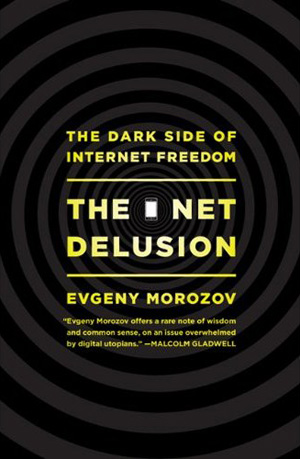
This, more or less, is the storyline of Evgeny Morozov’s very brief history of the Internet, “Two Decades of the Web: A Utopia No More” in Prospect. The author of The Net Delusion: The Dark Side of Internet Freedom, in case it wasn’t clear from the two titles, is not exactly optimistic about the direction the Internet has taken. The plot of his short overview of Internet history moves from early promise to eventual decline; it is a tale of utopian hopes disciplined by unfortunate realities.

Morozov’s history takes the idea of “virtual community” as its theme and features a set of Internet “cheerleaders” – Stuart Brand, Kevin Kelly, John Perry Barlow, and the Wired crowd – as its tragic protagonists. Tragic because their high-minded, lofty ideals were undercut, in Morozov’s telling, by an accompanying naiveté that left Paradise unguarded against the corporate snakes. “These men,” according to Morozov, “emphasised the importance of community and shared experiences; they viewed humans as essentially good, influenced by rational deliberation, and tending towards co-operation. Anti-Hobbesian at heart, they viewed the state and its institutions as an obstacle to be overcome—and what better way to transcend them than via cyberspace?”

This anarchist/libertarian proclivity exposed the online community to dangers trivial and grave:

Perhaps the mismatch between digital ideals and reality can be ascribed to the naivety of the technology pundits. But the real problem was that the internet’s early visionaries never translated their aspirations for a shared cyberspace into a set of concrete principles on which online regulation could be constructed. It’s as if they wanted to build an exemplary city on the hill, but never bothered to spell out how to keep it exemplary once it started growing.

The law of entropy took over from there. The allusion to a city on a hill recalls the Puritan experiment in pious self-government that never quite managed to pass on its vision to the next generation. Pursuing the analogy, Morozov fills the role of the preachers who evolved the jeremiad – a genre of sermon identified by historian Perry Miller that denounced the community’s departure from its founding principles and called for repentance and renewal. Morozov’s commentary fits the genre neatly, and that is not at all to detract from the value of his critique.

The connection to the Puritans is worth pursuing even further, but we have to see beyond the typical tropes with which they are associated, those that lend color to the term puritanical, for just a moment. The Puritans loom large in most tellings of early American history and their influence has long been both celebrated and lamented. In one respect, though, they are out of step with the subsequent evolution of American culture. The rugged individualism that came to dominate the American psyche would have been an unwelcome anomaly within the deeply communitarian ethos of the early Puritan settlers. John Winthrop’s sermon aboard the Arbella in which we find the “city on a hill” imagery is fundamentally a communitarian tract urging self-restraint, self-sacrifice, mercy, justice, and generosity for the good of the community. Shared sacrifice, shared risk, shared resources, shared lives – out of such was community forged.

With this in mind we can begin to sound out a tension within Morozov’s account. In his view, personalization and the loss of privacy are among the chief temptations that ultimately lead to the fall of the digital community. So for example, he notes with displeasure: “The logical end of this ever-increasing personalisation is of each user having his or her own online experience. This is a far cry from the early vision of the internet as a communal space.” And further on we read that, “For many internet users, empowerment was an illusion. They may think they enjoy free access to cool services, but in reality, they are paying for that access with their privacy.”

Yet, certain constructions of privacy and an aversion to personalization sit uneasily alongside of a communitarian ideal. Pressed to their extremes privacy and depersonalization converge in anonymity, and it was, in fact, the anonymity of the early Internet that thrilled theorist with the possibilities for experimentation with identity and its construction. Unfortunately, the early digital communitarian ideal was tied to this vision of privacy/anonymity, and you are not likely to have anything like a community in any strong sense on those terms, at least not in a way that answers to the human social impulse. Social media has provided something like an experience of community precisely because it has been tied to personalization (all of its attendant problems notwithstanding).

Maybe the real problem with the early internet was its commitment to anonymity. Personalization, not regulation, may have curbed the sorts of behaviors and developments that Morozov laments. The unbridled pursuit of self-interest which is always the enemy of community, virtual or otherwise, is abetted by the lack of accountability engendered by anonymity. This is a lesson at least as old as the Ring of Gyges story told by Plato. Community, and the fully human life it enables, is on the other hand built upon the risk of self-disclosure. A point not lost on Hannah Arendt when she noted that, “To live an entirely private life means above all to be deprived of things essential to a truly human life: to be deprived of the reality that comes from being seen and heard by others.” And, she later adds, “Action without a name, a ‘who’ attached to it, is meaningless …”

Admittedly, community is an amorphous and abstract concept and the pursuit of its virtual analogue may be finally incoherent. What’s more, anonymity is in certain circumstances clearly desirable, and commodified personalization is undoubtedly problematic. Finally, there are clearly important and necessary forms of privacy which must be protected. With these qualifications noted, it remains the case that any kind of online community, if it is to serve as a mediating structure that allows for social interaction on a scale somewhere between the anonymity of total seclusion and that of mass society, needs to be built on some degree of measured self-disclosure and consistency of identity.

This entails all sorts of risks and even sacrifices which means that what we may need is less of a jeremiad and more Winthrop-esque vision setting.

_________________________________________________________

Article first published as Virtual Communities, Anonymity, and the Risks of Self-Disclosure on Blogcritics.