The Cost of Distraction: What Kurt Vonnegut Knew

“The year was 2081, and everybody was finally equal.”

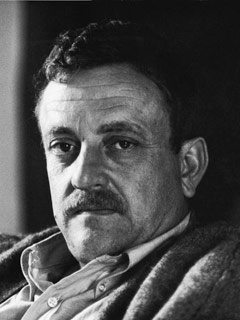
So begins the late Kurt Vonnegut’s 1961 short story, “Harrison Bergeron.” In 2009, Chandler Tuttle released a 25 minute film version of the story titled 2081, and you can watch the trailer at the end of this post.

Vonnegut goes on to describe the conditions of this equality:

They weren’t only equal before God and the law. They were equal every which way. Nobody was smarter than anybody else. Nobody was better looking than anybody else. Nobody was stronger or quicker than anybody else. All this equality was due to the 211th, 212th, and 213th Amendments to the Constitution, and to the unceasing vigilance of agents of the United States Handicapper General.

This government enforced equality was achieved by imposing prosthetic technologies on those who were above average; these prosthetics, however, were designed not to enhance, but to diminish.  So, for example, ballerinas who might otherwise rise above their peers in grace, elegance and beauty,

were burdened with sashweights and bags of birdshot, and their faces were masked, so that no one, seeing a free and graceful gesture or a pretty face, would feel like something the cat drug in.

Then there were those of above average intelligence like the title character’s father, George Bergeron.

[He] had a little mental handicap radio in his ear. He was required by law to wear it at all times. It was tuned to a government transmitter. Every twenty seconds or so, the transmitter would send out some sharp noise to keep people like George from taking unfair advantage of their brains.

Whenever George began to formulate a complex idea, which often involved questioning the status quo, a sharp, piercing noise would shoot in his ear distracting him and derailing his train of thought.  Sometimes the noise was like a siren going off, other times “like somebody hitting a milk bottle with a ball peen hammer.”  Regular and incessant, the distraction overwhelmed and undermined natural intelligence.
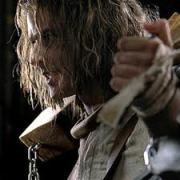
George’s son, Harrison Bergeron possessed gifts and abilities that rendered him an especially potent threat to the regime of equality.  Because of this he was taken away and locked up by the authorities when he was fourteen.  Midway through the story, however, as George and his wife Hazel watch encumbered ballerinas dancing on television, a news bulletin interrupts the performance.  A ballerina takes over from a stuttering  announcer to read the bulletin.

“Harrison Bergeron, age fourteen,” she said in a grackle squawk, “has just escaped from jail, where he was held on suspicion of plotting to overthrow the government. He is a genius and an athlete, is under-handicapped, and should be regarded as extremely dangerous.”

Shortly thereafter, Harrison, whose debilitating prosthetics made him look “like a walking junkyard,” bursts into the building.  He effortlessly rips off the multiple “handicaps” that had been attached to his body in an unsuccessful effort to equalize his prodigious strength and ability.  He then proclaims himself emperor, declaring to the wonder-struck onlookers, “Now watch me become what I can become!”

Having been joined by a beautiful ballerina who came forward to be his empress, they dance.  They dance majestically and preternaturally breaking not only “the laws of the land,” but “the law of gravity and the laws of motion as well.”  And while they danced so high they kissed the ceiling,

Diana Moon Glampers, the Handicapper General, came into the studio with a double-barreled ten-gauge shotgun. She fired twice, and the Emperor and the Empress were dead before they hit the floor.

And just like that, equality is restored.

“Harrison Bergeron” is a nicely executed short story that can be read from a number of perspectives, yielding insights that can be variously applied to political, economic, or cultural circumstances.  As I read it, the story shares a certain sensibility with both Orwell’s 1984 and Huxley’s Brave New World.  It has been noted by, among others, Huxley himself that Brave New World pictures a more likely image of the future because it is not posited on a heavy-handed totalitarianism.  It is, rather, a freely embraced dystopia.  I want to suggest that, in “Harrison Bergeron,” Vonnegut offered us an Orwellian adumbration of one particular dimension of our Internet soaked world that has in fact emerged along a more Huxleyian trajectory.

Consider the manner in which the advantages of the intellectually gifted are equalized in Vonnegut’s story — distraction, regular and constant distraction.  The story provides a vivid and disturbing image of the consequences of perpetual distraction.

We’ve noted more than a few critics who have been pointing to the costly consequences of living with the perpetual distractions created by the very nature of the Internet and the ubiquity of portable tools which allow us to be always connected, always accessible.   Recently a group of neuroscientists made news by taking a trip into the Utah wilderness to disconnect long enough to appreciate the mental costs of constant connectivity and the perpetual distraction that comes with it.

In the world of 2081 imagined by Vonnegut, the distracting technology  is ruthlessly imposed by a government agency.  We, however, have more or less happily assimilated ourselves to a way of life that provides us with regular and constant distraction.  We have done so because we tend to see our tools as enhancements.  They promise, and often provide, pleasure, comfort, efficiency, and productivity.  What’s more, our distractions are not nearly so jarring as those that afflict the characters in “Harrison Bergeron”; in fact, our distractions can often be quite pleasant.

But might they also be inhibiting the development of our fullest potential?  Are we trading away certain real and important pleasures and possibilities?  Have we adopted technologies that in their democratizing power, also engender mediocrity? Do our perpetual distractions constitute a serious impairment of our cognitive abilities?  Can we learn to use our tools in a way that mitigates the costs?

These are just a few of the questions suggested by “Harrison Bergeron.”  Our future, at least in part, may hinge on the answers.

Identity Reset

A few days ago we noted the conflicting opinions of Jeffrey Rosen and David Dylan Thomas on how much the Internet will or will not remember.  In a recent interview with The Wall Street Journal’s Holman Jenkins, Jr., Google CEO Eric Schmidt appears to think the Internet will in fact have a very long memory:

“I don’t believe society understands what happens when everything is available, knowable and recorded by everyone all the time,” he says.

A possible response?

He predicts, apparently seriously, that every young person one day will be entitled automatically to change his or her name on reaching adulthood in order to disown youthful hijinks stored on their friends’ social media sites.

Among the other things Schmidt said, also apparently seriously:

“I actually think most people don’t want Google to answer their questions,” he elaborates. “They want Google to tell them what they should be doing next.”

Super.

Behavioral Economics and Public Policy

From “Economics Behaving Badly” by George Loewenstein and Peter Ubel in the NY Times:

IT seems that every week a new book or major newspaper article appears showing that irrational decision-making helped cause the housing bubble or the rise in health care costs.

Such insights draw on behavioral economics, an increasingly popular field that incorporates elements from psychology to explain why people make seemingly irrational decisions, at least according to traditional economic theory and its emphasis on rational choice. Behavioral economics helps to explain why, for example, people under-save for retirement, why they eat too much and exercise too little and why they buy energy-inefficient light bulbs and appliances. And, by understanding the causes of these problems, behavioral economics has spawned a number of creative interventions to deal with them.

But the field has its limits. As policymakers use it to devise programs, it’s becoming clear that behavioral economics is being asked to solve problems it wasn’t meant to address. Indeed, it seems in some cases that behavioral economics is being used as a political expedient, allowing policymakers to avoid painful but more effective solutions rooted in traditional economics.

The “more effective solutions rooted in traditional economics” end up including the elimination of corn subsidies, a gas tax, and a carbon tax.  I don’t have the expertise to comment on the relative merits of these policy proposals.  Additionally, I’m in principle supportive of politicians making hard and unpopular decisions that are nonetheless right decisions (I suppose “in principle” so is everyone else).  My sense is that policies informed by behavioral economics are attractive in part because they attempt to nudge rather than coerce and in so doing appear to mediate between free markets and government interventionism.

Labor, Ennui, and Bourbon

I’m not sure yet whether to think of the weblog as a genre unto itself, or whether it is more helpful to conceive of the weblog as a writing space in which a variety of genres manifest themselves.  In any case, one of the uses to which I find a blog post particularly suited is the juxtaposition of two or more passages that seem to benefit from being placed in conversation with one another.  It may be that I’m not entirely sure how best  to articulate the relationship, but an intuition leads me to set ideas side by side to see what may emerge.  Or, it could be that I have already some sense of how the ideas relate.  It could also be that the intuition ends up being a blind alley and it is not until I write through it that the dead end emerges.  So with this in mind let me lay two passages side by side for your consideration and mine.

The first from the prologue to Hannah Arendt’s The Human Condition.  She is addressing “the advent of automation, which in a few decades [she is writing in the late 1950’s] probably will empty the factories and liberate mankind from its oldest and most natural burden, the burden of labouring and the bondage to necessity.”  This development, however, will not yield what it seems to promise.  Arendt continues:

The modern age has carried with it a theoretical glorification of labor and has resulted in a factual transformation of the whole of society into a laboring society.  The fulfillment of the wish, therefore, like the fulfillment of wishes in fairy tales, comes at a moment when it can only be self-defeating.  It is a society of laborers which is about to be liberated from the fetters of labor, and this society does no longer know of those other higher and more meaninfgul activities for the sake of which this freedom would deserve to be won.  Within this society, which is egalitarian because this is labor’s way of making men live together, there is no class left, no aristocracy of either a political or spiritual nature from which a restoration of the other capacities of man could start anew . . . What we are confronted with is the prospect of a society of laborers without labor, that is, without the only activity left to them.  Surely, nothing could be worse.

Alongside that observation consider an excerpt from an essay by Walker Percy that I recently came across thanks to Alan Jacobs at Text Patterns.  The essay is titled simply “Bourbon, Neat” and you should read it on its own terms, but here’s the part to consider in light of Arendt’s analysis:

Not only should connoisseurs of bourbon not read this article, neither should persons preoccupied with the perils of alcoholism, cirrhosis, esophageal hemorrhage, cancer of the palate, and so forth—all real enough dangers. I, too, deplore these afflictions. But, as between these evils and the aesthetic of bourbon drinking, that is, the use of bourbon to warm the heart, to reduce the anomie of the late twentieth century, to cure the cold phlegm of Wednesday afternoons, I choose the aesthetic. What, after all, is the use of not having cancer, cirrhosis, and such, if a man comes home from work every day at five-thirty to the exurbs of Montclair or Memphis and there is the grass growing and the little family looking not quite at him but just past the side of his head, and there’s Cronkite on the tube and the smell of pot roast in the living room, and inside the house and outside in the pretty exurb has settled the noxious particles and the sadness of the old dying Western world, and him thinking: “Jesus, is this it? Listening to Cronkite and the grass growing?”

Connection?

Wine and Economics

The following observations from Freakonomics following on a story about a particularly brazen case of mid-level wine fraud in a British supermarket:

This last phenomenon [little incentive for any individual to sue for fraud over small amounts] is the same sort of collective action dilemma that mobile phone companies, credit-card companies, and the like have been trading on for years: they upcharge customers a few cents here and there—rounding the length of a dropped call up to the nearest minute, for instance, or playing with the spread on exchange rates on foreign transactions—but it’s below the radar screen of anyone but the most obsessively litigious or penny-pinching customer. It adds up to a lot of money for the company, but not enough is taken from any individual to incite a lawsuit. It’s thus a highly effective form of fraud . . .

It might seem, then, that the optimal opportunity for fraud is where (1) the damages to each individual are relatively low; (2) the number of instances is fewer than would make the case worth a plaintiff firm’s time; and yet (3) the business is large enough to make good money for the counterfeiter.

And while we’re approaching the subject of economics through wine, here’s another item from Freakonomics:

In American restaurants, I have always seen a glass of wine (perhaps 6 to 7.5 ounces) sold for at least 1/3 of the price of a bottle of wine (750 milliliters=29.6 ounces), so that the per-unit price of a glass is typically at least 1/3 more than a bottle.  In the U.S., it’s always cheaper to buy a bottle of wine than buy glasses if you are having 3 glasses or more.  In the Parisian restaurant we visited, the per-ounce price was the same whether you bought a glass (150 milliliters) or a bottle (750 milliliters).  Indeed, even a carafe (pichet) of 500 milliters was sold at the same per-unit price.  Why did the restaurant do this, given the costs of fetching the bottle each time and pouring glasses (as opposed to uncorking once and leaving the bottle on the table)?  Also, given the mark-up on wines at restaurants, the owner should have an incentive to get customers to buy more wine—to buy a full bottle.  I don’t understand what seems to be a pricing anomaly.

Two take-aways there:  First, if you’re going to have more than three glasses, just buy the bottle.  Secondly, is it possible that something other than the profit motive might have been in play and are we so conditioned to its ubiquitous operation in our society that we are truly befuddled when it appears to be supplanted by other motivations?