Reading, With Attitude

I can’t improve on Matthew Battles’ introduction:

Maybe in the rush towards the Singularity, towards our apotheosis as networked demiurges who are always plugged in, always on, always checking and modulating moods and statuses and messages, the book will carve out a niche as the technology that lets you disappear. Until they get the whole quantum cloaking thing worked out, after all, the book is the best invisibility tech we have. Reading one increasingly seems like a cultural kilt, a silent version of the skirl of pipes on a misty hillside. The reader is the one true Scotsman of culture.

Please do enjoy:

Julian Smith

via Alan Jacobs

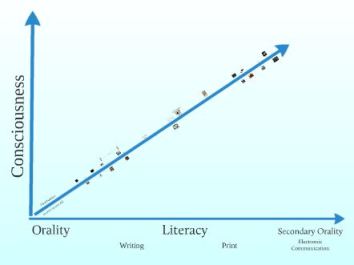
Ong’s Orality and Literacy Visualized

I’ve mentioned Walter Ong more than a few times in previous posts.  He’s best known for a little book titled Orality and Literacy in which he argues that transitions from oral to literate to secondary oral cultures (marked respectively by the development of alphabetic technology and electronic communication) have effected transformations in human consciousness. It is something of a testament to Ong’s enduring influence, he passed away in 2003, that I’ve been assigned his work in three separate graduate courses.

In the event that it may be of interest to someone out there, here is a visualization I put together using Prezi of Ong’s argument (supplemented by some additional information).  Once you’ve clicked over to the site, click the forward arrow to move through the presentation.

“Sealed in the tombs of their revealed preferences”

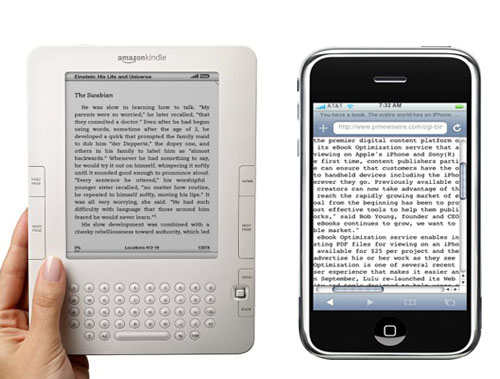
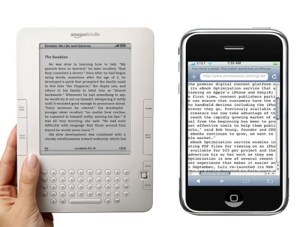
I’ve recently been emailed two interesting posts that intersect nicely with my reading of Illich’s In the Vineyard of the Text.  Illich is looking back at a transition in reading technologies and practices in the 12th century in order to gain perspective on the transformation taking  place when he is writing in the early 1990’s.  Illich’s analysis may be even more timely now, 15+ years after he wrote, as e-readers seem to have finally caught on and secured widespread acceptance and use.

The first post, “Bye, Bye, Borders?” by Megan McArdle at The Atlantic, considers recent rumors about the imminent demise of Borders (rumors which most likely are not, as in the case of Mark Twain, greatly exaggerated).  Here is her main point:

Personally I hope they’re wrong, too; like most writers, I like bookshops.  I suspect most of us had our destiny shaped while we were sandwiched behind the bookshelves at our local dealer.

On the other hand, like most of the writers I know, I rarely go into bookshops anymore.  Instead, the UPS truck stops at our house at least once a week, thanks to Prime, and more and more, I order Kindle books straight from my iPad.  I know that I am missing something–the serendipity of browsing through the bookshelves–which I have never replaced at Amazon; much as I love the convenience of online shopping, I never find anything that I am not looking for.

This is when the communitarians start looking for a government rule that will make it harder for people to buy books online; the environmentalists complain about all the energy wasted on shipping; and the moderate nostalgists start urging people to support their local bookstore.  But I’ll go by a combination of revealed preference and introspection:  the world may be better off without Borders, even though I (and everyone else who has stopped shopping there) likes the idea of its existence.

There is a certain irony here since it was not that long ago that Borders and Barnes & Noble were the villains, not the victims, in the story we told about the demise of small, independent books shops.  You remember You’ve Got Mail, no?

The second post, “Open Books:  The E-Reader Reads You” by Rob Horning at The New Inquiry, considers the wealth of data about the user that becomes available to publishers and distributors through E-Readers like Amazon’s Kindle.  Horning makes a number of observations that pair up suggestively with themes in Illich.  Consider this paragraph, for example, in which Horning cites literary critic Franco Moretti:

That is, the truth about them for publishers will be no different from what it is for distant-reading critics like Moretti — a matter of tabulated, graphable data. “Distance, let me repeat it, is a condition of knowledge: it allows you to focus on units that are much smaller or much larger than the text,” Moretti argues. “And if, between the very small and the very large, the text itself disappears, well, it is one of those cases when one can justifiably say, Less is more.”

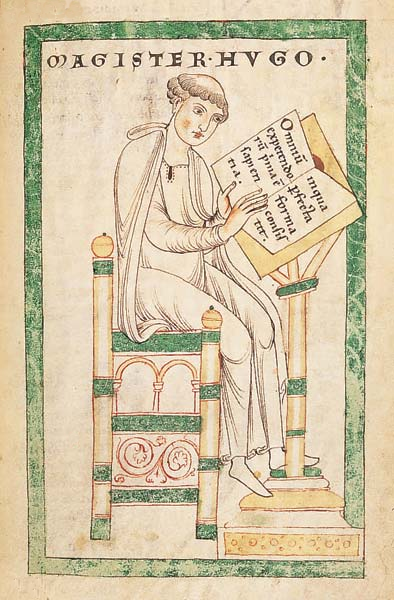
Moretti’s advocacy of distance appears a ways down a road tread by Hugh of Saint Victor’s when he advocated a pilgrim ethic for scholars summarized as follows by Illich:

With the spirit of self-definition, estrangement acquires a new positive meaning.  Hugh’s call away from the ‘sweetness of one’s native soil’ and to a journey of self-discovery is but one instance of the new ethos . . Hugh’s insistence on the need that the scholar be an exile-in-spirit echoes this mood.

Like McArdle, Horning explores the loss of the physical bookstore (or library) as a place of serendipitous discovery in light of increasingly sophisticated recommendation algorithms used by online booksellers.

Thanks to these innovations, publishers will know what books you’ve read; when you read them; what you chose to read next, or simultaneously; how long it took you; and what other books people read when they read what you have. The potential data mine this all represents may eventually divest readers of their need to discover anything. Instead, recommendation engines can take over, manufacturing serendipity for users as is already the case on Amazon’s website, only now with the not necessarily solicited advice being ported directly into the scene of reading. And if you shop through Google’s new bookstore, all that information and be joined with all the data derived from your search and browsing histories to further refine recommendations and circumscribe the scope of what is readily offered to you.

Horning, however, is slightly less sanguine than McArdle:

But perhaps more important, publishers will be able to draw from trends in this rich data for its editorial decision making, exploiting connections this information reveals among various demographics in the reading public, calibrating their lists to actual reader behavior with more precision that dumb sales data once allowed. Such rapid responsiveness can trigger a feedback loop that precludes the possibility of spontaneous, unexpected desires, fashioning a smoothly functioning market sealed off from vital disruptions. Readers will be sealed in the tombs of their revealed preferences. To capture the feeling of discovery and possibility again, they will have to look somewhere other than books.

The most startling contrast is clearly between McArdle’s somewhat begrudging embrace of “revealed preference” and Horning’s characterization of the same as “tombs” into which readers will be sealed.  Horning’s concerns also echo those of Jaron Lanier which we noted here a couple of months ago:

Students spend a lot of time acting as trivialized relays in giant schemes designed for the purposes of advertising and other revenue-minded manipulations. They are prompted to create databases about themselves and then trust algorithms to assemble streams of songs and movies and stories for their consumption . . . . The problem is that students could come to conceive of themselves as relays in a transpersonal digital structure.

The title of Horning’s post is interesting in this regard:  “Open Books:  The E-Reader Reads You.”  There was also a sense in which the book read the reader in twelfth century.   The book presented the reader with an external standard to which the reader, depending on the text,  may need to conform.  This is why Hugh believed reading and learning required humility.  Without humility the reader would fail to subject his own views and practices to the order of things that a text may reveal.  In other words, the book read the reader by illuminating where the reader must change; the reader read to discover an order to which they must align their inner world.  The technology bundled with the E-reader, and the economic models it participates in, reads the user and precisely the opposite sense.  It reads the reader in order to bring external realities into conformity with the existing internal dispositions of the user.

What reading is and is for, what counts for knowledge and wisdom, the rise and fall of social hierarchies — these have been transformed over the course of time as new technologies for representing and communicating human thought have emerged .  With Illich, I’m hopeful that understanding past developments in these areas will give us some guideposts to steer by as we experience these types of transformations in the present.

_______________________________

Thanks to Mr. Ridenhour and Mr. Greenwald for the links.
“Monastic Reading” — Reading with the Body

“Monastic Reading,” the third chapter in Ivan Illich’s In the Vineyard of the Text, gives us a window into a form of reading that involved the body along with the mind.  Illich is attentive to the physicality of reading and modes of remembering that (figuratively) engrave the text onto the body so that the body and mind work in tandem to remember and recall what has been read and learned.  Very interesting material given my recent fascination with embodied knowledge.

The easiest way to recognize instances of embodied knowledge is to take note of athletes and dancers who “know” how to do a great deal of things that they may have a very hard time putting into words.  Or, if you can type, ask yourself, where is the letter “L” on the keyboard?  How did you think of the answer?  If you are like most people in that situation you moved your fingers around to remember.

I’m most interested in how embodied knowledge — which is also picked up through the habits and rituals, religious and otherwise, that make up our cultural milieu — plays a significant role in shaping our dispositions, attention, inclinations.

Illich, who is drawing on the work of anthropologist Marcel Jousse, gives us some more instances of embodied knowledge, this time in the service of recalling articulated speech.

Previous posts:  Introduction, chapter one, chapter two.

  • Quoting Hugh of Saint Victor:  “Meditation is sustained thought along planned lines . . . . Meditation takes its start from reading, but is bound by none of the rules or precepts of reading.  Meditation delights to range along open ground, where it fixes its free gaze upon the contemplation of truth, drawing together now these, now those causes of things, or now penetrating into profundities, leaving nothing doubtful, nothing obscure.  The beginning of learning thus lies in reading but its consummation lies in meditation.” (52)
  • “Meditative reading can sometimes be difficult, a chore which must be faced with courage, fortitudo.  But the reader, sustained by the ‘zeal to inquire,’ will derive joy from his application.  Eagerness comes with practice.  To foster his zeal, the student needs encouraging example rather than instruction.”  (53)
  • “Hugh’s meditation is an intensive reading activity and not some passive quietist plunge into feelings.  This activity is described by analogy to body movements:  striding from line to line, or flapping one’s wings while surveying the already well-known page.  Reading is experienced by Hugh as a bodily motor activity.
  • In a tradition of one and a half millennia, the sounding pages are echoed by the resonance  of the moving lips and tongue.  The reader’s ears pay attention, and strain to catch what the reader’s mouth gives forth.  In this manner the sequence of letters translates directly into body movements and patterns nerve impulses.  the lines are a sound track picked up by the mouth and voiced by the reader for his own ear.  By reading, the page is literally embodied, incorporated.
  • The modern reader conceives of the page as a plate that inks the mind, and of the mind as a screen onto which the page is projected and from which, at a flip, it can fade.  For the monastic reader, whom Hugh addresses, reading is a much less phantasmagoric and much more carnal activity:  the reader understands the lines by moving to their beat, remembers them by recapturing their rhythm, and thinks of them in terms of putting them into his mouth and chewing.  No wonder that pre-university monasteries are described to us in various sources as the dwelling places of mumblers and munchers.” (54)
  • “For Hugh, who uses Latin, the act of reading with the eyes implies an activity not unlike a search for firewood:  his eyes must pick up the letters of the alphabet and bundle these into syllables.  The eyes are at the service of the lungs, the throat, the tongue, and the lips that do not usually utter single letters but words.”  (58)
  • “. . . for the monk, reading is not one activity but a way of life . . . . Reading impregnates his days and nights.”  (58-59)
  • “The process by which the written text of Scripture becomes part of each monk’s biography is typically Jewish rather than Greek.  Antiquity had no one book that could be swallowed.  Neither Greeks nor Romans were people of a book.  No one book was — or could be — at the center of the classical way of life, as it is for Jews, Christians, and Muslims.  For the first Christian millennium, memorization of this one book was performed by a process which stands in stark contrast to the building of memory palaces.  The book was swallowed and digested through the careful attention paid to the psychomotor nerve impulses which accompany the sentences being learned. Even today, pupils in Koranic and Jewish schools sit on the floor with the book open on their knees.  Each one chants his lines in a singsong, often a dozen pupils simultaneously, each a different line.  While they read, their bodies sway from the hips up or their trunks gently rock back and forth.  The swinging and the recitation continue as if the student is in a trance, even when he closes his eyes or looks down the aisle of the mosque.  The body movements re-evoke those of the speech organs that have been associated with them.  In a ritual manner these students use their whole bodies to embody the lines.
  • Marcel Jousse has studied these psychomotor techniques of fixing a spoken sequence in the flesh.  He has shown that for many people, remembrance means the triggering of a well-established sequence of muscular patterns to which the utterances are tied.  When the child is rocked during a cradle song, when the reapers bow to the rhythm of a harvest song, when the rabbi shakes his head while he prays or searches for the right answer, or when the proverb comes to mind only upon tapping for a while — according to Jousse, these are just a few examples of a widespread linkage of utterance and gesture.  Each culture has given its own form to this bilateral, dissymmetric complementarity by which sayings are graven right and left, forward and backward into trunk and limbs, rather than just into the ear and the eye.  Monastic existence can be viewed as a carefully patterned framework for the practice of such techniques.”  (pages 60-61)
  • “It is, however, not a social technique incorporated in the rule which makes the monk, but rather the attitude with which he approaches the book as the center of his life.  In the short chapter on meditation, Hugh refers to the spirit in which this life of reading ought to be lived.  He uses the word vacare, which says all but just cannot be translated into English . . . . Vacare means ‘to have been set or become free.’  When Christian authors use the term the stress is not on the release a person gets, but on the freedom he takes of his own volition.  The term stresses ‘the desire to be engaged ‘ in a new way of life rather than a release or flight from one’s old habits of bondage and lifestyle.  The verb is also used in classical Latin . . . . With generosity, [Seneca] urges, one should choose what to be free for.  True leisure can be found only by those who give themselves to wisdom (sapientiae vacant).”  (61-62)
  • Lectio is forever a beginning, meditatio a consummatio, and both integral to studium . . . For Hugh, there is only one kind of reading that is worthwhile, lectio divina.  This place him at the end of one thousand years during which lectio and otio vacare had defined each other.”  (63-64)
  • “The new way of reading the newly laid-out page calls for a new setting within the city:  colleges that engender the university, with its academic rather than monastic rituals.  The studium legendi ceases to be a way of life for the great majority of disciplined readers, and is viewed as one particular ascetical practice now called ‘spiritual reading.’  On the other hand, ‘study’ increasingly refers to the acquisition of knowledge.  Lectio divides into prayer and study.”  (64-65)

“Order, Memory, and History”

Excerpts from the second chapter of Ivan Illich’s In the Vineyard of the Text, “Order, Memory, and History.”  Previous posts:  Introduction and first chapter.

From the first few excerpts, one gets a feel for a mental world which had not yet divorced the sign from the signifier and still regarded the cosmos as inherently meaningful, like a book to be read.  Most of what follows centers on the fascinating history of memory techniques and Hugh’s attempt to revive these techniques as the foundation of the search for wisdom.  What we end up with then is an effort to microcosmically represent the macrocosmic order of things in the mind.  The mind symbolically captures the order of the cosmos.  I hope the excerpts below convey the gist of this ambitious project.

(Read here for an excellent recent essay delving into the history of memory techniques and books.)

  • “The passage from childlike searching to adult reading is governed by something that Hugh calls ordo.  In many instances Hugh stresses the importance that the reader advance with order, ordinate procedere debet, or that one ought to stride forward with a harmonious gait.  Hugh does not create, he follows, observes, searches the order of things.  “To order” is the interiorization of that cosmic and symbolic harmony which God has established in the act of creation.  “To order” means neither to organize and systematize knowledge according to preconceived subjects, nor to manage it.  The reader’s order is not imposed on the story, but the story puts the reader into its order.  The search for wisdom is a search for the symbols of order that we encounter on the page.”  (31)
  • Quoting Gerhart Ladner:  “It was one of the fundamental character traits of the early Christian and medieval mentalities that the signifying, symbolizing and allegorizing function was anything but arbitrary or subjective; symbols were believed to represent objectively and to express faithfully various aspects of a universe that was perceived as widely and deeply meaningful.”  (31)
  • In the “somethings never change” category:  “Hugh expresses dissatisfaction with the students of his day who, ‘whether from ignorance or from unwillingness, fail to hold to a fit method of study, and therefore we find many who study but few who are wise” . . . . Hugh looks for students who read so well that without leafing they instantly have details ready in their heart.  Memory training, for Hugh, is a precondition for reading, and something which he treats in a manual that readers of the Didascalicon are supposed to know.” (35)
  • “The child’s mind was trained to build the memory mazes, and to establish the habit to dart and retrieve in them.  Remembrance was not conceived as an act of mapping but of psychomotor, morally charged activity.  As a modern youth, from childhood on I was trained to the Baedeker [popular German travel guide].  As a mountain guide I learned to decipher maps and photographs before venturing into the rock.  Decades later, when I first arrived in Japan I purchased a map of Tokyo.  But I was not allowed to use it.  My host’s wife simply refused to let me map my way through the city’s mazes by looking at them, mentally, from above.  Day after day she led me around this, and then that corner, until I could navigate the labyrinth and reach my destinations without ever knowing abstractly where I was.  Reference work before the table of contents and the index must have been much more like this kind of mapless orientation for which our modern schools disqualify us.” (37)
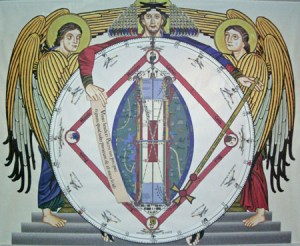
  • “For more advanced readers, Hugh proposed a much more complex, three-dimensional ark — a space-time matrix built within the mind of the student and modeled on Noah’s ark . . . [a] three-dimensional multicolored monster memory scheme.  The man who has best studied Hugh’s writings on the moral and mystical ark has come to the following conclusion:  220 square feet of paper would be needed for a still readable blueprint of Hugh’s ark-model of historical interrelationships.  Twentieth-century medievalists, who in the great majority have never had any training in mnemotechnics, can perhaps imagine a blueprint of Hugh’s ark, but they cannot recapture the experience of having such an ark in their own mind, or ‘be thoroughly at home with this thought and way of imagining.'”  (37-38)

Read here about a recent digital reconstruction of Hugh’s ark by Conrad Rudolph of the University of California and commissioned by the US National Gallery of Art.  Click on the image above for a more detailed representation.

  • “Some rudiments from the history of memory must be recalled to grasp Hugh’s unique place.  What anthropologists distinguish as ‘cultures’ the historian of mental spaces might distinguish as different ‘memories.’  The way to recall, to remember, has a history which is, to some degree, distinct from the history of the substance that is remembered.”  (39)
  • “We sometimes forget that words are creatures of the alphabet.” (39)
  • “In fact, the alphabet is an elegant technology for the visualization of sounds.  Its two dozen shapes trigger the memory of utterances that have been articulated by the mouth, the tongue, or the lips, and filter out what is said by gesture, mime, or the guts.  Unlike other writing systems, it records sounds, not ideas.”  (39)
  • “The one most common method used by the Greeks to achieve this purpose was the mental construction of a memory palace . . . . To become the student of a reputable teacher, the pupil had to prove that he was at home and at ease in some vast architecture that existed only in his mind, and within which he could move at an instant to the spot of his choice.”  (41)
  • “Early on it was found that the most effective way for locating and retrieving memories was that of randomly affixing to each one a mental label from a large set familiar to the student.  For example, to a goat or the sun, a branch or a knife, a sentence was attached for rote memorization.  The author who had thus equipped his palace for a speech or a dispute just moved to the appropriate imaginary room, took in at a glance the object placed on the labels, and had at his fingertips the memorized formulations that — for this particular occasion — he had associated with these emblems.”  (41-42)
  • “The art of memory as a symbolic labeling of memorized speech-acts was created in fourth-century Greece, taught by Sophists and used in politics.  In Rome, at least since Quintilian (35-100), its purpose and technique changed.  It was mainly used by lawyers.  Here memory training stresses the art of internalized reading.  The public speaker learned in late Roman antiquity how to ‘take notes’ in his mind and ‘read them off’ on the right occasion.”  (42)
  • “The rhetorical virtuoso was henceforth the one who could mentally register and label each sentence he intended to use, and promptly recover it from the appropriate architectonic feature in his own inner topology.  Today, in an age dazed by the feats of computers, this skill sounds like an impossible undertaking or freakish acrobatics for some academic circus.  But such memory training was part of the equipment expected by Hugh from the beginner.”  (42)
  • Reminding us that coping with information is not an entirely new challenge:  “By reviving ancient architectural memory training, Hugh hopes to prepare boys born around 1120 to read their way toward wisdom in an age in which the new collections could only too easily have scattered their brains and overwhelmed them.  He offers them a radically intimate technique of ordering this huge heritage in a personally created, inner spime [i.e., space time, taken from Einstein].” (45)
  • “Everything can make sense when it is related to this ordo of time; and noting is meaningful that is not placed by the reader into this ordo.  Hugh’s moral and spiritual Ark of Noah is more than a mnemotechnic palace with biblical features.  The Ark stands for a social entity, a process that begins with creation and continues to the end of time, what Hugh calls ‘the Church.’  The activity which Hugh calls ‘reading’ mediates between this macrocosmic Church and the microcosmos of the reader’s personal intimacy.  Each person, each place, each thing within this spatiotemporal cosmos must first be literally understood.  It then reveals itself as also something else:  as sign for something to come in the future, and as accomplishment of some other thing that, by analogy, has pointed toward its coming.”  (46-47)