Keeping Time, Keeping Silent

What shape does a well ordered life take and how does one achieve such a thing? I certainly don’t have a story of personal triumph on this score to share with you, but I’m fairly certain that if I did it would focus on the re-ordering of a disordered relationship to time. Time, in fact, is the theme of a commencement address delivered by Paul Ford to the Interaction Design MFA program at the School of Visual Arts in New York City. The speech, titled “10 Timeframes”, addresses the changing frames by which we measure and understand our experience of time, from the farmer whose frames are the changing season to the computer scientist who works with nanoseconds.

Commencement addresses are difficult to do well or in any kind of original fashion, but Ford managed both and my excerpts here will not convey either the feel or the insight of the whole. That said, here are the fragments of Ford’s speech I want to bring into conversation with the second piece which I’ll get to in just a minute. After giving a few illustrative examples, Ford reminds his listeners of the following:

“So it’s only a few hundred years ago that people started to care about centuries, and then more recently, decades. And of course hours and minutes. And in the last 40 years we’ve got 86 trillion nanoseconds a day, and a whole industry trying to make every one of them count.”

He introduced the nanosecond by referring back to a book published in the early 1980’s on the history of the computer, The Soul of a New Machine. After quoting one engineer describing the significance of nano-seconds, Ford then tells his audience,”One of the engineers in the book burned out and quit and he left a note that read: ‘I am going to a commune in Vermont and will deal with no unit of time shorter than a season.'”

Ford, who is speaking to creative types who will design digital tools that other creative types will use to do all sorts of work, concludes: “And I want you to ask yourself when you make things, when you prototype interactions, am I thinking about my own clock, or the user’s? Am I going to help someone make order in his or her life, or am I going to send that person to a commune in Vermont?”

Perhaps it would not be so bad to be in a commune in Vermont, but Ford clearly understood that one engineer’s decision to be the product of exhaustion — exhaustion that resulted from continuous work within a frame of time that led to a disordered experience of life.

Many of the discontents and disorders associated with modernity, discontents and disorders that are exacerbated by the advent of digital culture, revolve around time. Ford reminds us that our experience of time has a history, a history intimately tied to our machines for measuring time as Lewis Mumford observed many years ago. Mumford’s observations about the mechanical clock, whose origins lie in medieval monasticism, segue nicely (and somewhat paradoxically) to the second piece.

“How Silence Works”, a transcript of Jeremy Mesiano-Crookston’s email interviews with Trappist monks in the Benedictine Order living in Quebec, also dwells on the shape of the well ordered life. As the title suggests, the interviews focus on the place of silence in the monastic life. Contrary to popular belief, the Trappists take no “vow of silence,” although silence is an integral part of their communal life. As with Ford’s piece, I encourage you to read the whole, it is brimming with timely wisdom and insight.

Out of the many passages that are worth noting in the email exchanges, I’ll draw your attention to two. The first ties in nicely with Ford’s concerns. Mesiano-Crookston asks, “Out of curiosity, do the monks in the cloister watch the daily news? Are you interested in cultural changes in the world?” In response one monk wrote,

“I wonder if a lot of the cultural complexity you refer to [in a previous question] seems interesting to people because they have lost so much consciousness of [their] ancestors and the long view afforded by a knowledge of history. If you don’t know history, everything today can seem quite novel. But in the larger context of the story of human history, much of what fascinates, today, is quite redundant.”

The practices of the monastery, including the practice of silence, a practice that has the collateral effect of slowing down time, yield a frame of time (to borrow Ford’s terminology) quite different from the frame of time most of us work with in our day to day life. Saying as much is probably stating the obvious. But without suggesting that we all take up the monastic life, it would seem that with smaller gestures we might come closer to an ordering of time that was, simply put, better for us. Perhaps taking a cue  from the monastic life, we might learn to cultivate small rituals that establish a more humane rhythm for our daily life. Such small gestures are certainly within the realm of the possible for most of us. We might find that such small gestures — micro-practices to borrow sociologist Pierre Bourdieu’s wording — may have a considerable impact on the shape of our experience.

Asked whether they believed the practice of silence were beneficial for all people, one of the monks replied,

“I would say the cultivation of silence is indispensable to being human. People sometimes talk as if they were “looking for silence,” as if silence had gone away or they had misplaced it somewhere. But it is hardly something they could have misplaced. Silence is the infinite horizon against which is set every word they have ever spoken, and they can’t find it? Not to worry—it will find them.”

Perhaps. It is hard to quibble with a point so eloquently put; but while silence may indeed find us, I think that we ought also to do a little searching for it ourselves. At the very least, we should be prepared to receive it when it does find us. Perhaps then, in silence, we will find ourselves better able to recalibrate our frame of time and achieve something more closely resembling a well-ordered life.

The Tourist and the Pilgrim

Perhaps it is not the soul of the one whose photograph is taken that the camera steals, but rather the soul of the one who takes the picture.

What does it mean to be a tourist?

I thought about this often while spending two weeks out of the country being just that, a tourist. Sitting in front of one more cathedral, I think it was, having assaulted the structure with my camera and waiting to move on to the next target, I wondered whether someone had written something like a philosophy of tourism. I was certain someone must have; Alain de Botton surely. Every book I’ve ever imagined turned out already to have been written, often numerous times over.  I was sure this one was no exception. In any case, I didn’t plan to write that book. It was only a question occasioned by the nagging feeling that there was something fundamentally disordered about the experience we call tourism.

We know, of course, that there are many kinds of tourists ranging from the obnoxiously oblivious who seem to gleefully embrace the worst elements of the stereotype, to the ironically self-conscious who take pains to avoid appearing as a tourist at all. Most of us, as tourists that is, probably fall somewhere in between. For my part, I had little interest in pretending to be other than I was. And I certainly was not going to stop taking pictures in order to avoid appearing as a tourist.

In fact, I suffer from a severe case of camera eye. I would not claim to be an amateur photographer, as that might imply too high a level of photographic savvy, but I do enjoy taking pictures — many, many pictures. My wife tells me that she knows before I pull out the camera that I am about to do so because I get a certain look on my face that says, “That’s a good shot I’ve got to have.” I have no doubt that this is the case. I’ve frequently used the experience of walking around with a digital camera as an illustration of the way a technology can alter our experience merely by having it in hand. I use this example principally because I know its existential force all too well.

This photographic compulsion led me to think of being a tourist as a spectrum of activity defined by the degree to which the eye dominates the experience. On one end, seeing is all; the other is multi-sensory. Perhaps it is toward the visual end that most tourists naturally gravitate. You go to see sights. You are told that you must see this, that, and the other thing. You haven’t really been to X if you haven’t seen Y. And so on it goes. It is, more often than not, sight that first mediates our experience of any place. Further, if what there is to see is new or strange or majestic or stunning, we will continue to equate being there with seeing. And wanting to render the ephemeral visual experience durable we will seek to capture it with photographs burdened all the while by the realization that our pictures will always disappoint.

Clearly, then, I tend toward this end of spectrum. But even I recognize that seeing is not the only way to experience a place, or even the best way. And so I try to listen and to smell. From time to time I will touch a building to feel the place. And, of course, there is the tasting. The camera captures none of this, and so there is nothing to do but to put it away and sit and observe, with all the senses, this place and these people and the dynamic reality we call culture that emerges from their interaction. To “take it all in” as is it is sometimes put.

But even at this multi-sensory end of the spectrum, there is something that did not quite sit right with me. I kept thinking that in the end it is all still driven by the impulse to consume, precisely to take in and take away. It was as those tribesmen feared; with the camera I was hunting for the soul of the place, somehow to disassociate it from the material space and absorb it into myself. And even when I set the camera aside and sought to capture the full sensory experience, the impulse was still the same. How can it be otherwise? The essence of tourism is not merely spatial; it is also temporal. A tourist is not simply someone who goes to a different place, but someone whose experience of that place will be temporary. The experience of tourism is always defined by the nearness of its end. And so always conscious that I can be in this place only so much longer, I try to hard to take it in, which is to say, to consume it.

In this mode, there is little thought for what one might give to the place or how one might spend themselves in the place/for the place, or for the people of the place. There is little thought for how the place might transform the traveler either. The place is assimilated to the self and it becomes another vehicle of self-expression and self-fulfillment.

While thinking about what a book on the philosophy of tourism might encompass and what historical antecedents it might survey, it seemed obvious that it would have to reckon with pilgrimage. Pilgrimage had already been on my mind. In fact, pilgrimage is never far from my mind as a resonant metaphor for the religious life.  But the idea of pilgrimage was nearer than usual after having serendipitously watched The Way just two days before embarking on my own less symbolically fraught journey.

The Way is a 2010 film written and directed by Emilio Estevez and starring Martin Sheen. The father and son pair play a father and son. Early in the film, Sheen’s character travels to France to recover the body of his son played by Estevez. Upon arriving in France, he discovers that his son died while having just begun the famed pilgrimage to Santiago de Compostela in northwestern Spain where the body of the Apostle James is reportedly buried. This discovery propels Sheen’s character to undertake the same journey with the ashes of his son in tow. Along the way he is joined by an unlikely set of three fellow pilgrims and the film tells the story of their transformation on the way to Santiago de Compostela.

It is not a profound film, but that is the worst one can say about it I think. It is an earnest film that manages to blend lovely scenery and charming characters in its gesture toward the profound. Along their premodern pilgrim way, the characters flash their postmodern sensibilities by engaging in a running debate about what constitutes authentic pilgrimage. Does making the trek on a bicycle negate the authenticity of the journey? Does recourse to credit cards? The modern hiking gear?

As the film makes plain, many now undertake the pilgrimage with very different motives than their medieval predecessors thus raising the question of authenticity. We can imagine that those most eager to define the authentic pilgrim experience might formulate their concern as an effort to protect the purity of the pilgrimage against the tourist ethos that animates so many that are now on the way. The zeal for purity stems from a desire to shield the experience from the encroachment of commodification and the dynamic of consumerism.

In the end, the film seems to suggest that whatever one’s motives, the road will have its own way. None of the pilgrims whose paths the film follows receive what they expected or desired, but each is transformed. We might say that it is they who have been consumed by the journey. Thinking about the film, it occurred to me that the better, more interesting spectrum placed tourism on one end and pilgrimage on the other.

The way of the tourist is to consume; the way of the pilgrim is to be consumed. To the tourist the journey is a means. The pilgrim understands that it is both a means and an end in itself. The tourist and the pilgrim experience time differently. For the former, time is the foe that gives consumption its urgency. For the latter, time is a gift in which the possibility of the journey is actualized. Or better, for the pilgrim time is already surrendered to the journey that, sooner or later, will come to its end. The tourist bends the place to the shape of the self. The pilgrim is bent to shape of the journey.

Finally, it seemed to me that this was all about more than the literal trips we take for we are all, in a different sense, on the way. In our time of abandonment, home for most must now be a mythic place touched only by hope. We are untethered, unencumbered, uprooted. Under these conditions we have only to decide whether we are on the way as tourists or as pilgrims.

_________________________________________________________________

The opposition of consuming to being consumed is borrowed from William Cavanaugh. Hope in Time of Abandonment is the title of a book by Jacques Ellul.

Love and the Beauty of Our Lowly Bodies

“They want to get out of themselves and escape from the man. That is madness: instead of changing into angels, they change into beasts; instead of raising themselves, they lower themselves.”
— Michel de Montaigne 

Wim Wenders’ beautifully wrought Wings of Desire (Der Himmel über Berlin, 1987) depicts a world populated by human beings and angels.  We cannot ordinarily see or hear them, although children seem to be more attuned to their presence.  They see us and hear our thoughts.  They were here before us and they awaited our coming.  Now they watch and bear witness.  They, however, cannot touch or feel, taste or smell.  They have no weight.  In a particularly touching scene, Cassiel (Otto Sander), one of two angels through whose eyes we experience the film, is unable to prevent a suicide.  Driven by curiosity or empathy or more likely both, Cassiel imitates the fall but his weightless plummet can do him no harm.

Cassiel along with Damiel (Bruno Ganz) watch over East Berlin in the 1980’s, and through their witness to the lives of the human beings they are tasked to watch we are invited to pay lavish attention to the details of embodied life with all its attendant joys and sorrows.  Jeffrey Overstreet describes what he calls the “movie’s leisurely, telepathic stroll” which “takes us out of our pell-mell experience of life and all its worries, and it restores to us the balanced view of each moment, reacquainting us with the childlike joy of physical sensation and the holy contemplation of meaning in each tactile detail.”

The theme of childhood runs throughout the film which opens with a voiceover of Peter Handke’s “Song of Childhood”:

“When the child was a child
It walked with its arms swinging,
wanted the brook to be a river,
the river to be a torrent,
and this puddle to be the sea.”

And so on it goes. At first thought, the theme suggests, perhaps, an innocence shared by children and angels. On second, wonderment. Wonder that leads to desire. Damiel expresses the correlation between desire and the body when he longs “to be excited not only by the mind but, at last, by a meal, by the line of a neck.” Earlier when comparing notes, as it were, with Cassiel, he reports:

“A woman on the street folded her umbrella while it rained and let herself get drenched. A schoolboy who described to his teacher how a fern grows out of the earth, and the astonished teacher. A blind woman who groped for her watch, feeling my presence…. It’s great to live only by the spirit, to testify day by day, for eternity, to the spiritual side of people.”

But this patient observation, this wonder yields desire:

“But sometimes I get fed up with my spiritual existence. Instead of forever hovering above I’d like to feel there’s some weight to me. To end my eternity, and bind me to earth. At each step, at each gust of wind, I’d like to be able to say: ‘Now! Now! and Now!’ And no longer say: ‘Since always’ and ‘Forever.’ To sit in the empty seat at a card table, and be greeted, if only by a nod…. Whenever we did participate, it was only a pretence. Wrestling with one of them, we allowed a hip to be dislocated, in pretence only. We pretended to catch a fish. We pretended to be seated at the tables. And to drink and eat…. Not that I want to plant a tree or give birth to a child right away. But it would be quite something to come home after a long day, like Philip Marlowe, and feed the cat. To have a fever. To have blackened fingers from the newspaper…. To feel your skeleton moving along as you walk. Finally to “suspect”, instead of forever knowing all. To be able to say ‘Ah!’ and ‘Oh!’ and ‘Hey!’ instead of ‘Yes’ and ‘Amen’.”

Damiel desires the desires that can only be realized in the body. Again Overstreet:  “There is a woman, a trapeze artist (Solveig Dommartin) in a traveling circus, who captures his attention. But this infatuation is more than most you’ll see in onscreen romances. Damiel is truly moved by her entire person: her innermost thoughts, doubts, struggles, and courage. But it’s not merely platonic appeal: she’s a beauty, no doubt about it.”  And so Damiel, with the unlikely help of Peter Falk (playing himself) falls. But his is not the usual sort of angelic fall. It is not a Luciferian fall away from God in rebellion, it is a fall into embodiment (quite literally depicted in the film).  It is not a fall occasioned by resistance to limits, but one that seeks to embrace them. Eric Mader-Lin’s reflections on the theme of falling in Wings of Desire is worth quoting at length:

In this dialogue, in its contrast between the two kinds of yearning, human and angelic, the film affirms a new kind of spirituality, one that is paradoxically both material and spiritual, an affirmation of the necessary and permanent tension between the two: the meaninglessness of the one without the other.

One of the motifs through which Wenders develops this tension is that of falling. We’ve always imagined that transcending the limits of our earthbound lives meant rising up: all that is banal or merely mortal would be left behind if we could only take flight ….

The angel Damiel, in his growing desire to fall into humanity, becomes more and more fascinated with Marion. We see her through his eyes and hear her thoughts through his ears. Eventually Damiel truly falls from his angelic state and comes together with Marion. What does it mean that the film’s last scene shows Marion again practicing trapeze while Damiel, erstwhile angel, holds the rope that anchors her to earth? She didn’t need to renounce her art after all. A new balance between heaven and earth has been established, a balance which, this time, is effected through the love between man and woman.”

Damiel’s fall into enbodiment prompted by desire is an evocative reminder of the beauty and love proper to the life of body. And from time to time we do good to remind ourselves of such things, particularly in an age that in its rhetoric and practice too often disparages the humble body and its limitations.

The Architectural Legacy of Barcelona’s World’s Fairs

When world’s fairs close shop most of their buildings and structures are torn down and forgotten. This is as planned; most world’s fair architecture is designed to be temporary. Moreover, some world’s fair architecture was later destroyed by fire including London’s Crystal Palace and Chicago’s White City.  There are notable exceptions to this intended and unintended architectural ephemerality, of course. The Eiffel Tower is just the most famous instance of an enduring architectural legacy bequeathed to a city by a world’s fair. Seattle’s Space Needle would be another. We might also add a number of contemporary museums that are today housed in buildings first designed as world’s fair pavilions. Examples include the Queen’s Museum of Art in New York and The Museum of Science and Industry in Chicago.

Barcelona’s diverse architectural heritage which includes ancient Roman structures alongside bold modernist designs with medieval cathedrals between them also features a surprising number of prominent world’s fair contributions. A number of these are from the Exposición Universal de Barcelona held in 1888. But the most grand and impressive structures are gathered around the Plaça d’Espanya at the foot of Montjuïc and were built for the 1929 Barcelona International Exposition.

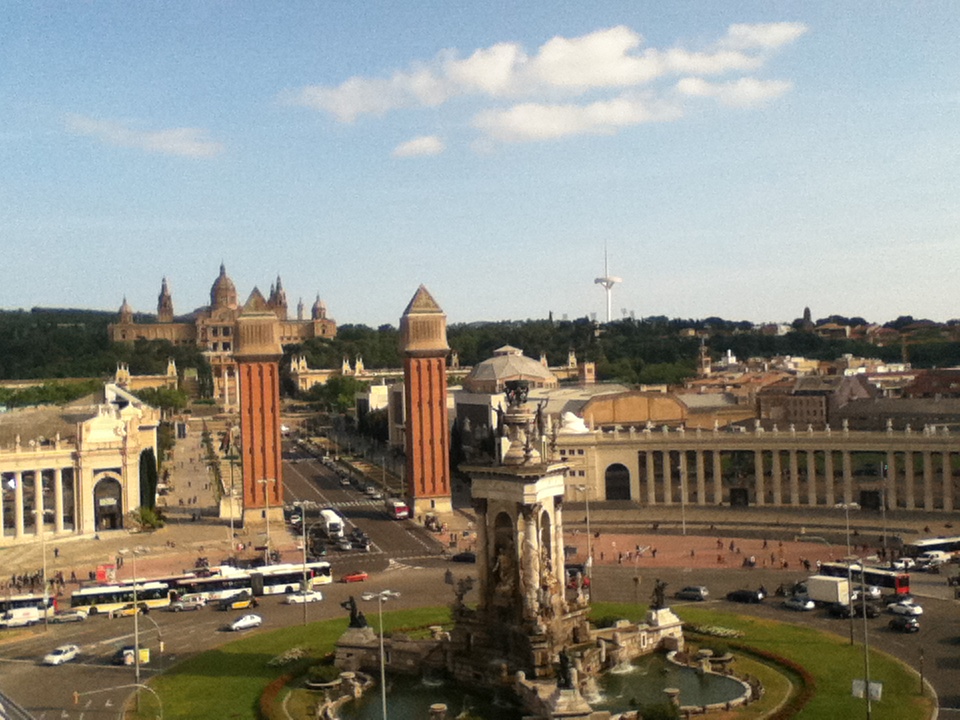
While in Barcelona two weeks ago I had the opportunity to take in some of these public spaces. Below are a few shots I gathered with a couple of additions for perspective, both temporal and spatial. To begin with, here is a shot taken from atop a former bull fighting arena now turned into a stylish shopping center. The shot was taken with my iPod so the quality is a bit lacking, but it shows a good bit of the roundabout that is Plaça d’Espanya along with several of the structures built for the 1929 Exposition. These include the Venetian inspired towers, the St. Peter’s inspired colonnades, and the Spanish Renaissance inspired palace in the background. Also visible is the Montjuïc Communications Tower built for the 1992 Olympics.

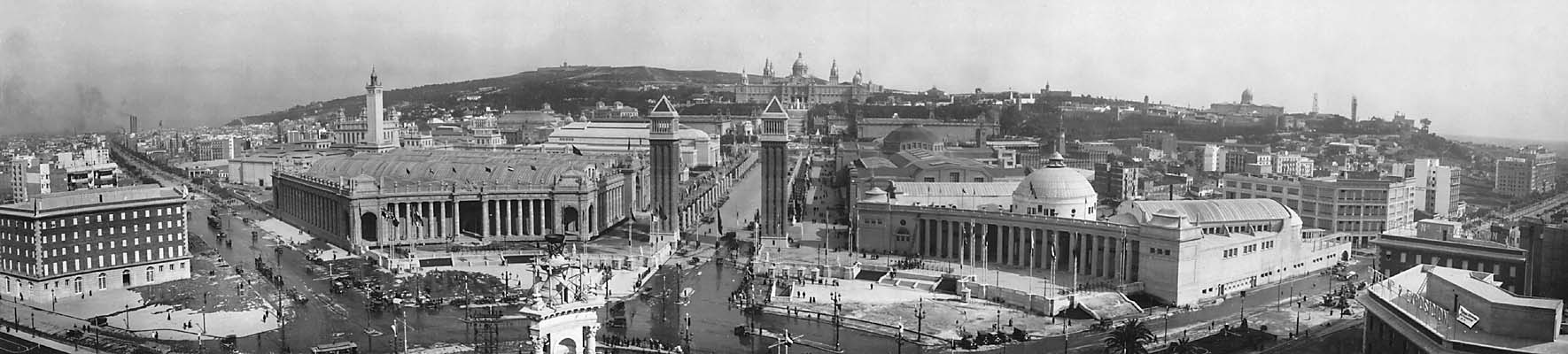
This panoramic black and white, which clearly I did not take, shows the same area and more as it appeared in 1929.

Here is another look at the Venetian towers, this time from Montjuïc toward Plaça d’Espanya. As you can tell, most of these shots were taken on a rather cloudy day which is unfortunate.

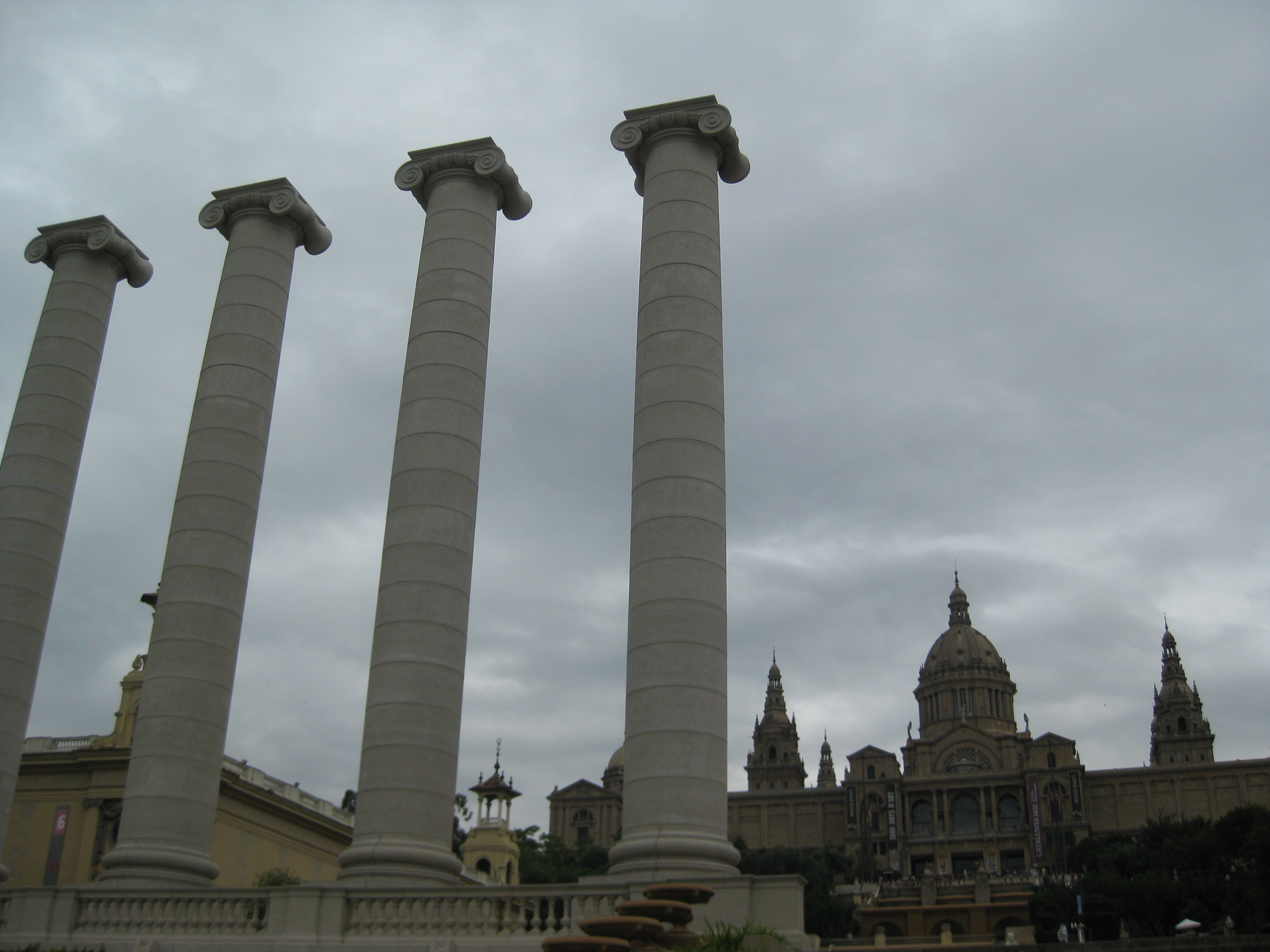
The four columns were intended to represent the four red bars of the Catalonian flag. Because of this the originals were torn down by then Spanish President Primo de Rivera. The columns visible today were reconstructed in 2010.

Below is a shot of what was for the fair the Palau Nacional and which now houses the Museu Nacional d’Art de Catalunya.

Once more looking out from the Museu Nacional toward Plaça d’Espanya. Visible to the right of the towers is the converted bull fighting arena.

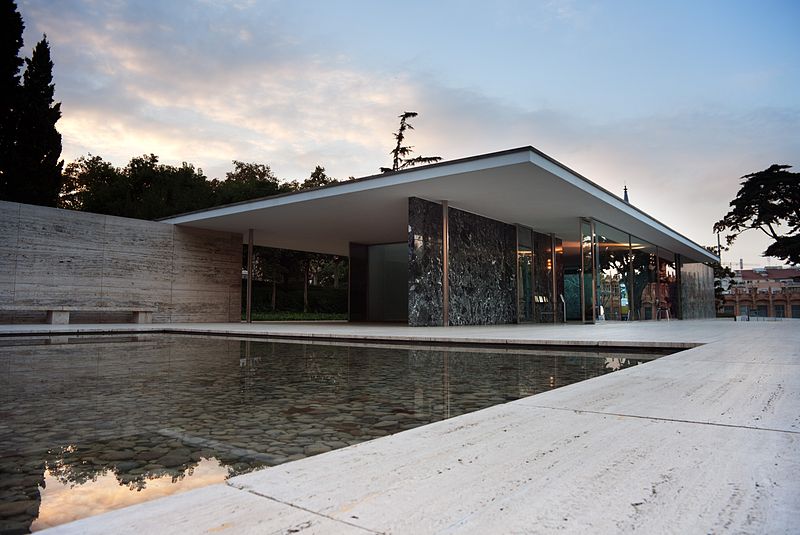
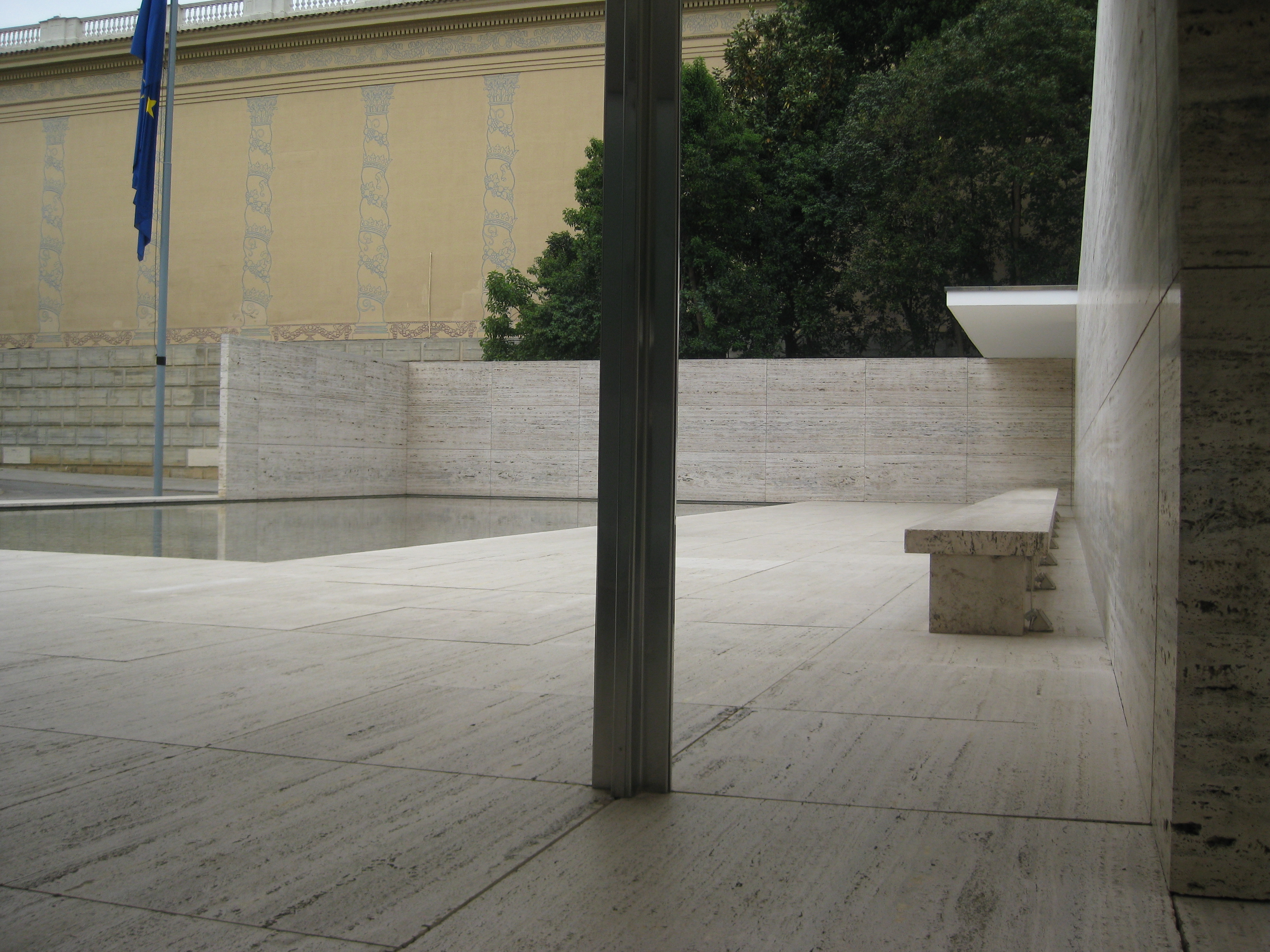
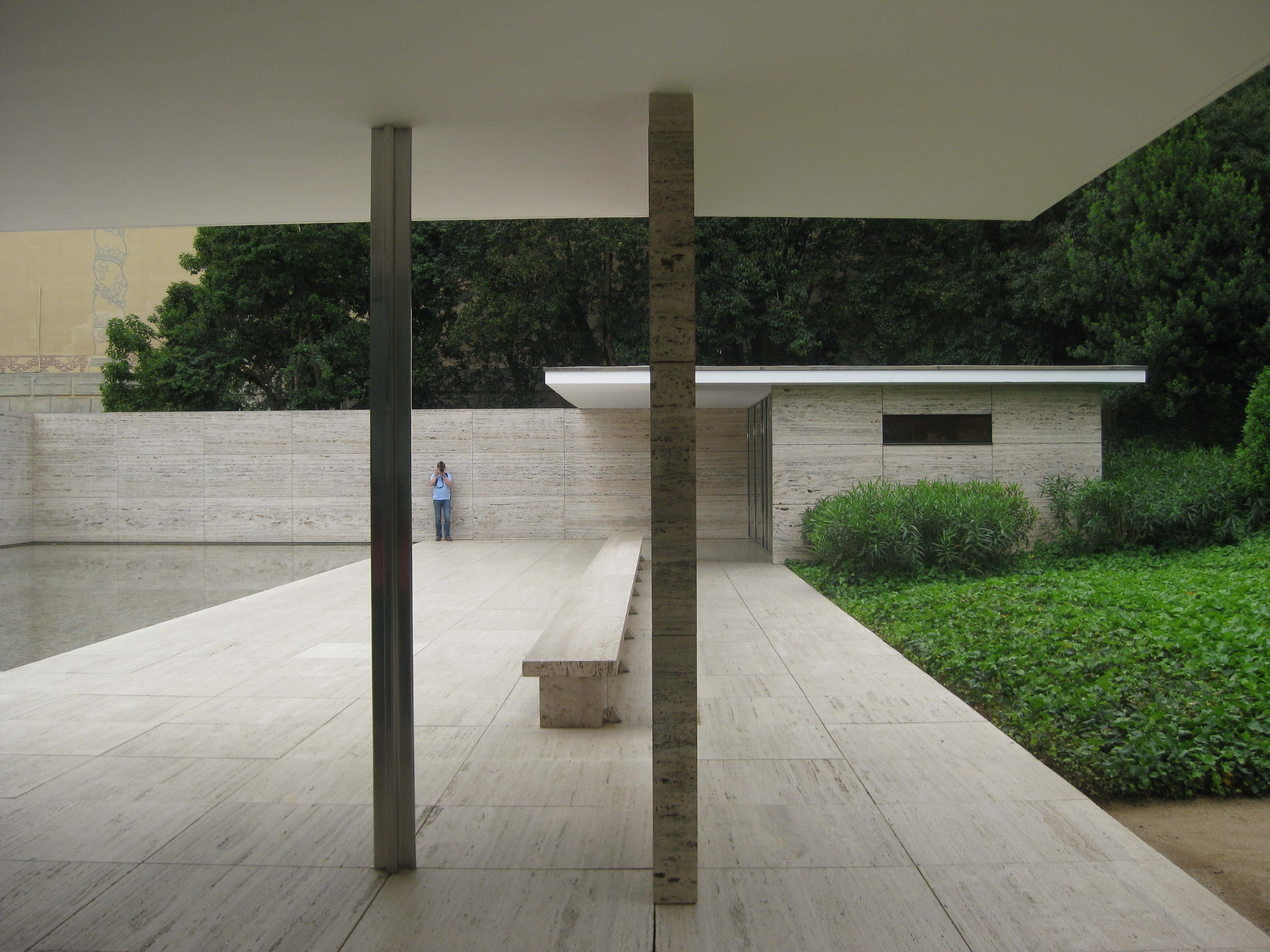
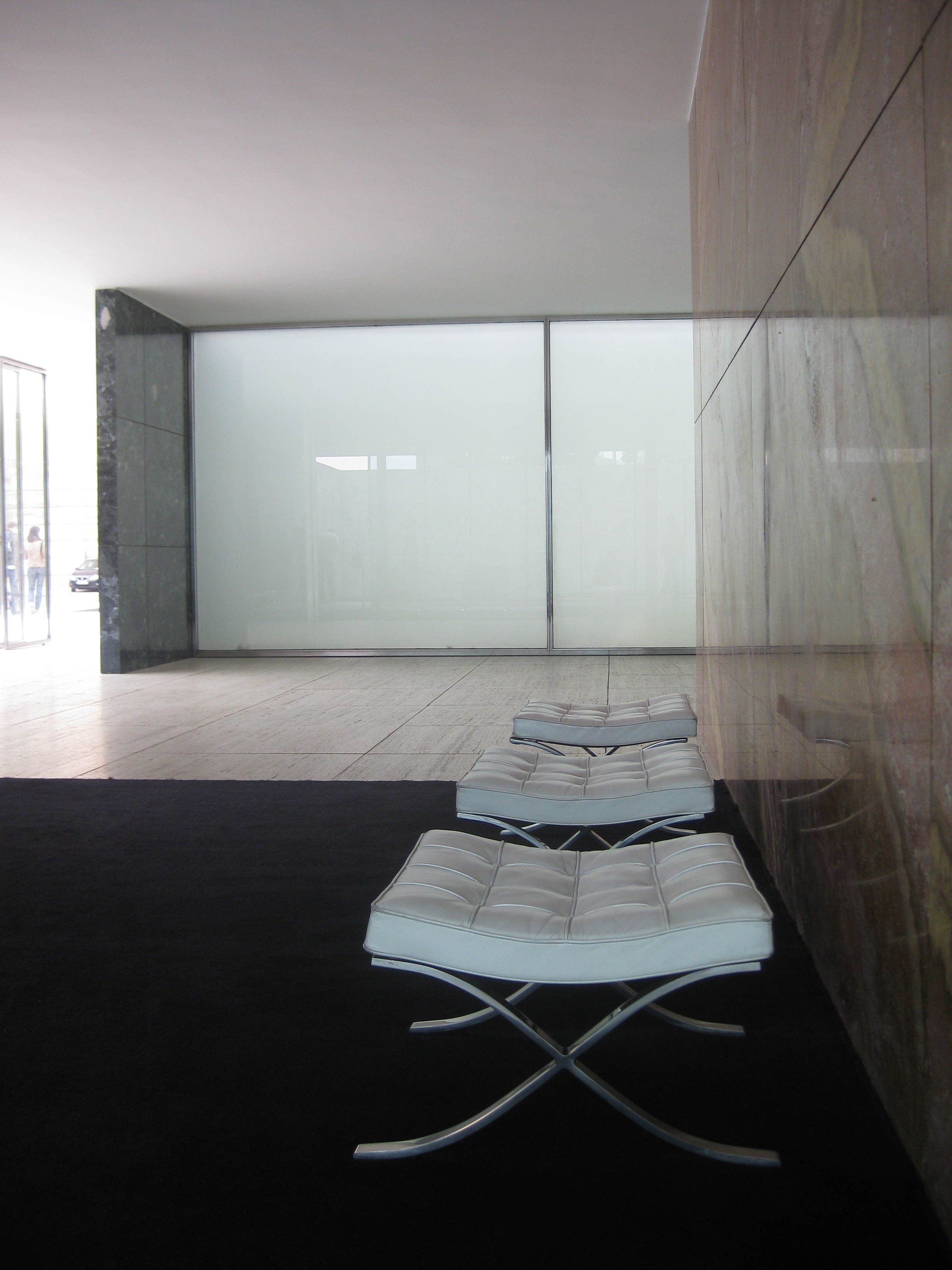
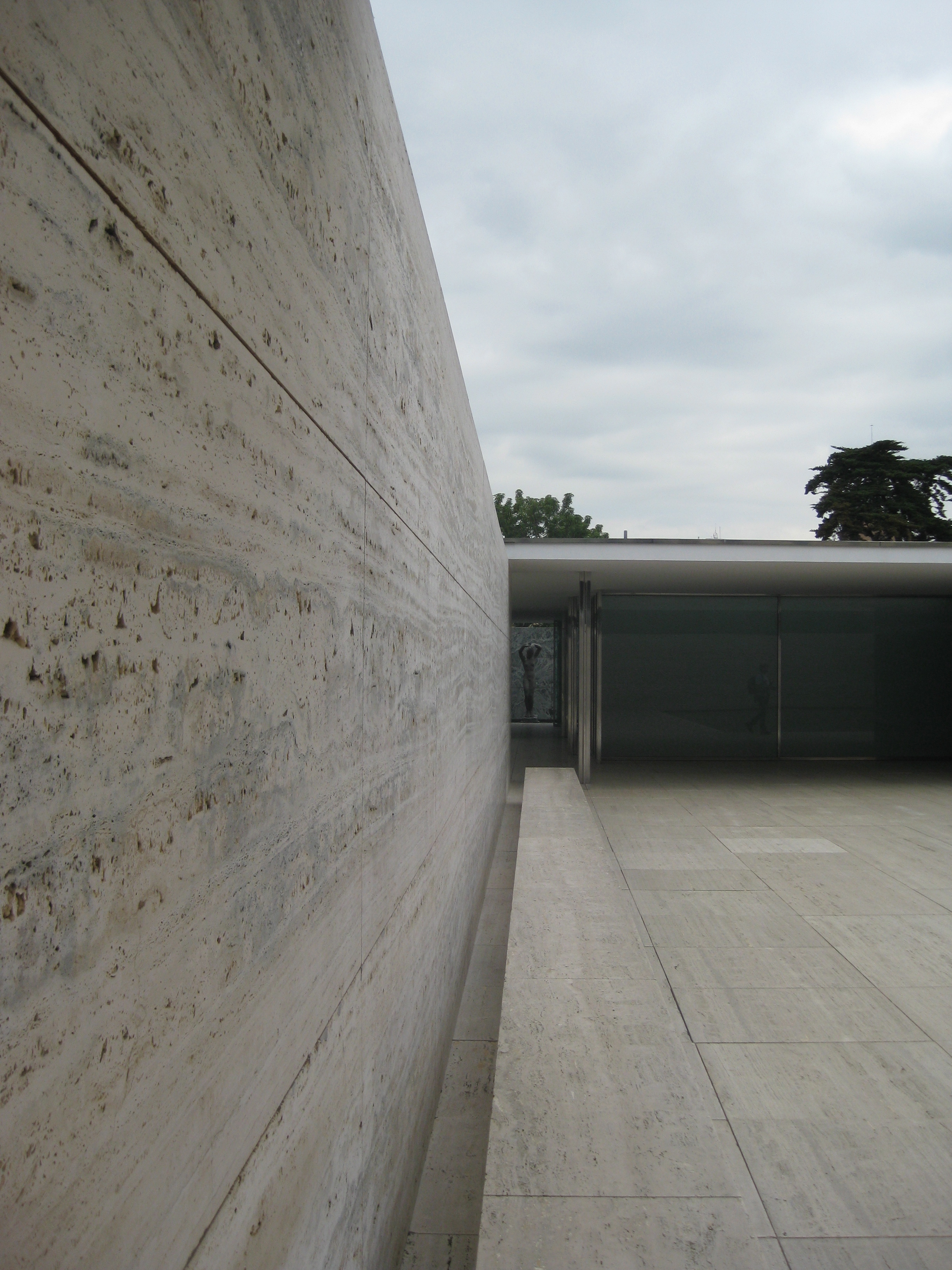
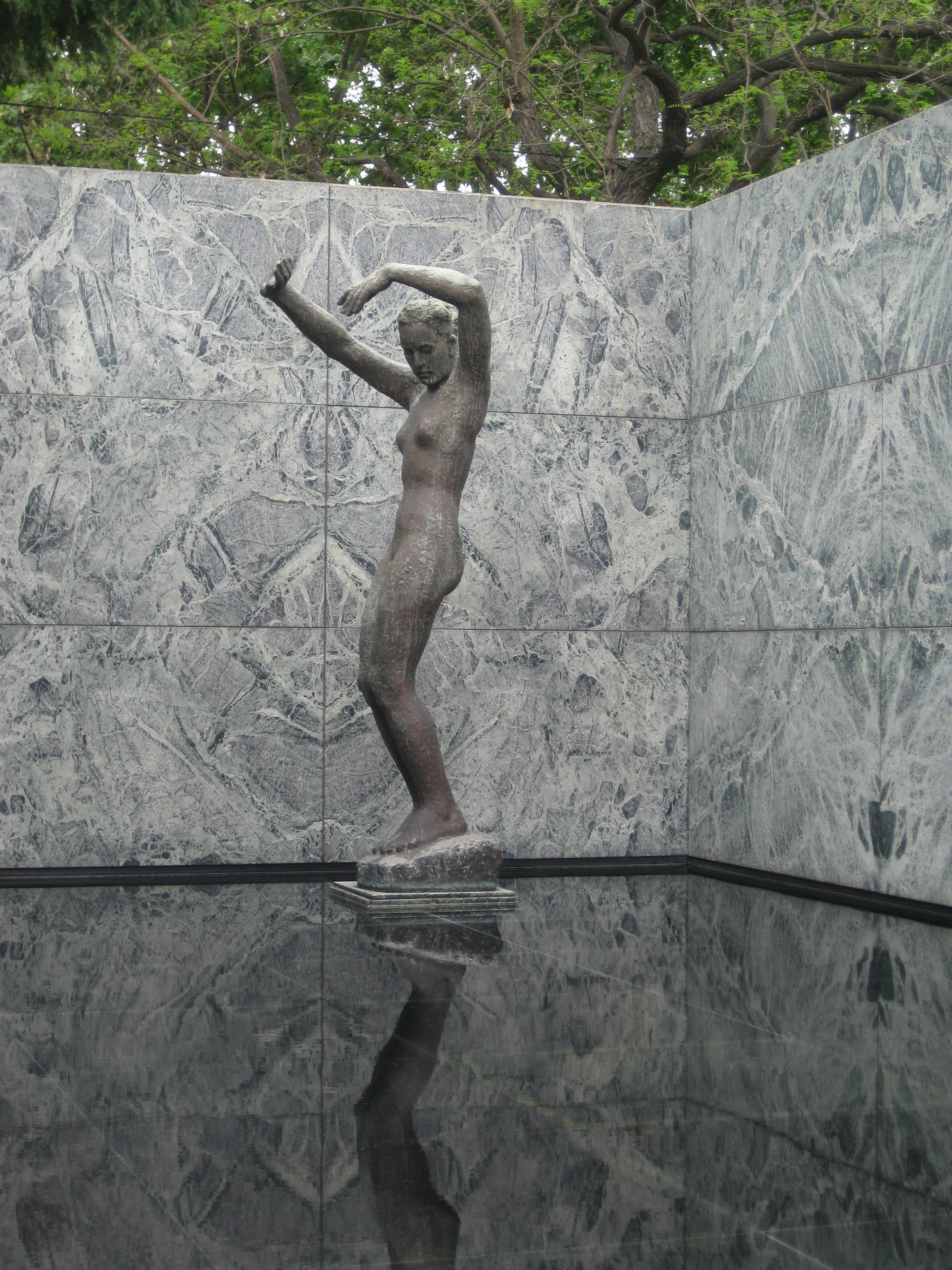
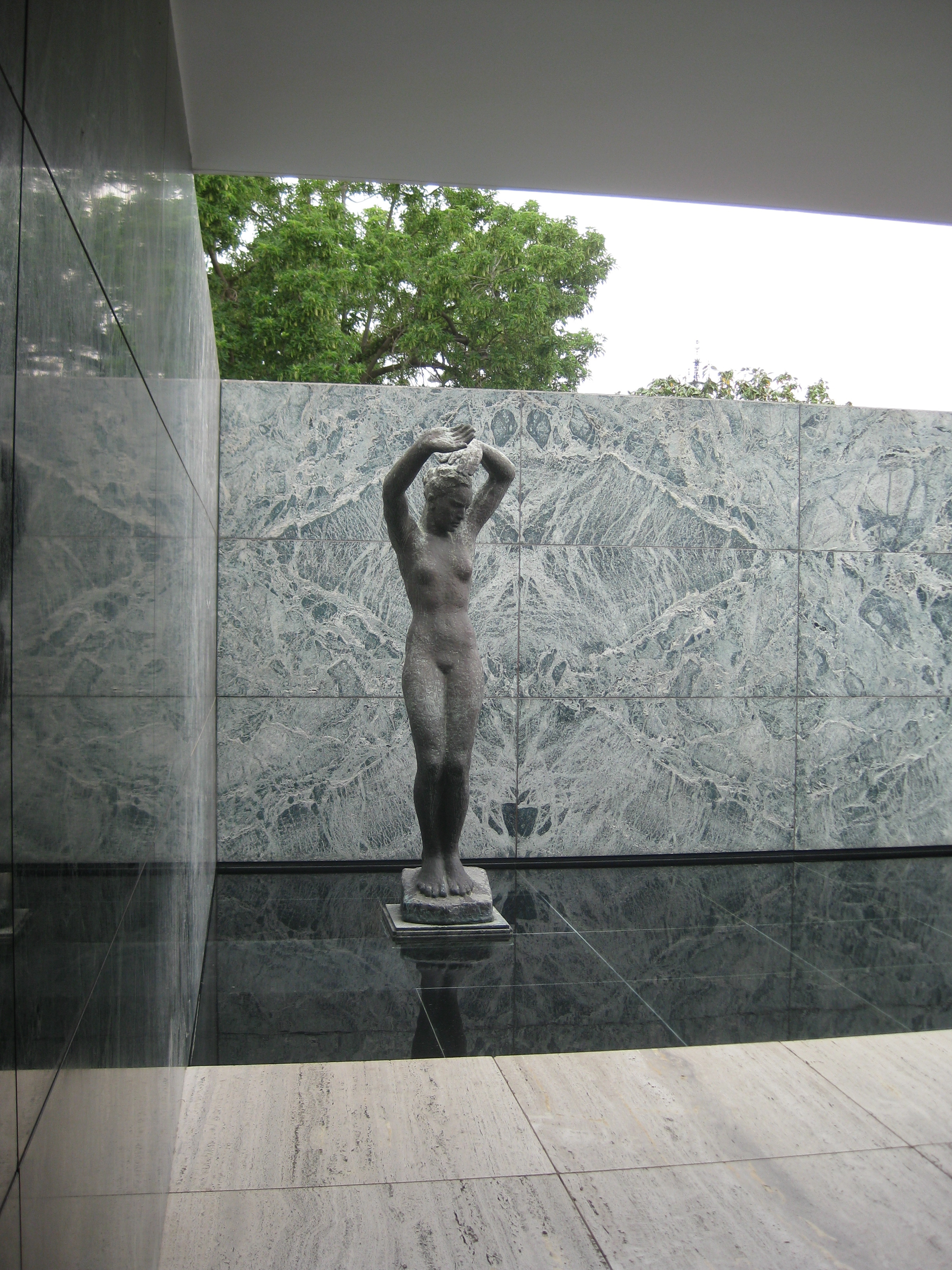
Remarkably, alongside these buildings that hearken back to the architectural past there was also built one of the early twentieth century’s most famous specimens of modernism, Ludwig Mies van der Rohe’s German Pavilion (today often referred to as the Barcelona Pavilion). As Paul Greenhalgh has put it referring to the German pavilion and the surrounding structures, “It is difficult to imagine these buildings being of the same century, and even more difficult to imagine them as part of the same event.”

Greenhalgh describes the juxtaposition as the “most dramatic example of contrast and competition between history and modernity at an exposition.” The Mies pavilion, he adds, “stunning in its opulent austerity, is an extraordinary essay on the potential of urban, domestic space to function as pure art.”

This first shot below is not my own, but taken from Wikipedia. It gives you a good look at the whole without any visitors present. Below are series of my own shots from inside the house. The original was torn down shortly after the fair in 1930. However, Spanish architects reconstructed the structure based on original plans and existing photographs between 1983 and 1986.

The pavilion also housed the sculpture below (seen from a distance above), Georg Kolbe’s Alba or Dawn. 

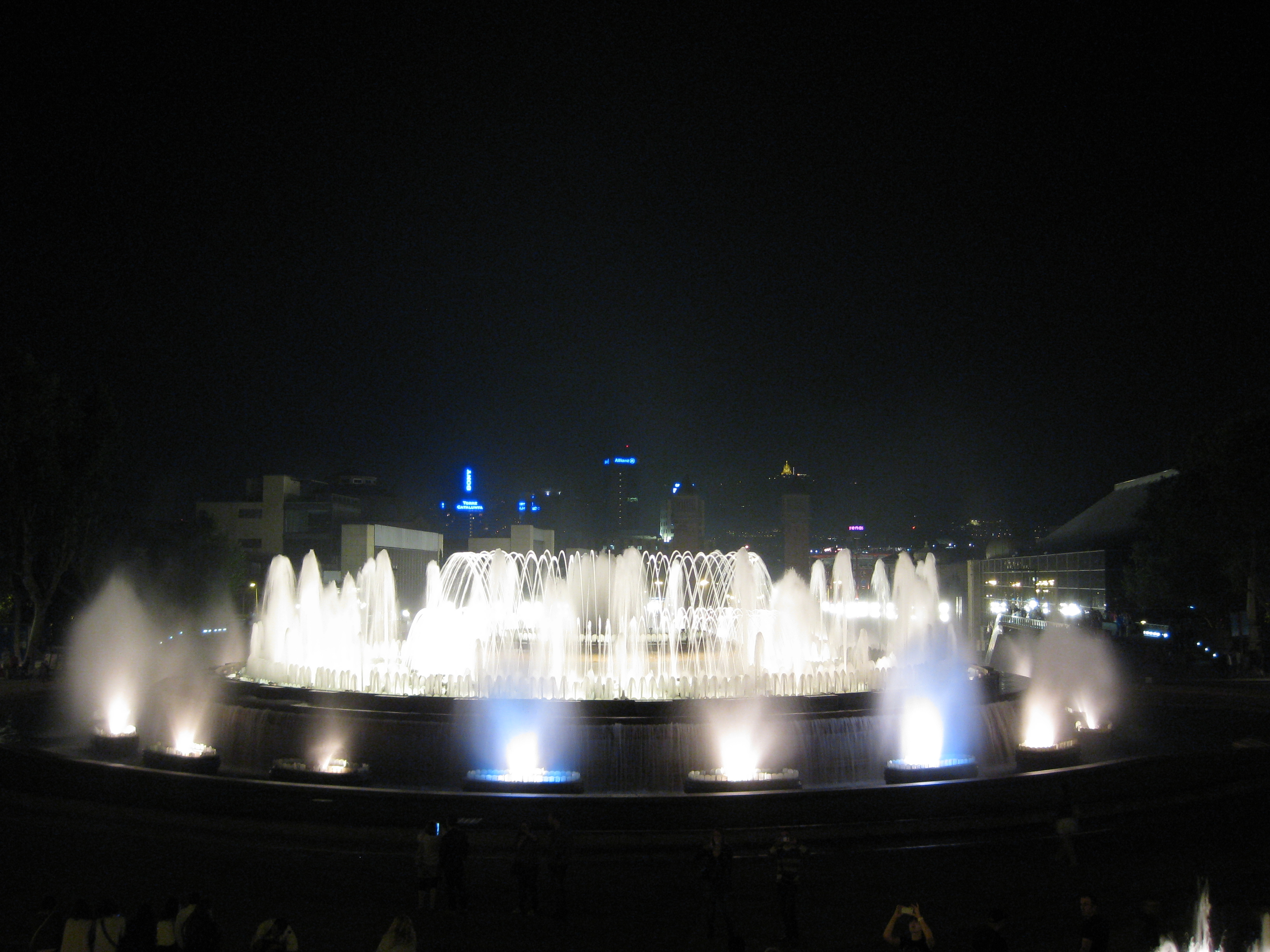
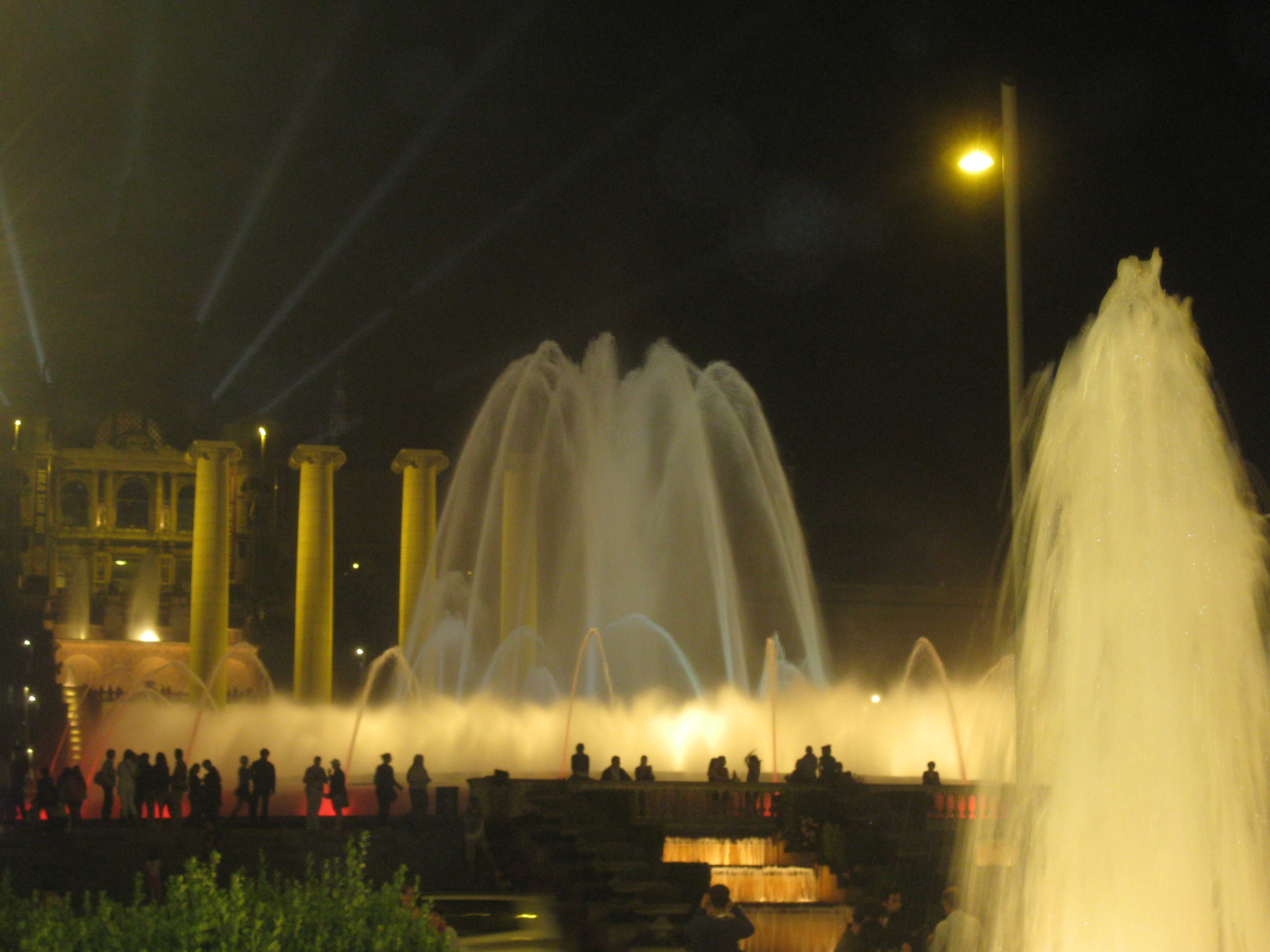
Finally, the fountains that line the avenue leading from Museu Nacional to Plaça d’Espanya including the massive fountain directly in front of the Museu Nacional, the Font màgica de Montjuïc, continue to put on a dazzling night time display as they were designed to do in 1929.

Temps de Flor in Girona

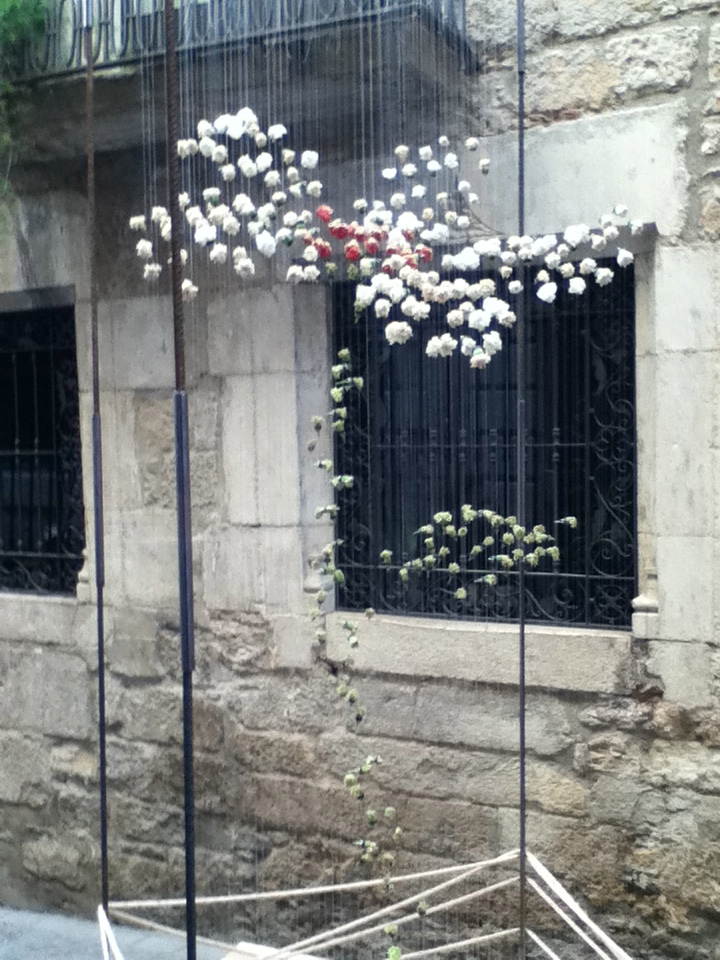
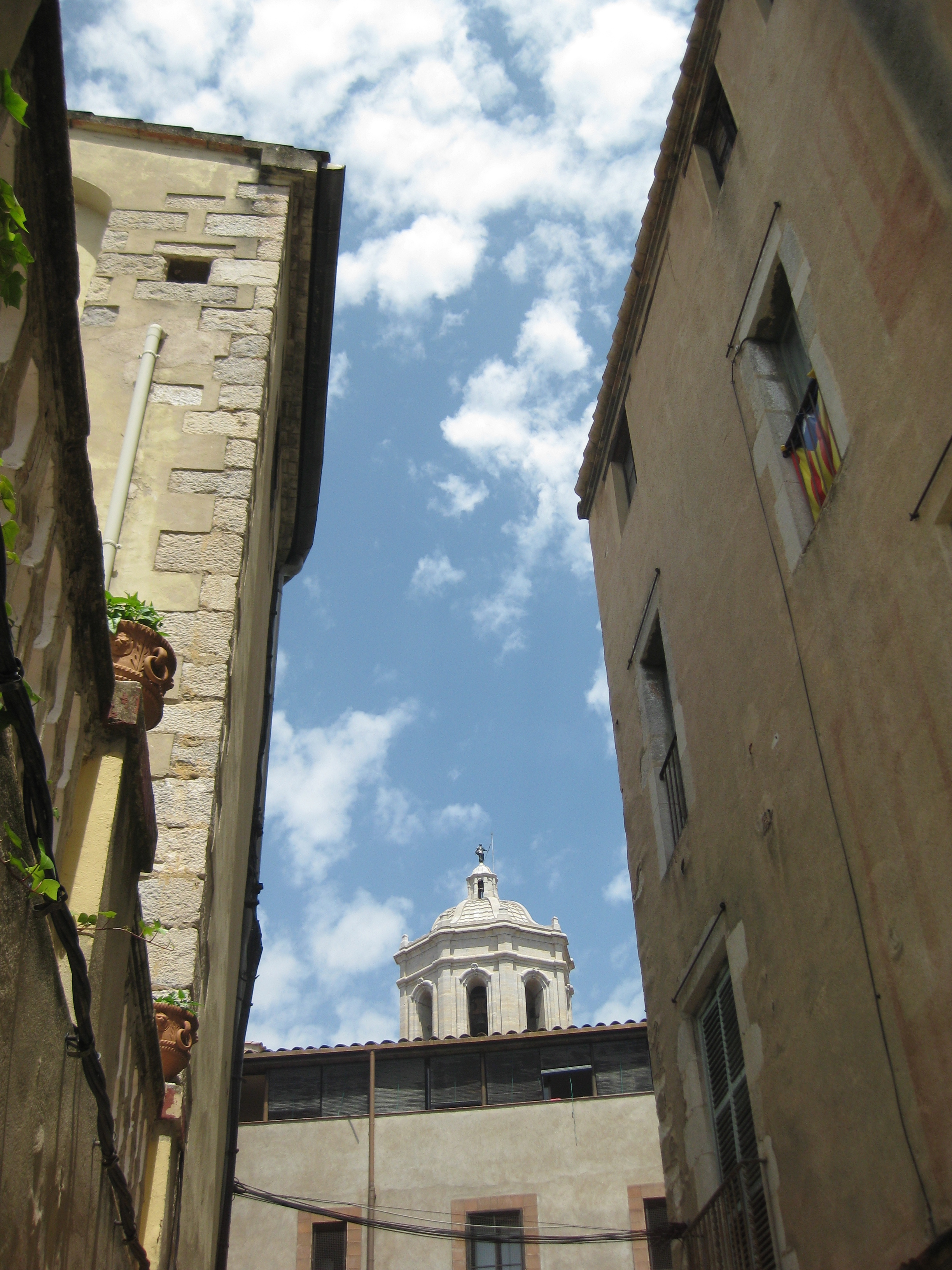
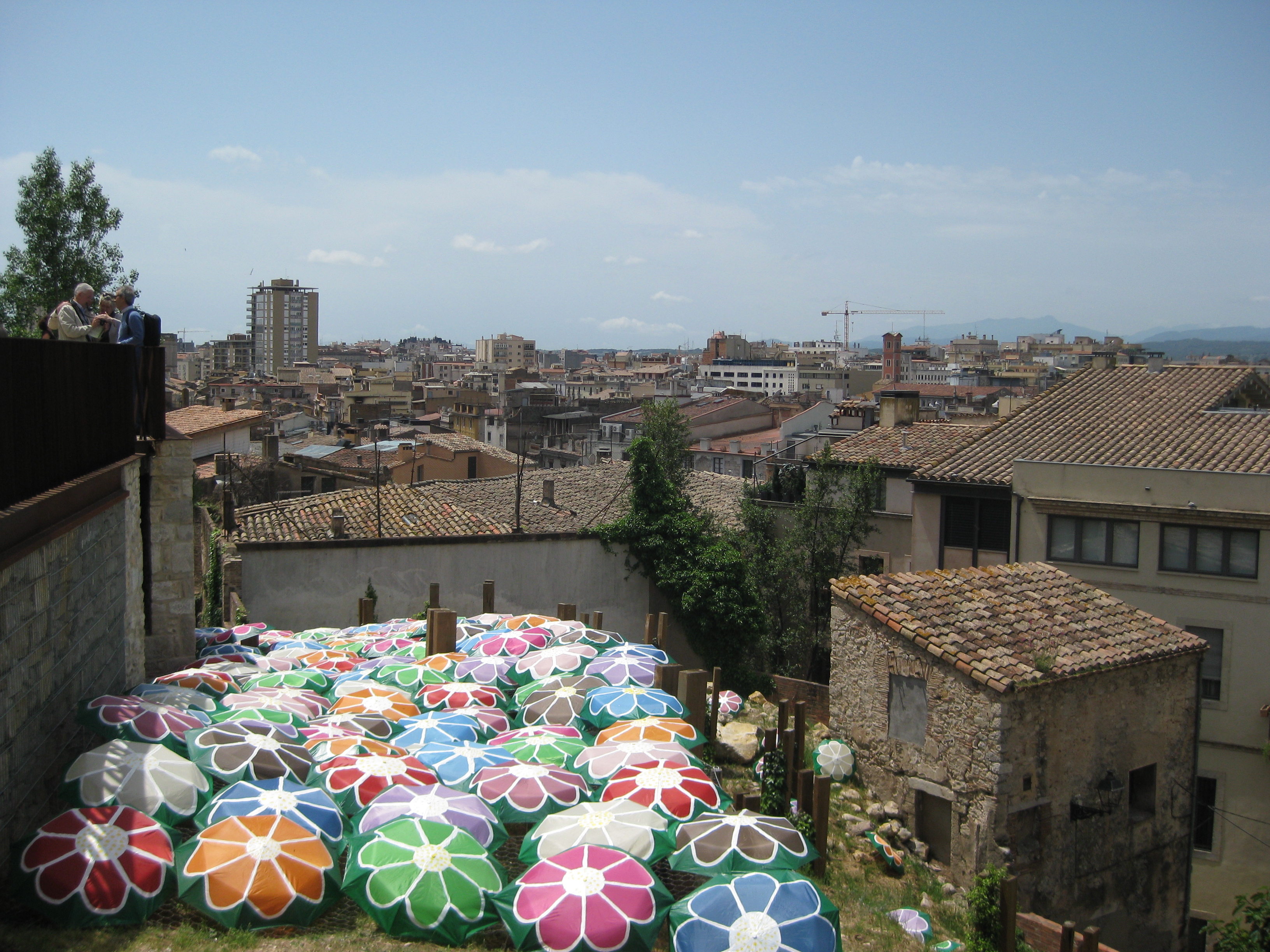
I’m not a photographer and this is not a travel blog. That said, I trust you will indulge me as I put up a post or two over the next few days with photographs from the past couple of weeks. For part of that time I was in Barcelona, a vibrant city with a rich historical and cultural heritage. A little later on this week I’ll likely post about the world’s fairs held there in 1888 and 1929. But for now I’ll share some photographs taken just a short train trip to the north in the city of Girona. Serendipitously, I came to the city during the annual Temps de Flors, a flower festival held each May.

Even without the flowers, Girona is a delightful city; the flowers simply add gorgeous dashes of color to the remarkably photogenic scenery. Of course, photographs don’t quite measure up to the experience, particularly when they are taken by an amateur with a rather pedestrian camera, but here a few of the better or more interesting ones.

N.B. The bridge in the first photo was designed by Gustave Eiffel whose more famous work resides in Paris and no political statement is necessarily intended by the last photo.

Cheers!