 What is theory? It is, at least in part, an effort to make explicit what is implicit and to expose what is assumed but unspoken. To paraphrase Niklas Luhmann, theory seeks to perceive the reality which one does not perceive when one perceives it. If so, then Katherine Hayles is offering us a theory of electronic literature that renders electronic literature an embodiment of theory. Not, however, in the sense early theorists of hypertext imagined, but in a way that is more consonant with the anti-speculative perspective advocated by Jerome McGann in Radiant Textuality: Literature after the World Wide Web
 .
.
Early hypertext theorists such as George Landow enthusiastically read electronic literature as an embodiment of poststructuralist theory. It appeared that electronic literature manifested on the surface everything Roland Barthes painstakingly sought to reveal about traditional literature and the author. This reading of electronic literature, however, appears now to have been stillborn because of its identification of the hyperlink as electronic literature’s “distinguishing characteristic,” a move which Hayles shows was beset by serious problems. (Electronic Literature: New Horizons for the Literary , 31) Likewise, McGann seems intent on moving past this mode of theorizing. As I read him, it is not so much theory itself which McGann repudiates, but a certain way of constructing and applying theory. As I’ve noted in response to radiant textuality, theory for Mcgann is best aligned with the kinds of knowledge that arise from performance/deformance because Mcgann envisions theory as poiesis rather than gnosis. The kind of embodied knowledge or theory that arises from acts of making or performance “makes possible the imagination of what you don’t know” because it elicits knowledge from failure and also from serendipity. (radiant textuality, 83)
McGann’s notion of imagining what you don’t know recalls Hayles’ clever appropriation of Rumsfeld’s Zen-like categorizations of knowledge. As she puts it, “I propose that (some of) the purposes of literature are to reveal what we know but don’t know that we know, and to transform what we know we know into what we don’t yet know.” Further resonating with McGann, she sees literature achieving this knowledge by “activating a recursive feedback loop between knowledge realized in the body through gesture, ritual, performance, posture, and enactment, and knowledge realized in the neocortex as conscious and explicit articulations” in much the same way that McGann sees theory arising through “the kinds of knowledge involved in performative operations.” (Electronic Literature, 132; RT, 106) In one sense I would argue that as Hayles describes the effects of electronic literature it functions in a way reminiscent of McGann’s practices of deformance.
For both Hayles and McGann, theory is bound up with the body, with the material, and with action. For McGann, deformance is a practice which leads the reader to tap through performance the kind of embodied knowledge that helps them reckon with the materiality of the text. For Hayles, electronic literature already requires or is intended to force the kinds of interactions that deformance is attempting to artificially elicit in the context of print. Put otherwise, the productive disruptions code introduces into narrative awaken us, according to Hayles, to the reality of the human life-world’s integration with intelligent machines in much same way that the disruptions of deformance awaken us to the material realities of the text according to McGann.
Electronic literature as Hayles’ theorizes it draws into the open features of human existence that previously lay below the level of awareness. At its best then electronic literature, like good theory, reveals what is not always perceived, but always present. And this, according to Hayles, it accomplishes by “creating recursive feedback loops between explicit articulation, conscious thought, and embodied sensorimotor knowledge.” (Electronic Literature, 135) Or, as McGann might put it, through poiesis and not merely gnosis.
 I Drink, Therefore I Am: A Philosopher’s Guide to Wine. That is the title of a recent volume by Roger Scruton reviewed by John von Heyking at VoegelinView. Here’s a sample, or tasting, from the review:
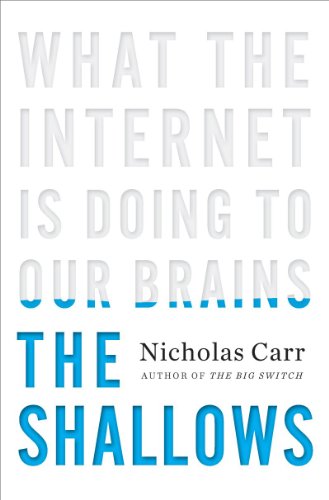
 . Barely off the presses, it has already been making the rounds through media outlets and blogs.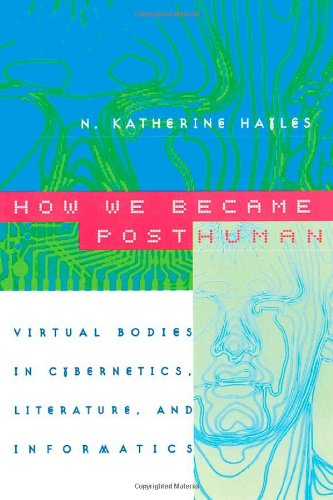
 as an intervention. “I view the present moment,” she explains in the first chapter, “as a critical juncture when interventions might be made to keep disembodiment from being rewritten, once again, into prevailing concepts of subjectivity.” (5) Later on at the close of chapter two she writes, “I believe that our best hope to intervene constructively in this development is to put an interpretative spin on it – one that opens up the possibilities of seeing pattern and presence as complementary rather than antagonistic.” (48-49) Writing in the late 1990’s, she clearly believes the shape and form of posthumanism to be as of yet undetermined. No doubt she would acknowledge a multiplicity of possible and complex paths along which posthumanism might evolve, but she tends to speak in binaries. Dream or nightmare, terror or pleasure – these are the options. (4, 5, 47, 284-285)
 L.M. Sacasas