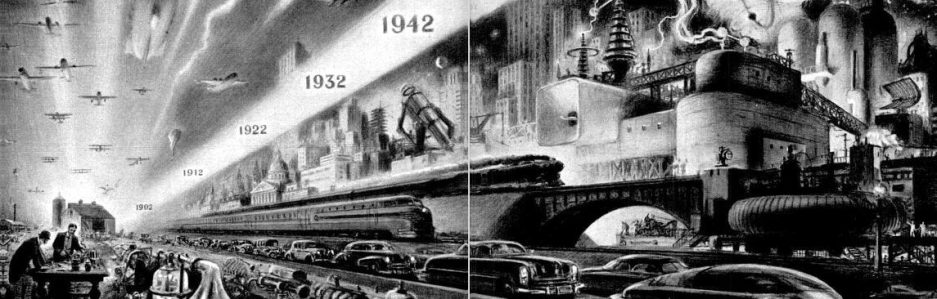
The idea of a “frictionless” life has been on mind since March when I read (and posted) Chetan Sharma’s vision of a pervasively wired and connected world. Speaking of the benefits he sees accruing to the realization of his vision, Sharma explains,
This is where it needs to go and will go in 10 years, making everyday experiences much better and friction free. If a person has a desire to learn or shop or engage in social interaction, it’s right there. Beyond just doing things on televisions and cell phones, you’ll be able to do these things on a wall anywhere. It’s about reducing friction. You can accomplish any given task today with 50 different steps but this future of connected devices is all about making things much easier.
Regardless of what we might think about the desirability of such a world, it did appear to me that Sharma had given us a compelling metaphor for the world we desire: friction free. After all, who would oppose “making things much easier.” The question, however, may be whether “making things much easier” necessarily makes “everyday experience much better.” As the metaphor flitted in and out of thought over the last few weeks, it eventually occurred to me that the metaphor invited a certain extension that may begin to answer that question: A frictionless life is also a life without traction.
 At the expense of letting metaphors run wild, I want to pursue this formulation and suggest that not all forms of friction are undesirable. Certain forms of friction are absolutely essential to acting and maneuvering in the world. A frictionless world would also be one in which we would feel ourselves unanchored and afloat, perpetually propelled by forces we have no power to resist. That seems already to describe the feel of everyday life for many. This can be exhilarating for a time, but I suspect that eventually we desire a greater degree of stability and agency — traction.
Removing all resistance removes all traction; and if everything is easy, in the end nothing may be satisfying or meaningful. This reminded me of philosopher of technology Albert Borgmann’s suggestion that we must make a distinction between “trouble we reject in principle and accept in practice and trouble we accept in practice and in principle.” When you begin talking about accepting trouble it becomes important to make clear distinctions. In the former category of trouble we accept in practice but reject in principle, Borgmann has in mind troubles on the order of car accidents and cancer. By “accepting them in practice,” Borgmann only means that at the personal level we must in our own way discover a means of coping with such tragedies. But these are troubles that we oppose in principle and so we seek cures for cancer and improved highway safety.
Against these, Borgmann opposes troubles that we also accept in practice, but ought to accept on principle as well. Here the examples are preparing a meal (including growing the ingredients) and hiking a mountain. These sorts of troubles, not without their real dangers, could be opposed in principle — never prepare meals at home, never hike — but such avoidance would also prevent us from experiencing their attendant joys and satisfactions. If we seek to remove all trouble or resistance from our lives; if we always opt for convenience, efficiency, and ease; if, in other words, we aim indiscriminately at the frictionless life; then we will simultaneously rob ourselves of the real satisfactions and pleasures that enhance and enrich our lives.
Traction implies resistance and sometimes trouble, but it also presents us with the opportunity to navigate meaningfully. A frictionless life may promise ease and a certain security, but it also leaves us adrift, chasing one superficial pleasure after another; never satisfied, because we never experience the struggle against resistance that is essential to a sense of accomplishment. The trajectory of our desire toward a frictionless life, then, may paradoxically leave us unable to find meaningful satisfaction or a sense of fulfillment. Trading some friction for traction, however, may, in fact, make “everyday experience much better.”
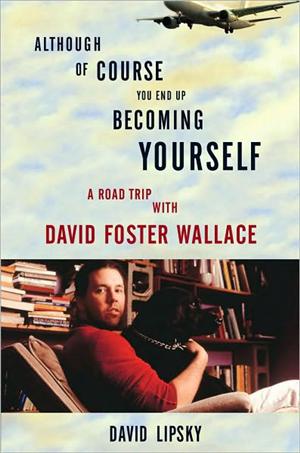
 , a book that amounts to a running transcript of David Lipsky’s five days with Wallace back in the mid-1990s during a book tour for Wallace’s then recently released
  . I’ve not read anything by Wallace leading up to this, but I had been drawn to his personality by the numerous mentions of Wallace I’d come across over the last year or so. I’ve not been disappointed. It has been an odd thing to feel a deep sadness for the



 L.M. Sacasas