Alfred Barr’s famous chart of art history:

History of game controllers courtesy of Pop Chart Labs via How To Be A Retronaut.


Alfred Barr’s famous chart of art history:
History of game controllers courtesy of Pop Chart Labs via How To Be A Retronaut.
A little bit of politics, religion, parenting, plagiarism … you know, all the stuff you’re not supposed to talk about at the dinner table. Plus one surprise for you at the end. Hope you have a lovely weekend.
“Pew’s Must See Picture of US Politics” by Rod Dreher at The American Conservative: Dreher provides an overview of the recently released Pew Center Political Typology Report, its first since 2005. Some interesting, counter-intuitive findings. Follow his link to the Pew page and you can take the survey to find out where you are in the Pew Typology.
“Varieties of irreligious experience” by Jonathan Rée in New Humanist: “The dividing lines between religiosity and secularism, or between belief and disenchantment, are not getting any clearer as time goes by, and if there has been a lot of traffic travelling from the camp of religion to the camp of disbelief in the past couple of centuries, it has followed many different paths, and is bound for many different destinations.” Well written piece in a Jamesian key on the subtleties of dis-belief in traditional religion.
“The Evolution of Data Products” by Mike Loukides at O’Reilly Radar: Helpful piece on the evolution and future trajectory of data and data products. “Data products are striving for the same goal: consumers don’t want to, or need to, be aware that they are using data. When we achieve that, when data products have the richness of data without calling attention to themselves as data, we’ll be ready for the next revolution.”
“What if the Secret to Success is Failure” by Paul Tough at the NY Times Magazine: Longish piece on efforts to instill character education in schools. “This push on tests is missing out on some serious parts of what it means to be a successful human.” “Our kids don’t put up with a lot of suffering. They don’t have a threshold for it. They’re protected against it quite a bit. And when they do get uncomfortable, we hear from their parents.”
“Uncreative Writing” by Kenneth Goldsmith at the The Chronicle of Higher Ed: Be warned, this piece may make you angry. Author argues the virtues of plagiarism claiming that writing must adjust to the conditions brought about by the computer, although there is a trajectory leading to this moment that pre-dates the computer. Some interesting points — it’s not a “crazy” piece — but my response is mixed.
And, last but not least, an impressive and surprising rendition of the national anthem from someone you wouldn’t have guessed could pull it off: watch it here.
Part Two of Three. Part One.
Ulmer’s project — fashioning a heuristic apparatus that brings the social unconscious partly into view — focuses on the semiotic elements of the socially situated self. Yet, this is only one of the unconscious, or pre-cognitive, dimensions of identity and action. In How We Became Posthuman, Katherine Hayles drew attention to the relationship among embodiment, cognition, and subjectivity. The group subject emerges, according to Hayles, not only out of the realm of image, symbol, and language, but also out of the matrix of embodied practice.
Ulmer’s unconscious may be labeled the semiotic (or iconic) unconscious. Adapting Lacan’s psychic schema, Ulmer proposes to map the group subject by recognizing the pattern of recurring signifiers within the four discourses of what Ulmer calls the popcycle (Family, Entertainment, School, Career). The recurring signifier, analogous to the Lacanian symptom, takes on the role of Guattari’s “existential refrain”: “An implication for electrate identity,” according to Ulmer, “is that a unique refrain, a singularity, may be the clasp that holds together a collectivity (that the nation, so to speak, ‘hangs by a thread’).” The emerging apparatus of electracy allows the group subject to be written, and thus to emerge, at least partially, from its blind spot.
Hayles supplements the semiotic unconscious with what may be called the embodied unconscious. The embodied unconscious consists of “bodily practices” which have sedimented
into habitual actions and movements, sinking below conscious awareness. At this level they achieve an inertia that can prove surprisingly resistant to conscious intentions to modify or change them. By their nature, habits do not occupy conscious thought; they are done more or less automatically, as if the knowledge of how to perform the actions resided in ones’ fingers or physical mobility rather than in one’s mind.

In articulating the significance of the embodied unconscious, Hayles draws heavily on the work of French sociologist Pierre Bourdieu. Bourdieu arrived at his conceptions of practice and embodied knowledge through his study of a group of Berber tribes known as the Kabyle living in North Africa. Bourdieu observed that the seasonal rituals of the Kabyle conveyed considerable “understanding” about the world, but did so by communicating not “abstractions,” but “patterns of daily life learned by practicing actions until they become habitual.” Habitus, as Bourdieu put it, preserves “a past which survives in the present and tends to perpetuate itself into the future by making itself present in practices structured according to its principles,” and it does so by embedding this knowledge or remembering in the body.
In summarizing Bourdieu’s findings, Hayles concludes that his
work illustrates how embodied knowledge can be structurally elaborate, conceptually coherent, and durably installed without ever having to be cognitively recognized as such . . . The habitus, which is learned, perpetuated, and changed through embodied practices, should not be thought of as a collection of rules but as a series of dispositions and inclinations that are both subject to circumstances and durable enough to pass down through generations. The habitus is conveyed through the orientation and movement of the body as it traverses cultural spaces and experiences temporal rhythms.
This durable knowledge carried in the body and yielding dispositions and inclinations is transmitted through the ritualized practices of a society. Ulmer tends to associate embodied knowledge and its modes of acquisition with oral cultures and religious liturgies, consequently this form of subject formation is unfortunately marginalized in his analysis of literate and post-literate societies. By contrast, Hayles forefronts this form of knowledge and argues for its ongoing significance. She concludes her discussion of Bourdieu by identifying four key elements of embodied knowledge that emerged from his research:
First, incorporated [or, embodied] knowledge retains improvisational elements that make it contextual rather than abstract, that keep it tied to the circumstances of its instantiation. Second, it is deeply sedimented into the body and is highly resistant to change. Third, incorporated knowledge is partly screened from conscious view because it is habitual. Fourth, because it is contextual, resistant to change, and obscure to the cogitating mind, it has the power to define the boundaries within which conscious thought takes place.
The fourth point is particularly significant in relation to ATH or blindness and Arendt’s call to think what we are doing. Hayles explicitly links the obscurity of embodied knowledge with the contours within which conscious thought flows.
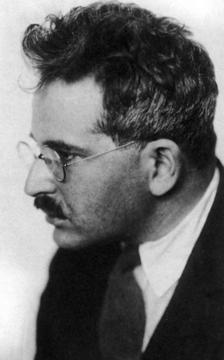
Connecting embodied knowledge with blindness is not intended to disparage embodied knowledge. In fact, without offloading certain procedures, interactions, and functions to the embodied unconscious, it would be difficult to function at all. But the benefits of embodied knowledge come at a price. Here it is helpful to recall Ulmer’s discussion of Walter Benjamin’s notion of the “optical unconscious”:
The capacity of the camera to separate itself from the human physical and mental eye, combined with the theories of psychoanalysis, produced the notion of the ‘optical unconscious’ (Benjamin). The attitude toward truth as standpoint in the image apparatus of electracy is that clarity is an effect of repression, blindness (ATH).
“Clarity is an effect of repression” is a dictum that applies not only to the optical unconscious, but also to the embodied unconscious. The benefits of the embodied unconscious come at the cost of installing habitual repression into our experience of the world. Habituated forms of attention are simultaneously habituated forms of inattention. Interestingly, the connection between repression and habituation appears in Rosalind Krauss’ analysis cited by Ulmer in his discussion of the optical unconscious:
As Rosalind Krauss explained, applying the poststructural psychoanalysis of Jacques Lacan, the ‘extimate’ inside-outside nature of the human subject installs an opaque obstacle “within the very heart of a diagrammatic clarity that is now a model both of vision’s claims and of vision’s failure . . . . The graph of an automatist visuality would show how the vaunted cognitive transparency of the ‘visual as such’ is not an act of consciousness but the effect of what is repressed: the effect, that is, of seriality, repetition, the automation.”
Just as we often see through habituated acts of not seeing, we also often act through habituated acts of not thinking.
Part One of Three (projected).
Writing near the midpoint of the last century, Hannah Arendt worried that we were losing the ability “to think and speak about the things which nevertheless we are able to do.” The advances of science were such that representing what we knew about the world could be done only in the language of mathematics, and efforts to represent this knowledge in a publicly meaningful and accessible manner would become increasingly difficult, if not altogether impossible. Under such circumstances speech and thought would part company and political life, premised as it is on the possibility of meaningful speech, would be undone. Consequently, “it would be as though our brain, which constitutes the physical, material condition of our thoughts, were unable to follow what we do, so that from now on we would indeed need artificial machines to do our thinking and speaking.”
Arendt was nearly prescient. She clearly believed this to be a dystopian scenario that would result in the enslavement of humanity, not so much to our machines, but to one narrow constituent element of our humanity – our “know-how,” that is our ability to make tools. What Arendt did not imagine was the possibility that digitally, and thus artificially, augmented human thought might avert the very enslavement she foresaw.
On the eve of the 21st century, similar concerns were articulated by Paul Virilio who believed that our technologies, particularly the Internet, created a situation in which a total and integral accident was possible – an accident unlike anything we have heretofore experienced and one that we could not, as of yet, imagine. Virilio termed this possibility the general accident. Like Arendt, Virilio believed that the emerging shape of our technological society threatened the possibility of politics; and if politics failed, Virilio claimed, the general accident would be inevitable. Again, like Arendt, Virilio too seems unable to imagine that the way forward may lay through, not against technology, particularly the Internet.
If the concerns expressed by both Arendt and Virilio continue to resonate, it is because the structure of the challenge they articulated remains intact. The pace of technological development outstrips our ability to think through its attendant social and ethical implications; moreover, the political sphere appears so captivated by the ensuing spectacle that it is ensnared by the very problems we call upon it to solve. We are confronted, then, with a technologically induced failure of thought and politics, along the lines anticipated by Arendt and Virilio.
Gregory Ulmer is likewise concerned about the challenges presented to our thinking and our politics by technology, specifically the Internet; but Ulmer is more sanguine about the possibility of inventing new forms of thought adequate to our circumstances. Electracy, according to Ulmer, will be to the digital age what literacy has been to the age of print: an apparatus of thought and practice directed toward the perennial question: “why do things go wrong?”
Ulmer further elaborates the function of electracy in reference to subjectivity:
If the literate apparatus produced subjectivation in the mode of individual selves organized collectively in democratic nation-states, electracy seems to allow the possibility of a group subjectivation with a self-conscious interface between individual and collective . . .
Ulmer begins Electronic Monuments with a discussion of Paul Virilio’s general accident because, in Ulmer’s view, Virilio has “most forcefully” articulated concerns about “the Internet as the potential source of a general accident.” Unlike Virilio, however, Ulmer believes the best response to the potential of the general accident lies not in opposition to Internet, but through the possibilities created by the Internet.
In The Human Condition, Arendt set for society a very straightforward goal: “What I propose, therefore, is very simple: it is nothing more than to think what we are doing.” While Arendt goes on to help the reader understand “what we are doing,” the matter of thinking what we are doing remains an elusive task.
Ulmer attributes our inability to think what we are doing to the blindness that plagues us, both individually and collectively, and he draws on a combination of Greek tragedy and psychoanalysis to frame and theorize this blindness. Reflecting on Greek tragedy, an “oral-literate hybrid” bridging oral and literate forms of problem recognition, Ulmer explains, “The aspect of tragedy of most interest in our context is (in Greek) ATH (até in lowercase), which means ‘blindness’ or ‘foolishness’ in an individual, and ‘calamity’ or ‘disaster’ in a collectivity.”
The sources of ATH, according to Ulmer, are “those circumstances already in place and into which we are thrown at birth, providing the default moods enforcing in us the institutional construction of identity.” Marshall McLuhan captures a similar point in characteristically pithy fashion when he observes that, “Environments are invisible. Their groundrules, pervasive structure and overall patterns elude easy perception.”
In the concluding chapter of Electronic Monuments, Ulmer further clarifies the concept of ATH with reference to Jacques Lacan’s exposition of Antigone: “Lacan is interested in ATH as showing that exterior that is at the heart of me, the intersubjective nature of human identity.” Ulmer also refers to the intersubjective nature of human identity in describing the Internet as a “prosthesis of the unconscious (intersubjective) mind.” On more than one occasion, Ulmer identifies this metaphor – the Internet as prosthesis of the unconscious – as one of the key assumptions informing his development of the apparatus of electracy.
Taking Ulmer’s discussions of ATH, intersubjectivity, and the unconscious together, the following picture emerges: For Ulmer the unconscious is not necessarily a realm of repressed trauma or libidinal desire, but rather is shorthand for the countless, unarticulated ways in which subjectivity is constructed by the social world it inhabits. From one angle, Ulmer has given Freud, not a semiotic spin as Lacan had done, but a sociological spin. The unconscious names the group subject – the exteriority at the heart of me.
The Internet is a prosthesis of this unconscious in the sense that it is a virtually limitless digital repository of all of the features of the social world that have imprinted themselves on the subject. On Youtube, to take one example, a viewer can locate the toy commercial from their childhood that is still vaguely remembered, and then have links provided for a multitude of other more forgotten commercials, themes songs, and cartoons that, once seen, are remembered, and whose significance can be startling. Like T. S. Eliot’s “unknown, unremembered gate” in “Little Gidding,” the Internet operating as a prosthesis of the unconscious allows the user to “arrive where we started/And know the place for the first time.”
This collective element of group subjectivity, until it is made accessible through the practices of electracy Ulmer develops, functions as a blind spot (ATH). It is a source of judgment and action that remains hidden from conscious thought analogously to the traditional psychoanalytic unconscious. This blindness, therefore, presents a powerful obstacle to Arendt’s plea, that we think what we are doing. Ulmer’s project, then, may be understood as an attempt to employ the Internet in an effort to make conscious thought aware of the way in which it has been constructed by the social.
Social media and online identity, mind control, self-control, and figuring out what an education is for. All of that is on tap this week. Enjoy. Feel free to comment on the links or just to let me know what sort of pieces you’d most like to see in these weekly round-ups. Have a great weekend.
“Rethinking Privacy and Publicity on Social Media,” Part 1 and Part 2, by Nathan Jurgenson at Cyborgology: Engaging posts on the creative dance between what is revealed and simultaneously concealed on social networks. Jurgenson’s dissertation research on self-documentation and social media yields compelling insights and analysis; you can keep up with his work at Cyborgology.
“Brainwave Controllers” from The Economist’s Technology Quarterly: “The idea of moving objects with the power of the mind has fascinated mankind for millennia.” Overview of non-invasive brain-computer interface technology and its various uses, current and potential.
“Focusing on Focus” and “The Will Power Circuit” by Jonah Lehrer at The Frontal Cortex: A mini-theme within this week’s selection: the science of willpower. Standard Lehrer pieces: Describe a series of interesting neurological experiments and what they tell us about focus and self-control.
“The Sugary Secret of Self-Control” by Steven Pinker in the NY Times: Theme continued in a review by Steven Pinker of Roy Baumeister and John Tierney’s Willpower: Rediscovering the Greatest Human Strength, a look at the science of self-control and how it can be trained.
“Who Are You and What Are You Doing Here” by Mark Edumdson in the Oxford American: Longish essay aimed at incoming college freshman. Edmundson addresses some of the problems with higher ed, but unlike many who do so, he does not resort to carelessly disparaging either faculty or students. Also, it seemed to me, he manages to encourage without being didactic or preachy. Draws on Freud and Emerson.
 L.M. Sacasas