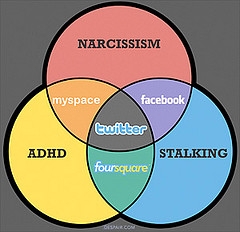
Facebook and Loneliness: The Better Question

In 2008, Nick Carr’s article in The Atlantic, “Is Google Making Us Stupid?”, touched off a lively and still ongoing debate about the relative merits of the Internet.  Of course, the title was a provocation and perhaps played a role in generating initial interest in the piece. I’ve often wondered whether that was Carr’s own choice for a title or if an editor with the magazine slapped it on as link bait. In any case, I tend to think it does the essay as a whole a disservice. It suggested a straw man to readers before they read the first word of the article. Having used the piece in a variety of classes that I’ve taught, I’m struck by how often readers respond to the title rather than Carr’s argument in the body of the essay.

In this month’s issue, The Atlantic has once again published a cover story bearing a strikingly similar title — “Is Facebook Making Us Lonely?” by novelist Stephen Marche. I suppose it was too tempting to pass up.

This time around, however, the title is at best generically provocative and more like predictably lame. And, as with Carr’s piece, it threatens to obscure the argument.

Take, for example, the quite interesting response to Marche by sociologist Zeynep Tufekci. In a blog post, she takes on the article’s title more so than the contents of the article. Or so it seems to me. Tufekci emphasizes the need to rely on empirical research and she cites a number of studies that fail to find a causal correlation between social media and loneliness. In fact, studies suggest that on the whole social media users report lower rates of loneliness than non-users.

But as I read (and reread) Marche’s article, I failed to find Marche himself advocating such a causal connection. In fact, at several points Marche is quite clear in denying that social media (since Facebook, like Google in Carr’s article, stands in for a larger reality) causes loneliness. At the outset of the last main section of the article, Marche writes:

“Loneliness is certainly not something that Facebook or Twitter or any of the lesser forms of social media is doing to us. We are doing it to ourselves.”

That seems pretty straightforward to me.

In fact, Marche and Tufekci seem to be in broad agreement. Both agree that individuals have become more isolated over the course of the last few decades. Tufekci cites three studies to that effect:

“We are, on average, more isolated, at least in terms of strong ties. Three separate studies say so–and as we say in social sciences, once is a question, twice is a coincidence, thrice is a finding. (That is the General Social Survey with follow-up here, Pew Internet studieswritten up by Keith Hampton (with others) and a recent study by Matt Brashears).”

Marche makes the same point; in fact, I would suggest that Marche’s essay is really about this broad trend toward loneliness and isolation that predates the rise of social media. It is true that Marche clearly thinks Facebook is less than an ideal antidote to this loneliness and that it engenders certain problematic forms of socialization, but he does not claim that social media is making us lonely. It is the unfortunate title that suggests that.

The more interesting part of Tufekci’s response lies in her notion of cyberasociality which she defines as “the inability or unwillingness of some people to relate to others via social media as they do when physically-present.” Happily, Tufekci links to an unpublished paper in which she lays out her case for the existence of cyberasociality. She draws on an analogy to dyslexia to argue that some people may have an inherent inability to socialize via text based media. As she acknowledges, this is something she is still “working through empirically and conceptually,” but it is certainly an intriguing possibility.

Interestingly, at one point in Marche’s essay he himself appears to acknowledge as much. While discussing the work of Moira Burke — which (again) he himself notes “does not support the assertion that Facebook creates loneliness” — Marche ventures the following introspective confession: “Perhaps it says something about me that I think Facebook is primarily a platform for lonely skulking.” Perhaps. If so, Tufekci may already be working on the theory that explains why.

The real issue, it seems to me, is not whether Facebook makes us lonely, but whether Facebook is reconfiguring our notions of loneliness, sociability, and relationships. These are after all not exactly static concepts. Here is where I think Marche raises some substantial concerns that are unfortunately lost when the debate goes down the path of determining causality.

What Facebook offers is the dream of managing the social and curating the self, and we seem to obsessively take to the task. The asynchronicity of Facebook is rather safe, after all, when compared to the messy and risky dynamics of face-to-face interactions, and we naturally gravitate toward this sort of safety. I suspect this is in part also why we would sometimes rather text than call and, if we do call, why we hope to get sent to voicemail. It seems reasonable to ask whether we will be tempted to take the efficiency and smoothness of our social media interactions as the norm for all forms of social interaction.

One last thought. It seems to me that we should draw a distinction among desires that are bundled together under the notion of loneliness. There is, for example, a distinction between the desire for companionship (and distinctions among varieties of companionship) and the desire simply to be noticed or acknowledged. C. S. Lewis, eloquent as per usual, writes:

“We should hardly dare to ask that any notice be taken of ourselves. But we pine. The sense that in this universe we are treated as strangers, the longing to be acknowledged, to meet with some response, to bridge some chasm that yawns between us and reality, is part of our inconsolable secret.”

Among Facebook’s more problematic aspects, in my estimation, is the manner in which the platform exploits this desire with rather calculated ferocity. That little red notifications icon is our own version of Gatsby’s green light.

Facebook as Rear Window: What Hitchcock and Gadamer Can Teach Us About Online Profiles

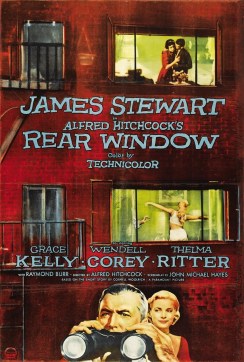
In Hitchcock’s 1954 classic, Rear Window, Jimmy Stewart plays a photojournalist named Jeff who is laid up with a broken leg and passes his time observing his neighbors through his apartment’s rear window. The window looks out on a courtyard onto which the rear windows of all the other apartments in the building also open up. It’s a multiscreen gallery for Stewart’s character who reclines in the shadows and becomes engrossed in the lives of his neighbors – the attractive dancer, the lonely woman, the young pianist, the newlyweds, and, most significantly, the unhappy married couple. Increasingly playing the part of the obsessive voyeur, he becomes convinced the disgruntled husband murdered his wife. The film’s plot is driven by Jeff’s determination to prove the man’s guilt.

The film came to my attention again when I received a link to the clip below, which impressively and artfully splices all of the scenes depicting what Jeff sees out of his window. [Update: The video is no longer available.] Serendipitously, I watched the clip not long after reading some comments on Hans-Georg Gadamer’s hermeneutical aesthetics developed in Truth and Method. Naturally, I then thought of Facebook … as one does after watching Hitchcock and reading Gadamer.

Let’s start with Hitchcock. Like the windows in Hitchcock’s film, Facebook profiles offer an opening into a life and one through which others can observe without the observed knowing it. This is classic Facebook behavior. The platform has always abetted and elicited stalker-ish activity from users. This is why one of the most popular of the many spam links that circulate on the social network purports to reveal who has been looking at your profile. If ever such a capability were enabled it would likely lead to a massive reduction in page views for Facebook.

Like Jeff’s character, Facebook users look through the profiles-as-windows at the lives of their virtual neighbors. And as with Jeff, it may begin in a relatively innocent curiosity born of boredom, or it may veer into the obsessive. There is, of course, one glaring difference between the rear windows and Facebook profiles: Stewart’s neighbors were presumably unaware that they were being watched. Facebook users are not only aware they are being watched – they are counting on it.

On Facebook we’re all flâneurs, simultaneously watching and being watched. But we don’t exactly know who is doing the watching and how much watching they’re doing or to what end. The uncanny moment in Rear Window comes when the watcher becomes the watched. Needless to say, such a moment would be equally uncanny where it to unfold online. Yet it is enough that we know we are being watched in general. This alone renders the profile something other than a representation of our life. It becomes itself a presentation. And that is were Gadamer first comes in.

As he develops his hermeneutical aesthetics, Gadamer challenges the representational view of the work of art that understands the work of art as a mere re-presentation of some real thing. On this view, whatever meaning the work of art holds is derivative of the thing it re-presents. Against this view, Gadamer contends that the appearing of the work of art before the participant (for the one who takes in a work of art is never merely a passive observer) constitutes an “event of being.” Meaning inheres in the work of art in itself. It is a presentation, not a re-presentation.

Now think again about a Facebook profile. It may be tempting to understand a profile as a representation of a life or of a personality whose meaning derives from the lived experience of the user who creates the profile. But is this entirely true? It is certainly the case that the online profile is, in a certain sense, grounded in the offline experience of the user. Also, we would do well to resist a digital dualism that abstracts the “real,” offline experience from “virtual,” online experience. Offline and online experience impinge upon one another; it would be misleading to compartmentalize the two.

Yet, there are multiple ways of construing the nature of their enmeshment. One way of resisting digital dualism is to note how the possibility of self-documentation asserts itself in lived experience. I’ve discussed this here on more than a few occasions and Nathan Jurgenson’s notion of “Facebook Eye” captures this dynamic neatly. On this view online profiles impinge upon offline experience by reordering our conscious intentionality – to the person with a social media profile, experience becomes a field of potential self-documentation to be publicized through social media. To the person with a hammer, everything looks like a nail. To the person with a Facebook profile, everything looks like a potential status update. Or alternatively, to the person with a Facebook profile, the question is always “How many ‘likes’ will this get?” But Gadamer offers another complimentary construal.

It begins by noting the presentational character of the online profile. It is not a mere copy of the original life; in its appearing before a profile viewer, it appears on its own terms. It’s meaning is not merely derived from the manner in which it copies life, rather it emerges out of the dynamics of the life as it is presented in the profile. And here is why, as I see it, this does not constitute a digital dualism. Gadamer’s discussion of the work of art as an “event of being” includes what Peter Leithart has called “retroactive ontological consequences” for the thing it refers to in the “real” world.

Leithart interprets Gadamer by reference to landscape painting. When a landscape is painted by Constable, its character has been altered, it is now a “landscape-that-inspires-painting.” When person maintains an online profile, they are now a person-with-a-profile. The landscape painting, Leithart continues, is an “event of being” because it is “an enhancement of the thing itself.” Likewise the online profile, although perhaps enhancement is not necessarily the best word to use here. Moreover Leithart concludes, “every encounter with the real landscape involves a moment of interpretation that is a ‘performance’ of the thing, and after Constable (even for many who are not directly aware of Constable) the interpretive performance is inflected by Constable’s work …” Translated: every encounter with a person-with-a-profile invites acts of interpretation that are inflected by Facebook. Now back to Rear Window to illustrate.

In the film, the windows presented a slice of a life. What Jeff saw was not something other than the lived experience of the people he watched, but the windows did the work of constituting those slices of their lives as something in themselves for Jeff inviting interpretation, not unlike the way a profile presents itself as something in itself for the viewer also inviting the viewer into a work of interpretation. And as we noted, via Gadamer, as a thing in itself the window-as-presentation gives off meaning that has retroactive ontological consequences. If Jeff were to meet any of the people he watched outside of their apartments, his interactions with them would be contoured by his interpretations of their fenestrated (when would I ever have another chance of using that word) presentations.

Likewise, when Facebook users encounter one another offline, their mutual interpretations of one another are loaded with whatever interpretations their profiles have already invited.

Now one final thought. Our presentations always produce more meaning than we intend. This is another way of saying that we are not entirely in control, despite our best efforts, of the manner in which our profile presentations are interpreted. Because they are always partial re-presentations (insofar as they are alluding back to lived experience), our profiles hide while they reveal and thus invite or even demand acts of creative interpretation. These interpretative surpluses, for better or worse, are those that are then brought to bear on our face-to-face encounters.

___________________________________________

An expanded and revised version of this post appeared at The Medias Res.

Tracking the Spread of Technology

The graph below which plots the diffusion of new technologies throughout the twentieth century came to my attention via Derek Thompson’s post at The Atlantic, “The 100 Year March of Technology in One Graph.”

Take a second and click to enlarge the graph. The lines trace the percentage of US households that adopted the technologies in question over time. There’s a lot of information condensed into this chart, and of course, there’s a lot that a chart can’t convey. Below the graph I’ll list a few of the things that caught my attention.

Grap by Visualizing Economics. Click to enlarge.

The first thing to note is that this chart gives us a glimpse at the social history of technology, a dimension of the story of technology that sometimes gets left out. Very often the focus is on the inventors and the process of invention or on the capabilities of a technology and its consequences. But behind each of these lines there is often a very interesting, and very human story. Naturally, this chart doesn’t quite give us those stories, but they do hint at them. (Many of these stories have been told in quite compelling fashion. America Calling by Claude Fischer, for instance, is a well regarded treatment of the social history of the telephone up to 1940.)

This particular chart, however, gives the impression that technologies always track toward almost full saturation of a society. Once invented, they inexorably trend upwards, some more quickly than others. But remember what this particular chart leaves out: the myriad of technologies that fail to achieve widespread adoption and those that are superseded and recede downward toward near extinction. So consider that this chart might also have included cassette players, laser discs, and typewriters.

That said, the far end of the chart does begin to show us a little of this kind of falling off. You’ll notice, for example, that the VCR adoption rate begins to tail off around the year 2000. So too does the telephone. This is not too surprising and we can readily guess at the causes: the appearance of the DVD player and cell phone respectively. Interestingly, the computer also shows a falling off which raises the question of how the “computer” is defined for the purposes of this chart.

As an aside, this reminds us that visual data, of which we are lately so fond, tends to present itself in rather objective, even clinical fashion, but interpretations are already built in to the data.

There are also instances of dips in adoption rates on the way to full saturation. Notably we see dips in the adoption of telephones, electricity, and automobiles. Not surprisingly, the most pronounced of these dips occurred in the early 1930s as the nation entered the Great Depression. This reminds us that economic conditions play an important role in the stories of technology adoption. It also prompts certain questions: why, for example, did telephone adoption dip while radio adoption continued to increase steadily?

The point of the chart — judging by its title, “Consumption Spreads Faster Today” — is to show that technologies are adopted more quickly today than in the past. There seems to be something to this claim; in fact, it feels intuitively commonsensical to us. But at second glance, it seems a bit more complicated than that.

Remember, for starters, the problem of interpretation that is buried below the apparent objectivity of the graph. It would seem, for instance, that the Internet began in the early 1990s, but arriving at this date involves defining out of existence the early history of the Internet which stretches back into the 1970s at least. Also, several earlier technologies — the radio, the refrigerator, the color TV —  appear to rise as precipitously in adoption rate as more recent technologies.

Interesting as well are the rather languid adoption rates for certain “time-saving” household technologies such as the  clothes washer (but not the clothes dryer) and the dishwasher. By contrast, the microwave enjoys a rather steep rate of adoption. This recalls Ruth Schwartz Cowan’s classic work in the social history of technology, More Work for Mother: The Ironies of Household Technology from the Open Hearth to the Microwave, in which she dismantled the assumption that the introduction of modern household technologies radically unburdened the average housewife.

This chart, then, is chiefly valuable for what it points to: the fascinating social history of technology. It’s a history that is often forgotten, but one whose consequences we all share in. In America Calling, Fischer sums up:

“Inventors, investors, competitors, organized customers, agencies of government, the media, and others conflict over how an innovation will develop. The outcome is a particular definition and a structure for the new technology, perhaps even a “reinvention” of the device. The story could always have been otherwise if the struggles had proceeded differently.”

“You know, like when you realize you left your phone at home …”

The discipline of anthropology cut its teeth on the study of cultures that were deemed “primitive” and exotic by the standards of nineteenth century Western, industrialized society. North American and European nations were themselves undergoing tremendous transformations wrought by the advent of groundbreaking new technologies — the steam engine, railroad, and telegraph, to name just three. These three alone dramatically reordered the realms of industry, transportation, and communication. Altogether they had the effect of ratcheting up the perceived pace of cultural evolution. Meanwhile, the anthropologists studied societies in which change, when it could be perceived, appeared to proceed at a glacial pace. Age-old ritual and tradition structured the practice of everyday life and a widely known body of stories ordered belief and behavior.

“All that is solid melts into air, and all that is holy is profaned …” — so wrote Marx and Engels in 1848. The line evocatively captures the erosive consequences of modernity. The structures of traditional society then recently made an object of study by the anthropologists were simultaneously passing out of existence in the “modern” world.

I draw this contrast to point out that our own experience of rapid and disorienting change has a history. However out of sorts we may feel as we pass through what may be justly called the digital revolution, it probably does not quite compare with the sense of displacement engendered by the technological revolutions of the late nineteenth and early twentieth century. I still tend to think that the passage from no electricity to near ubiquitous electrification is more transformative than the passage from no Internet to ubiquitous Internet. (But I could be persuaded otherwise.)

So when, in “You’ve Already Forgotten Yesterday’s Internet,” Philip Bump notes that the Internet is “a stunningly effective accelerant” that has rendered knowledge a “blur,” he is identifying the present position and velocity of a trajectory set in motion long ago. Of course, if Bump is right, and I think he is certainly in the ball park so far as his diagnosis is concerned, then this history is irrelevant since no one really remembers it anyway, at least not for long.

Bump begins his brief post by making a joke out of the suggestion that he was going to talk about Herodotus. Who talks about Herodotus? Who even knows who Herodotus was? The joke may ultimately be on us, but Bump is right. The stories that populated the Western imagination for centuries have been largely forgotten. Indeed, as Bump suggests, we can barely keep the last several months in mind, much less the distant past:

“The web creates new shared points of reference every hour, every minute. The growth is exponential, staggering. Online conversation has made reference to things before World War II exotic — and World War II only makes the cut because of Hitler.

Yesterday morning, an advisor to Mitt Romney made a comment about the Etch-A-Sketch. By mid-afternoon, both of his rivals spoke before audiences with an Etch-A-Sketch in hand. The Democratic National Committee had an ad on the topic the same day. The point of reference was born, spread — and became trite — within hours.”

Bump’s piece is itself over a week old, and I’m probably committing some sort of blogging sin by commenting on it at this point. But I’ll risk offending the digital gods of time and forgetting because he’s neatly captured the feel of Internet culture. But this brings us back to the origins of anthropology and the very idea of culture. Whatever we might mean by culture now, it has very little to do with the structures of traditional, “solid” societies that first filled the term with meaning. Our culture, however we might define it, is no longer characterized by the persistence of the past into the present.

I should clarify: our culture is no longer characterized by the acknowledged, normative persistence of the past into the present. By this clarification I’m trying to distinguish between the sense in which the past persists whether we know it or like it, and the sense in which the past persists because it is intentionally brought to bear on the present. The persistence of the past in the former sense is, as far as I can tell, an unavoidable feature of our being time-bound creatures. The latter, however, is a contingent condition that obtained in pre-modern societies to a greater degree, but no longer characterizes modern (or post-modern, if you prefer) society to the same extent.

Notably, our culture no longer trades on a stock of shared stories about the past. Instead (beware, massive generalizations ahead) we moved into a cultural economy of shared experience. Actually, that’s not quite right either. It’s not so much shared experience as it is a shared existential sensibility — affect.

I am reminded of David Foster Wallace’s comments on what literature can do:

“There’s maybe thirteen things, of which who even knows which ones we can talk about.  But one of them has to do with the sense of, the sense of capturing, capturing what the world feels like to us, in the sort of way that I think that a reader can tell ‘Another sensibility like mine exists.’  Something else feels this way to someone else.  So that the reader feels less lonely.”

Wallace goes on to describe the work of avant-garde or experimental literature as “the stuff that’s about what it feels like to live.  Instead of being a relief from what it feels like to live.”

When the objective content of culture, the stories for example, are marginalized for whatever myriad reasons, there still remains the existential level of lived experience which then becomes the object of analysis and comment. Talk about “what it feels like to be alive” now does the work shared stories accomplished in older cultural configurations. We’re all meta now because our focus has shifted to our own experience.

Consider the JFK assassination as a point of transition. It may be the first event about which people began to ask and talk about where they were when the event transpired. The story becomes about where I was when I heard the news. This is an indicator of a profound cultural shift. The event itself fades into the background as the personal experience of the event moves forward. The objectivity of the event becomes less important than the subjective experience. Perhaps this exemplifies a general societal trend. We may not exchange classical or biblical allusions in our everyday talk, but we can trade accounts of our anxiety and nostalgia that will ring broadly true to others.

We don’t all know the same stories, but we know what it feels like to be alive in a time when information washes over us indiscriminately. The story we share is now about how we can’t believe this or that event is already a year past. If feels as if it were just yesterday, or it feels as if it was much longer ago. In either case, what we feel is that we don’t have a grip on the passage of time or the events carried on the flood. Or we share stories about the anxiety that gripped us when we realized we had left our phone at home. This story resonates. That experience becomes our new form of allusion. It is not an allusion to literature or history, it is an allusion to shared existential angst.

The Wisdom of Gandalf for the Information Age

Tolkien is in the air again. In December of this year, the eagerly awaited first part of Peter Jackson’s The Hobbit will be released. The trailers for the film have kindled a great deal of excitement and the film promises to be a delight for fans of one of the most beloved stories ever written. By some estimates it is the fourth best selling book ever. Ahead of it are A Tale of Two Cities in the top spot, The Little Prince, and Tolkien’s own The Lord of the Rings trilogy.

I happily count myself among the Tokien devotees and I’ve declared this my very own Year of Tolkien. Basically this means that when I’m not reading some thing I must read, I’ll be reading through Tolkien’s works and a book or two about Tolkien.

Reading The Fellowship of the Ring several days ago, I was captivated once again by an exchange between the wizard Gandalf and the hobbit Frodo. If you’re familiar with the story, then the following needs no introduction. If you are not, you really ought to be, but here’s what you need to know to make sense of this passage. In The Hobbit, the main character, Bilbo, passes on an opportunity to kill a pitiable but sinister creature known as Gollum. The creature had been corrupted by the Ring of Power, which had been forged by an evil being known as Sauron. It would take too long to explain more, but in the following exchange Gandalf is retelling those events to Bilbo’s nephew Frodo.

Frodo has just proclaimed, “What a pity that Bilbo did not stab that vile creature, when he had a chance!”

Here is the ensuing exchange:

‘Pity? It was Pity that stayed his hand. Pity, and Mercy: not to strike without need …

‘I am sorry,’ said Frodo. ‘But I am frightened; and I do not feel any pity for Gollum.’

“You have not seen him,’ Gandalf broke in.

‘No, and I don’t want to,’ said Frodo. ‘I can’t understand you. Do you mean to say that you, and the Elves, have let him live on after all those horrible deeds? Now at any rate he is as bad as an Orc, and just an enemy. He deserves death.’

‘Deserves it! I daresay he does. Many that live deserve death. And some that die deserve life. Can you give it to them? Then do not be too eager to deal out death in judgement. For even the very wise cannot see all ends. I have not much hope that Gollum can be cured before he dies, but there is a chance of it. And he is bound up with the fate of the Ring. My heart tells me that he has some part to play yet, for good or ill, before the end; and when that comes, the pity of Bilbo may rule the fate of many — yours not least …’

This is, in my estimation, among the most evocative portions of a body of writing replete with wise and often haunting passages. Among the many things that could be said about this exchange and the many applications one could draw, I will note just one.

Gandalf is renowned for his wisdom, he is after all a great wizard. But in what does his wisdom lie? In this particular instance, it lies not in what he knows, rather it lies in his awareness of the limits of his knowledge. His wisdom issues from an awareness of his ignorance. “Even the very wise cannot see all ends,” he confesses. He does not have much hope for Gollum, but he simply does not know and he will not act, nor commend an action, that would foreclose the possibility of Gollum’s redemption. Moreover, he does not know what part Gollum may play in the unfolding story. For these reasons, which amount to an acknowledgement of his ignorance, Gandalf’s actions and judgments are tempered and measured.

These days we are enthralled by the information at our command. We are awestruck by what we know. The data available to us constitutes an embarrassment of riches. And yet one thing we lack: an awareness of how much we nevertheless do not know. We have forgotten our ignorance and we are judging and acting without the compassion or wisdom of Gandalf because we lack his acute awareness of the limitations of his knowledge.

We do not have to search very far at all to find those who will rush to judgment and act out of a profound arrogance. I will let you supply the examples. They are too many to list in any case. More than likely we need not look further than ourselves.

I have more than once cited T. S. Eliot’s lament from “Choruses from ‘The Rock'”:

“Where is the Life we have lost in living?
Where is the wisdom we have lost in knowledge?
Where is the knowledge we have lost in information?”

Our problem is that we tend to think of the passage from information to knowledge and on to wisdom as a series of aggregations. We accumulate enough information and we pass to knowledge and we accumulate enough knowledge and we pass to wisdom. The truth is that we pass to wisdom not by the aggregation of information or knowledge, both of which are available as never before; we pass to wisdom by remembering what we do not know. And this, in an age of information, seems to be the one thing we cannot keep in mind.