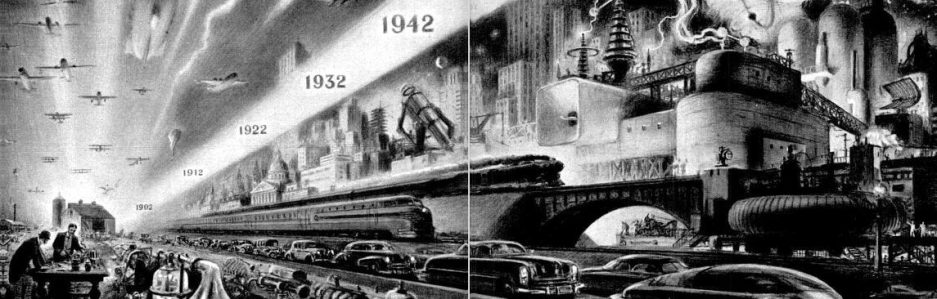
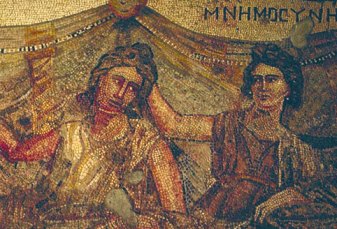
 Memory, knowledge, identity, technology — these are intimately bound together and it would be difficult to disentangle one from the others. What is it to know something if not to remember it? Beyond the biological facts of my existence what constitutes my identity more significantly than my memory? What could I remember without technologies including writing, books, pictures, videos, and more? Or to put it in a more practical way, what degree of panic might ensue if your Facebook profile were suddenly and irrevocably deleted? Or if your smart phone were to pass into the hands of another? Of if you lost your flash drive? Pushing the clock back just a little, we might have similarly asked about the loss of a diary or photo albums.
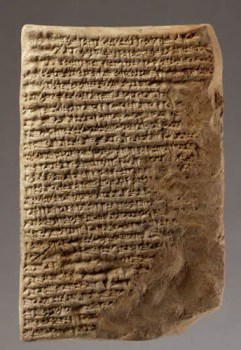
The connection among these four, particularly memory and technology, is established as early as the Platonic dialogs, most famously the Phaedrus in which Socrates criticizes writing for its harmful effects on internal memory and knowledge. What we store in written texts (or hard drives, or “the cloud”) we do not remember ourselves and thus do not truly know it. The form of this debate recurs throughout the subsequent history of technology all the way to the present debates over the relative merits of computers and the Internet for learning and education. And in these debates it is almost de rigueur to begin by citing Plato’s Phaedrus either the reinstall or dismiss the Socratic critique. Neil Postman began his book, Technopoly: The Surrender of Culture to Technology
The rejoinder comes quickly though: Surely Socrates failed to appreciate the gains in knowledge that writing would make possible. And what if I offload information to external memory, this simply frees my mind for more significant tasks. There is, of course, an implicit denigration of mere memory in this rebuttal to Socrates.
Yet some tension, some uneasiness remains. Otherwise the critique would not continue resurfacing and it wouldn’t elicit such strong push back when it did. In other words, the critique seems to strike at a nerve, a sensitive one at that, and when again we consider the intimate interrelationship of memory with our ideas about knowledge and education and with the formation and maintenance of our identities it is not surprising at all. A few posts down I cited Illich’s claim that
What anthropologists distinguish as ‘cultures’ the historian of mental spaces might distinguish as different ‘memories.’ The way to recall, to remember, has a history which is, to some degree, distinct from the history of the substance that is remembered.
I’m wondering now whether it might also be true that a history of personal identity or of individuality could be told through a history of memory and its external supports. Might we be able to argue that individualism is a function of technologies of memory that allow a person to create and sustain his own history apart from that of the larger society?
In any case, memory has captured my attention and fascinating questions are following hard. What is memory anyway, what is it to remember a name, a look, a person, a fact, a feeling, where something is, how to do something, or simply to do something? What do we remember when we remember? How do we remember? Why do we remember? And, of course, how have the answers to all of these questions evolved along with the development of technology from the written word to the external hard drive?
On that last note, I wonder if our choice to call a computer’s capacity to store data “memory” has not in turn affected how we think of our own memory. I’m especially thinking of a flash drive that we hold in hand and equate with stored memory. In this device I keep my pictures, my documents, my videos, my memories — memory, or a certain conception of it, is objectified, reified. Is memory merely mental storage? Or has this metaphor atrophied our understanding of memory?
Of course, metaphors for memory are nothing new. I’m beginning to explore some of these ideas with Paul Ricoeur’s Memory, History, Forgetting

 (2009). In a