On the Reading of Old Books

Following on the Christmas holiday, here is a little something that is, given the book from which it is taken, tangentially related. Both of these paragraphs are from C. S. Lewis’ Introduction to an edition of Athanasius’ On the Incarnation. They each contain a great deal of wisdom about the reading of old books. First, on actually reading the old books:

“There is a strange idea abroad that in every subject the ancient books should be read only by the professionals, and that the amateur should content himself with the modern books. Thus I have found as a tutor in English Literature that if the average student wants to find out something about Platonism, the very last thing he thinks of doing is to take a translation of Plato off the library shelf and read the Symposium. He would rather read some dreary modern book ten times as long, all about “isms” and influences and only once in twelve pages telling him what Plato actually said. The error is rather an amiable one, for it springs from humility. The student is half afraid to meet one of the great philosophers face to face. He feels himself inadequate and thinks he will not understand him. But if he only knew, the great man, just because of his greatness, is much more intelligible than his modern commentator. The simplest student will be able to understand, if not all, yet a very great deal of what Plato said; but hardly anyone can understand some modern books on Platonism. It has always therefore been one of my main endeavours as a teacher to persuade the young that firsthand knowledge is not only more worth acquiring than secondhand knowledge, but is usually much easier and more delightful to acquire.”

And secondly, on the epistemological benefits of reading the old books:

“Every age has its own outlook. It is specially good at seeing certain truths and specially liable to make certain mistakes. We all, therefore, need the books that will correct the characteristic mistakes of our own period. And that means the old books. All contemporary writers share to some extent the contemporary outlook – even those, like myself, who seem most opposed to it. Nothing strikes me more when I read the controversies of past ages than the fact that both sides were usually assuming without question a good deal which we should now absolutely deny. They thought that they were as completely opposed as two sides could be, but in fact they were all the time secretly united – united with each other and against earlier and later ages – by a great mass of common assumptions. We may be sure that the characteristic blindness of the twentieth century – the blindness about which posterity will ask, “But how could they have thought that?” – lies where we have never suspected it, and concerns something about which there is untroubled agreement between Hitler and President Roosevelt or between Mr. H. G. Wells and Karl Barth. None of us can fully escape this blindness, but we shall certainly increase it, and weaken our guard against it, if we read only modern books. Where they are true they will give us truths which we half knew already. Where they are false they will aggravate the error with which we are already dangerously ill. The only palliative is to keep the clean sea breeze of the centuries blowing through our minds, and this can be done only by reading old books. Not, of course, that there is any magic about the past. People were no cleverer then than they are now; they made as many mistakes as we. But not the same mistakes. They will not flatter us in the errors we are already committing; and their own errors, being now open and palpable, will not endanger us. Two heads are better than one, not because either is infallible, but because they are unlikely to go wrong in the same direction. To be sure, the books of the future would be just as good a corrective as the books of the past, but unfortunately we cannot get at them.”

That said, then, to quote from one very old book, tolle lege.

Shared Sensibilities

Rochelle Gurstein captures in lovely prose a handful of thoughts I have attempted, with less eloquent results, to express myself.  “The Perils of Progress”, a brief essay appearing in The New Republic, opens with a story about “a lecture by an exquisitely sensitive, painfully alert poet friend of ours about how we live today” which elicits tired labels contemptuously applied.  As Gurstein puts it:

These days, even a few well-considered, measured reservations about digital gadgetry apparently cannot be tolerated, and our poet friend was informed by forward-looking members of the audience that she was fearful of change, nostalgic, in short, reactionary with all its nasty political connotations.

And this presumably from a learned and sophisticated audience.

Gurstein goes on to challenge the same NY Times editorial by Steven Pinker which drew some of my own comments some time ago.  She observes that in …

… disputes about the consequences of innovation, those on the side of progress habitually see only gains. They have no awareness that there are also losses—equally as real as the gains (even if the gain is as paltry as “keeping us smart”)—and that no form of bookkeeping can ever reconcile the two.

Gurstein concludes with some poignant reflections on the materiality of the book and the difference it makes to the experience of reading and the reader’s relationship to the author.  The essay truly is worth a few minutes of your time to read.  Also reading the few comments posted in response to Gurstein’s essay tends to reinforce her concerns.

At one point in the essay Gurstein spoke of Pinker’s “stacking the deck against” her sensibility.  That word, sensibility, struck me.  This is I think near to the heart of matter.  What Gurstein and others like her attempt to defend and preserve is not merely a point of view or a particular truth.  It is more subjective than that, but is not merely preference.  It is not at all like a preference, which, I suspect, is precisely what those who do not understand it will try to label it.  It is, well, a sensibility — a certain disposition or way of being in the world.  It is an openness and a sensitivity to certain kinds of experience and to certain dimensions of reality.  Because of this it resists description and facile reduction to the terms of a cost/benefit analysis.  Consequently, it can be difficult to convincingly defend a sensibility to those who know nothing of it.  Maybe it is best described as a “seeing the world as” or, perhaps better still, a “feeling the world as.”  A sensibility is a posture toward life, a way of inhabiting the world.

What all of this groping for words may have at its center is the experiential quality of a sensibility, and experience is, after all, incommunicable.   Unless, that is, two people share the sensibility and then words may even seem superfluous.  In this sense, those who share a sensibility, share the world.  Those who lack or fail to appreciate the sensibility Gurnstein articulates know only to shake their heads in condescending bemusement.  What those, like Gurnstein and her poet friend, who grieve the passing of a culture that nurtured their sensibility fear may be the onset of a long loneliness.

_______________________________________________________________

Nota bene: This post was first published in early July of 2010. I re-publish it today because the Gurnstein essay had been on my mind, because I think it makes a point that bears repeating, and because I imagine that my audience is now quite different than it was nearly a year and a half ago. I have edited some of the temporal references accordingly.

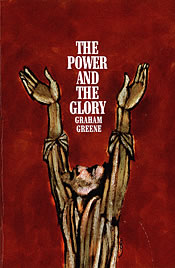
“It was impossible to hate”: Presence, Absence, and Graham Greene’s Whiskey Priest

“When you visualize a man or woman carefully, you could always begin to feel pity.”  Or so the nameless priest in Graham Greene’s 1940 novel, The Power and the Glorythought to himself as he sat in a dark, dank, crowded jail cell accosted by a self-righteous woman intent on exposing his unworthiness.

The unnamed priest, however, needed no convincing.  Earlier in the novel we read that,

He was a bad priest, he knew it:  they had a word for his kind — a whiskey priest — but every failure dropped out of his sight and out of mind:  somewhere they accumulated in secret — the rubble of his failures.  One day they would choke up, he supposed, altogether the source of grace.  Until then he carried on, with spells of fear, weariness, with a shamefaced lightness of heart.

The Power and the Glory is set in the Mexican state of Tabasco during the 1930’s when the Red Shirts, a rabidly anti-clerical paramilitary organization, came to power and brutally suppressed the Catholic Church.  Greene’s protagonist, along with Padre Jose, a priest who agreed to marry and forsake his calling in exchange for his life, are the last vestiges of the Church in the state.

Throughout the story the whiskey priest eludes a fanatical police lieutenant who is hell bent on eradicating each and every reminder of the state’s religious past.  “He wanted to destroy everything,” the narrator’s voice explains, “to be alone without any memories at all.”  While evading capture, the nameless priest reluctantly and with an ever-present sense of his worthlessness ministers the sacraments in secret.  He hears confession in the darkness before dawn, he holds a Mass with illicit wine — the Red Shirts also banned alcohol — in dingy jungle huts, and finally he forsakes the promise of safety across the state border to attend to an American convict dying of a gun shot wound that he might be absolved.

Through it all, as author Scott Turrow recently put it, “he emerges as a figure of intense humility and faith, willing to sacrifice himself to attend in secret to the devoted and utterly unaware of his own goodness.”  Not unlike Christ, who in John’s Gospel returns to Jerusalem fully aware that it will cost him his life in order to attend to the dying Lazarus, the priest returns to attend to the dying American knowing that he is to be betrayed to the police and most likely executed.  And indeed, that is the path marked out for him.

In the concluding pages of the novel, after the priest has been unceremoniously executed, an event we witness through the eyes of an English dentist with whom the story had begun, we revisit a number of the families and individuals who along the way had harbored or otherwise interacted with the nameless priest.  In each case, we discover that the priest’s presence among them had been consequential — perhaps ambiguously so, but felt and remembered nonetheless.  This was particularly evident in the case of a young boy whose family had early on sheltered the whiskey priest.  At various points in the novel we listen in as the mother reads to the boy and his sisters an account of the death of a famous Mexican martyr.  The boy had been distracted, unimpressed.  But in the end, when he learns that the shabby priest with the “funny smell” who had been in their very house was also put to death, had now also become a martyr, he has a change of heart.

It brought it home to one — to have had a hero in the house, though it had only been for twenty-four hours.  And he was the last.  There were no more priests and no more heroes.

The priest’s presence, in retrospect, had made the difference.  This appears, from one perspective, to be the central premise of the novel.  By contrast, the oppressive quality of the setting is early on described as a “huge abandonment,” and the antagonist, the hell-bent lieutenant, was marked by the experience of a “vacancy,” and absence.  The priest, tortured by his own failures — often drunk and father of an illegitimate child — cannot quite see the significance of his presence.  He is in his own eyes merely a “fool” who “loves all the wrong things.”  But it is his presence we learn that has made all the difference, that has given hope and sustained faith.

In that prison with which we began, in the darkness, the priest gives profound expression to the significance of presence.

When you visualized a man or woman carefully, you could always begin to feel pity … that was a quality God’s image carried with it … when you saw the lines at the corners of the eyes, the shape of the mouth, how the hair grew, it was impossible to hate.

Greene considered The Power and the Glory to be his best novel.  Critics including John Updike, who wrote the Introduction to the 50th Anniversary Edition, agreed.  It is frequently listed among the best novels of the 20th century.  I read The Power and the Glory while also reflecting on the theme of presence along the lines suggested by Jaron Lanier.  Lanier drew attention to what we might call our presence to ourselves, that is our full engagement in our own experience that was threatened whenever our desire to record and publish our lives through social media led us to fragment our focus and our attention, to become spectators of our own lives.

Reflecting on Greene’s novel provided yet another angle from which to think of presence.  It suggested that our presence to one another may be the most significant gift we can offer.  Alienation and loneliness are still with us.  We speak incessantly of our living in a “connected” age, and indeed it has never been easier to make and maintain connection.  But connection is not presence.   It is true that very often, especially where great distance separates us, a connection is all we can offer — it is better than nothing.  But how often do we fail to give our whole presence to one another when we are separated by feet and inches?  How often do we fail not only to give our own, but to perceive the other’s presence so that we may notice “the lines at the corners of the eyes, the shape of the mouth, how the hair grew”?

Like the unnamed whiskey priest, we may never know what difference our presence will make in the life of another.  What we do know is that our absence, whether literal or effected by our fractured inattentiveness, may in the end contribute to a “huge abandonment.”

Making Sense Out of Life: Early Modern and Digital Reading Practices

When I wrote the About page for this blog I cited an article by Alan Jacobs from several years ago in which he likened blogs to commonplace books. Commonplace books, especially popular during the sixteenth century when printing first began to yield an avalanche of relatively affordable books, served as a means of ordering and making sense out of the massive amounts of information confronting early modern readers. As is frequently noted, the dismay and disorientation they experienced is not altogether unlike the angst that sometimes accompanies our recent and ongoing digital explosion of available information. And so, taking a cue from Jacobs, I intended for this blog to be something akin to a commonplace book.

As it turned out, the analogy was mostly suggestive. Much that I write here does not quite fit the commonplace genre. Nonetheless, something of the spirit, if not the law, persists. The commonplace genre would find a nearer kin in Tumblr than in traditional blogs.

In a 2000 essay reprinted in The Case for Books (2009), historian of the book Robert Darnton also reflects on commonplace books and the scholarly attention they attracted. The attention was not misplaced.  Commonplace books offered a window into the reading practices and mental landscape of their users; and for an era in which they were widely kept, they could offer a glimpse at the mental landscape of whole segments of society as well.  In the spirit of the commonplace book, here are some excerpts from Darnton’s essay with a few reflections.

Describing the practice of commonplacing:

“It involved a special way of taking in the printed word. Unlike modern readers, who follow the flow of a narrative from beginning to end (unless they are digital natives and click through texts on machines), early modern Englishmen read in fits and starts and jumped from book to book.  They broke texts into fragments and assembled them into new patterns by transcribing them in different sections of their notebooks.

Then they reread the copies and rearranged the patterns while adding more excerpts. Reading and writing were therefore inseparable activities. They belonged to a continuous effort to make sense of things, for the world was full of signs: you could read your way through it; and by keeping an account of your readings, you made a book of your own, one stamped with your own personality.”

What is only a parenthetical aside in Darnton’s opening paragraphs was for me a key insight. Darnton’s description of commonplacing could easily be applied to the forms of reading practiced with digital texts, all the way down to the personalization. What is missing, of course, and this is no small thing, is the public or social dimension.

On what commonplace books reveal:

“By selecting and arranging snippets from a limitless stock of literature, early modern Englishmen gave free play to a semi-conscious process of ordering experience. The elective affinities that bound their selections into patterns reveal an epistemology at work below the surface.”

That last sentence could easily function as a research paradigm for analysis of social media. Map the “elective affinities” of what Facebook or Twitter or Google+ users link and post and the emergent patterns will be suggestive of underlying epistemologies. Although here again the social dimension complicates the matter considerably. The “elective affinities” on display in social networking sites are performative in a way that private commonplacing was not, thus injecting a layer of distorting self-reflexivity.  But, then, that performative dimension is interesting on its own terms.

Commonplacing as reading for action:

“But they read in the same way — segmentally, by concentrating on small chunks of text and jumping from book to book, rather than sequentially, as readers did a century later, when the rise of the novel encouraged the habit of perusing books from cover to cover. Segmental reading compelled its practitioners to read actively, to exercise critical judgment, and to impose their own pattern on their reading matter. It was also adapted to ‘reading for action,’ an appropriate mode for men like Drake, Harvey, [etc.] and other contemporaries, who consulted books in order to get their bearings in perilous times, not to pursue knowledge for its own sake or to amuse themselves.”

Again the resemblance between early modern reading practices as described by Darnton and digital reading practices is uncanny. The rise of sustained, linear reading is often attributed to the appearance of printing. Darnton, however, would have us connect sustained, cover-to-cover reading with the later rise of the novel. In this case, the age of the novel stands as an interlude between early modern and digital forms of reading which are more similar to one another than either is to reading as practiced in the age of the novel.

The idea of “reading for action” is also compelling as it suggests the agonistic character of both early modern English politics and early 21st century American politics. I suspect that a good deal of online reading today is done in the spirit of loading a gun. At least this is often the ethos of the political blogosphere.

Nonetheless, Darnton would have us see that this form of reading, at least in its early modern manifestation, had its merits in what it required from the reader as an active agent.

Finally, on reading and the attempt to make sense of out of experience:

“… we may pay closer attention to reading as an element in what used to be called the history of mentalities — that is, world views and ways of thinking. All the keepers of commonplace books, from Drake to Madan, read their way through life, picking up fragments of experience and fitting them into patterns. The underlying affinities that held those patterns together represented an attempt to get a grip on life, to make sense of it, not by elaborating theories but by imposing form on matter.”

Early modern Britons and those of us who are living through the digital revolution (an admittedly overplayed phrase) share a certain harried and anxious disposition. It was, after all, the early modern poet John Donne, who wrote of his age, “Tis all in pieces, all coherence gone.” Early moderns deployed the commonplace book as a means of collecting some of the pieces and putting them together once more. If we follow the analogy, and this is always a precarious move, it would suggest that the impulses at work in contemporary digital commonplacing practices — which have not only written information, but lived experience as the field from which fragments are culled — are deeply conservative. They would amount to an effort to impose order on the chaotic flux of live.

E-books Go to School

Article first published as E-books Go to School – What is the Plan for Implementation? on Blogcritics.

On Monday, text book publisher McGraw-Hill rolled out its first digital, cloud-based textbook.   While McGraw-Hill had previously sold digital supplements to print curriculum, this will be the first all-digital effort available to the K-12 market.  It comes as something of a surprise that it has taken so long, but the hardware limitations frequently faced by schools had until recently presented enough of an obstacle to discourage publishers.  According to Sarah Kessler at Mashable, the e-books will be part of a complete online curriculum for K-12 math and 7-12 science which will also allow students to “participate in Facebook-like conversations that stay with the text.”  Polly Stansell, of McGraw-Hill, explains, “We’re trying to meet students and teachers where they’re at digitally.”

A recent study, however, suggests that this may not necessarily be the wisest strategy, at least as far as educational effectiveness is concerned.  The University of California Libraries recently released the findings of a 2010 survey of e-book users which included graduate and undergraduate students as well as post-doctoral researchers and faculty members.  Surprisingly, the youngest participants registered the strongest preference for print.  Undergraduates reported the highest percentage of participants, 58%, preferring print textbooks over e-books.  Altogether, 44% of the participants said they preferred print, while only 35% said they preferred e-books.

Participants were also asked to explain their preference, and their responses were summarized by Nicholas Carr as follows, “The answers suggest that while students prefer e-books when they need to search through a book quickly to find a particular fact or passage, they prefer printed books for deep, attentive reading.”  One response in particular, also cited by Carr, was especially illuminating:

I answered that I prefer print books, generally. However, the better answer would be that print books are better in some situations, while e-books are better in others. Each have their role – e-books are great for assessing the book, relatively quick searches, like encyclopedias or fact checking, checking bibliography for citations, and reading selected chapters or the introduction. If I want to read the entire book, I prefer print. If I want to interact extensively with the text, I would buy the book to mark up with my annotations; if I want to read for background (not as intensively) I will check out a print book from the library if possible. All options have their place …”

Practical, sensible flexibility of this sort implies the freedom to fit a technology to the educational situation.  Unfortunately, it is more often the case that the educational situation must conform to the technology.  Education is often driven by a certain faddishness, and this seems to be especially true when it comes to technology.  There is long and undistinguished list of tools and devices that were all intended to revolutionize the field and deployed into classrooms precipitously and with little evidence of their value.

This drive to implement new technologies is often accompanied by the rhetoric of choice and freedom for students and teachers, but choice is often precisely what gets left behind.  An all online, cloud based curriculum certainly expands the materials available to students and teachers, but it would almost certainly eliminate the kind of flexibility enjoyed by the student cited in the University of California study.  When schools buy in to new technologies the financial investment yields a corresponding pressure to implement what has been purchased.  This pressure is typically a function of avoiding the appearance of wasted money rather than evidence that education would be made more effective.

The educational value of e-books will likely be uneven as is often the case with any technology, even print; only time will tell. Ideally, the implementation of e-books will be guided by a willingness to perceive the circumstances under which they offer a genuine advance over print and where print still retains the advantage. In part, this is a matter of bending the tool to the needs of the student, rather than bending the student to fit the demands of the tool. Buying into (literally and figuratively) the ideology of educational technology fed by industry marketing undermines the discernment necessary to make just those kinds of judgments.