For Your Consideration – 10

These “For Your Consideration” posts have been few and far between of late. The pace may pick up to something close to weekly, which was my original intent. Or, it may not. We’ll see. If only writing this blog were my full-time occupation. Alas, it is not, barring the unexpected appearance of some foolishly generous patron. That said, I have found it fairly easy to post about a link a day at the Facebook page I set up for The Frailest Thing. So if you’d like a more regular stream of suggested readings related to technology and society feel free to “Like” the page (that phrase persists in sounding rather ridiculous) by clicking the icon just to the right of this text.  I’ll only note that the links there will be more narrowly focused on matters technological while those I include in these posts tend to be a bit more eclectic. So without further ado …

“Synthetic double-helix faithfully stores Shakespeare’s sonnets”:

“DNA packs information into much less space than other media. For example, CERN, the European particle-physics lab near Geneva, currently stores around 90 petabytes of data on some 100 tape drives. Goldman’s method could fit all of those data into 41 grams of DNA.”

“Noted”:

“The remedy for the problems created by information technology is more information technology.”

“In his 1689 De arte Excerpendi, the Hamburg rhetorician Vincent Placcius described a scrinium literatum, or literary cabinet, whose multiple doors held 3,000 hooks on which loose slips could be organized under various headings and transposed as necessary.2 Two of the cabinets were eventually built, one for Placcius’s own use and one acquired by Leibniz.”

“Google and the future of search: Amit Singhal and the Knowledge Graph”:

“‘We are maniacally focusing on the user to reduce every possible friction point between them, their thoughts and the information they want to find.’ Getting ever closer to Page’s brain implants, in effect.”

“The Pope’s Social Media Guru On @Pontifex’s First Tweet”:

“As Secretary of the Pontifical Council for Social Communications, Tighe is the Pope’s social media guy.”

“It’s almost like the equivalent of the old marketplaces where Jesus went to engage people. That’s where we have to be, with all of its ambiguities and difficulties, because that’s where the people are.”

“Why We Should Memorize Poetry”:

“My late colleague Joseph Brodsky, who died in 1996, used to appall his students by requiring them to memorize something like a thousand lines each semester. He felt he was preparing them for the future; they might need such verses later in life.”

‘I am what I am attached to’: On Bruno Latour’s ‘Inquiry into the Modes of Existence’:

“The Economy — the pride and joy of the Moderns and of the “hard” social sciences — illustrates this well. What a mad construction Latour shows it to be! It is Providence itself, a second Nature, a religion that presides over the distribution of all that is good and evil.”

“Speak, Memory”:

“It is startling to realize that some of our most cherished memories may never have happened—or may have happened to someone else. I suspect that many of my enthusiasms and impulses, which seem entirely my own, have arisen from others’ suggestions, which have powerfully influenced me, consciously or unconsciously, and then been forgotten.”

“SIRI RISING: The Inside Story Of Siri’s Origins — And Why She Could Overshadow The iPhone”:0

“This Siri — the Siri of the past — offers a glimpse at what the Siri of the future may provide, and a blueprint for how a growing wave of artificially intelligent assistants will slot into our lives. The goal is a human-enhancing and potentially indispensable assistant that could supplement the limitations of our minds and free us from mundane and tedious tasks.”

The Internet as seen from 1969:
Writing, Academic and Otherwise

Passing through the process of academic professionalization is, in part, not unlike the process of learning a new language. It is, for example, the sort of process that might lead me to write discourse in place of language to conclude that first sentence. Learning this new language can be both an infuriating and exhilarating experience. At first, the new language mystifies, baffles, and frustrates; later, if one sticks to it and if this new language is not utter nonsense (as it may sometimes be), there is a certain thrill in being able to see and name previously unseen (because unnamed) and poorly understood dimensions of experience.

I suspect the younger one happens to be when this initiating process takes place, the more zealously one may take to this new language, allowing it to become the grid through which all experience is later comprehended. This is, on the whole, an unfortunate tendency. Another unfortunate tendency is that by which, over time, academics forget that theirs is a learned and often obscure language which they acquired only after months and possibly years of training. This is easily forgotten, perhaps because it is only metaphorically a new language. It is, if you are American, still English, but a peculiarly augmented (or deformed, depending on your perspective) form of the language.

This means, usually, that when academics (or academics in training) write, they write in a way that might not be easily assimilated by non-academics. This is, of course, entirely unrelated to intellect or ability (a point that is sometimes missed). A brilliant Spaniard, for instance, is no less brilliant for having never taken the time to learn Swahili. This is also a function of the tribal quality of academic life. One gets used to operating in the language of the tribe and sometimes forgets to adjust to accordingly when operating in other contexts.

Again, I think this is very often simply a matter of habit and forgetfulness, although, it is sometimes a matter of arrogance, self-importance, and other such traits of character.

I mention all of this because, if I were asked to verbalize why I write this blog, I would say that it was in part to translate the work of academics, critics, and theorists into a more accessible form so that their insights regarding the meaning and consequences of media and technology, so far as those insights were useful, might be more widely known. After all, the technologies I usually write about affect so many of us, academics and non-academics alike. Anyone who cares to think about how to navigate these technologies as wisely as possible should be able to encounter the best thinking on such matters in a reasonably accessible form. I don’t know, maybe there is a certain naïveté in that aspiration, but it seems worth pursuing.

I’m fairly certain, though, that I don’t always achieve this goal that I half-consciously maintain for what I do here. I’m writing this post mostly to remind myself of this aspiration and renew my commitment to it.

I should be clear, I’m talking neither about dumbing down what there is to know nor am I suggesting anything like condescension ought to be involved. The challenge is to maintain the depth of insight and to resist the over-simplification of complexity while at the same time avoiding the characteristics of academic language that tend to make it inaccessible. It’s a matter of not ignoring the non-academic reader while also taking them seriously.

I’m reminded of some comments that David Foster Wallace made regarding the purposes of literature. I’ve cited this passage before, quite some time ago, and it has stuck with me. It’s a bit long, but worth reading. Wallace is discussing literature with the interviewer, David Lipsky, and they are debating the relative merits of traditional literature and less traditional, more avant-garde writing:

Huh.  Well you and I just disagree.  Maybe the world just feels differently to us.  This is all going back to something that isn’t really clear:  that avant-garde stuff is hard to read.  I’m not defending it, I’m saying that stuff — this is gonna get very abstract — but there’s a certain set of magical stuff that fiction can do for us.  There’s maybe thirteen things, of which who even knows which ones we can talk about.  But one of them has to do with the sense of, the sense of capturing, capturing what the world feels like to us, in the sort of way that I think that a reader can tell “Another sensibility like mine exists.”  Something else feels this way to someone else.  So that the reader feels less lonely.

There’s really really shitty avant-garde, that’s coy and hard for its own sake.  That I don’t think it’s a big accident that a lot of what, if you look at the history of fiction — sort of, like, if you look at the history of painting after the development of the photograph — that the history of fiction represents this continuing struggle to allow fiction to continue to do that magical stuff.  As the texture, as the cognitive texture, of our lives changes.  And as, um, as the different media by which our lives are represented change.  And it’s the avant-garde or experimental stuff that has the chance to move the stuff along.  And that’s what’s precious about it.

And the reason why I’m angry at how shitty most of it is, and how much it ignores the reader, is that I think it’s very very very very precious.  Because it’s the stuff that’s about what it feels like to live.  Instead of being a relief from what it feels like to live.

Maybe it is ill-advised to make this comparison, but I think what Wallace has to say here, or at least the spirit of what he is saying can apply to academic work as well. It can also be a way of representing what it feels like to be alive. I tend to hold literature in rather high esteem, so I don’t think that non-fiction can really replicate the experience of more literary writing, but it can be useful in its own way. It can help make sense of experience. It can generate self-understanding. It can suggest new possibilities for how to make one’s way in the world.

It’s too late for new year’s resolutions, but I’m hoping to keep this goal more clearly in focus as I continue to write on here. You can tell me, if you’re so inclined, how well I manage. Cheers.

From Memory Scarcity to Memory Abundance

The most famous section in arguably the most famous book about photography, Roland Barthes’ Camera Lucida, dwells on a photograph of Barthes’ recently deceased mother taken in a winter garden when she was a little girl. On this picture, Barthes hung his meditative reflections on death and photography. The image evoked both the “that-has-been” reality of the subject, and the haunting “this-will-die” realization. That one photograph of his mother is also the only image discussed by Barthes that was not reproduced in Camera Lucida. It was too personal. It conveyed something true about his mother, but only to him.

But what if Barthes had not a few, but hundreds or even thousands of images of his mother?

I’ve long thought that what was most consequential about social media was their status as prosthetic memories. A site like Facebook, for example, is a massive archive of externalized memories preserved as texts and images. For this reason, it seemed to me, it would be unbearably hard to abandon such sites, particularly for those who had come of age with and through them. These archives bore too precious a record of the past to be simply deleted with a few clicks. I made this argument as late as last night.

But now I’ve realized that I had not fully appreciated the most important dynamic at play. I was operating with assumptions that were formed during an age of relative memory scarcity, but digital photography and sites like Facebook have brought us to an age of memory abundance. The paradoxical consequence of this development will be the progressive devaluing of such memories and severing of the past’s hold on the present. Gigabytes and terabytes of digital memories will not make us care more about those memories, they will make us care less.

We’ve seen the pattern before. Oral societies which had few and relatively inefficient technologies of remembrance at their disposal, lived to remember. Their cultural lives were devoted to ritual and liturgical acts of communal remembering. The introduction of writing, a comparably wondrous technology of remembrance, gradually released the individual from the burdens of cultural remembrance. Memory that could be outsourced, as we say, or offloaded could also be effectively forgotten by  the individual who was free to remember their own history. And it has been to this task that subsequent developments in the technology of remembrance have been put to use. The emergence of cheap paper coupled with rising rates of literacy gave us the diary and the boxes of letters. Photography and the film were also put to the task of documenting our lives. But until recently, these technologies were subject to important constraints. The recording devices were bulky and cumbersome and they were limited in capacity by the number of exposures in a film and the length of ribbon in a tape. There were also important practical constraints on storage and access. Digital technologies have burst through these constraints and they have not yet reached their potential.

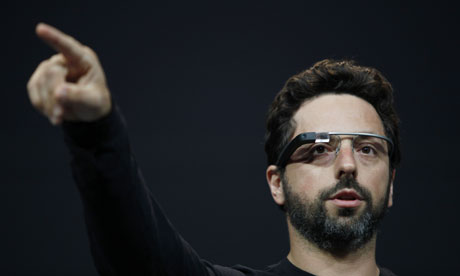
Now we carry relatively unobtrusive devices of practically unlimited recording capacity, and these are easily linked to archives that are likewise virtually unlimited in their capacity to store and organize these memories. If we cast our vision into the not altogether distant nor fantastical future, we can anticipate individuals engaging with the world through devices (e.g., Google Glass) that will both augment the physical world by layering it with information and generate a near continuous audio-visual record of our experience.

Compared to these present and soon-to-be technologies, the 35mm camera which was at my disposal through the ’80s and ’90s seems primitive. With regards to a spectrum indicating the capacity to document and archive memories, I was then closer to my pre-modern predecessors than to the generation that will succeed me.

Roland Barthes’ near mystical veneration of his mother’s photograph, touching as it appears to those of us who lived in the age of memory scarcity, will seem quixotic and quaint to those who have known only memory abundance. Barthes will seem to them as those medievals that venerated the physical book do to us. They will be as indifferent to the photograph, and the past it encodes, as we are to the cheap paperback.

It may seem, as it did to me, that social media revived the significance of the past by reconnecting us with friends we would have mostly forgotten and reconstituting habits of social remembering. I’d even expressed concerns that social media might allow the past to overwhelm the present rendering recollection rather than suppression traumatic. But this has only been an effect of novelty upon that transitional generation who had lived without the technology and upon whom it appeared in medias res. For those who have known only the affordances of memory abundance, there will be no reconnection with long forgotten classmates or nostalgic reminiscences around a rare photograph of their youth capturing some trivial, unremembered moment. It will all be documented and archived, but it will mean not a thing.

It will be Barthes’ contemporary, Andy Warhol, who will appear as one of us. In his biography of Warhol, Victor Bockris writes,

Indeed, Andy’s desire to record everything around him had become a mania.  As John Perrault, the art critic, wrote in a profile of Warhol in Vogue:  “His portable tape recorder, housed in a black briefcase, is his latest self-protection device.  The microphone is pointed at anyone who approaches, turning the situation into a theater work.  He records hours of tape every day but just files the reels away and never listens to them.”

Andy Warhol’s performance art will be our ordinary experience, and it is that last line that we should note — “… and he never listens to them.”

Reconsider Plato’s infamous critique of writing. Critics charge Plato with shortsightedness because he failed to see just how much writing would in fact allow us to remember. But from a different perspective, Plato was right. The efficient and durable externalization of memory would makes us personally indifferent to remembrance. As the external archive grows, our personal involvement with the memory it stores shrinks in proportion.

Give me a few precious photographs, a few minutes of grainy film and I will treasure them and hold them dear. Give me one terabyte of images and films and I will care not at all.

In the future, we will float in the present untethered from the past and propelled listlessly onward by the perpetual stream of documentary detritus we will emit.

Sergey Brin, co-founder of Google appear

For Your Consideration – 9

It’s been a while since the last of these posts, so there’s some older stuff thrown in here. Older, of course, by web standards.

“What Turned Jaron Lanier Against the Web?”:

“Social lasers of cruelty?” I repeat.

“I just made that up,” Lanier says. “Where everybody coheres into this cruelty beam….Look what we’re setting up here in the world today. We have economic fear combined with everybody joined together on these instant twitchy social networks which are designed to create mass action. What does it sound like to you? It sounds to me like the prequel to potential social catastrophe. I’d rather take the risk of being wrong than not be talking about that.”

“Google Should Not Choose Right and Wrong”:

“Such technologies endorse a rather impoverished view of their human masters. Humans, no longer seen as citizens capable of deliberation, are treated as cogs in a system preoccupied with self-optimisation, as if the very composition of that system was uncontroversial.”

“Invasion of the Cyber Hustlers”:

“Cybertheorists in general could perhaps be tolerated as harmlessly colourful futurists, were it not that so many of them, through the influence of their consulting work and virtual bully pulpits, are right now engaged in promoting widespread cultural vandalism. Whatever smells mustily of the pre-digital age must be torn down, “disrupted” and made anew in the sacred image of Google and Apple, except more open to the digital probings of the internet- company oligopoly. Long live sharing, social reading, volunteering free labour as a peer student or member of a company’s online “community”, and entrusting your documents to the data-mining mega-corporations that control the “cloud”.”

“The human race: Prosthetics, doping, computer implants: we take every upgrade we can get. But what is waiting for us at the finish line?”:

“For some, perhaps, this is a consummation devoutly to be wished. But it also reveals the essentially religious nature of much singularity-style techno-futurism: such visions constitute an eschatology in which human beings finally sublime into the cybersphere. It is the silicon Rapture — and this reminds us that ‘to enhance’ once meant literally ‘to raise up’. This desire to become machinic implicitly betrays a hatred of the flesh as severe as that of self-flagellating religious ascetics. For the devout of singularity theory, the perfection of humanity is synonymous with its destruction.”

“The End of the Map”:

“But my favorite cartographic error is the Mountains of Kong, a range that supposedly stretched like a belt from the west coast of Africa through half the continent. It featured on world maps and atlases for almost the entire 19th century. The mountains were first sketched in 1798 by the highly regarded English cartographer James Rennell, a man already famous for mapping large parts of India.”

“The Riddle and the Gift: The Hobbit at Christmas”:

“On his death-bed, the dwarf king, Thorin commends Bilbo’s blend of courage and wisdom, adding, “if more of us valued food and cheer and song above hoarded gold, it would be a merrier world.” Food and cheer are transitory pleasures, which take their value from the moment and the company.”

“The Body Medium and Media Ecology: Disembodiment in the Theory and Practice of Modern Media” [PDF]:

“The body as medium and its disembodiment in the theory and practice of media is an imperative problem for media ecology.”

“Jerry Seinfeld Intends to Die Standing Up”:

“In his jokes he often arranges life’s messy confusions, shrewdly and immaculately, into a bouquet of trivial irritants. Seinfeld’s comedic persona is unflappable — annoyed plenty, but unmarked by extremes of emotion, much less tragedy.”

“Why Stephen Greenblatt is Wrong — and Why It Matters”:

“This is a powerful vision of the world entering a prolonged period of cultural darkness. If it were true, then Greenblatt’s second Swerve, the anti-religious polemic, also would deserve every award and plaudit it won. However, Greenblatt’s vision is not true, not even remotely.”

“Saying Goodbye to Now”:

“It’s an era of controlled deprivations and detoxification, of fasts and cleanses. Perhaps everyone should make a weekly ritual of twenty-four hours of undocumented life. Periods of time in which memory must do all the heavy lifting, or none of it, as it chooses, the consequences being what they may be. No phone, no eclipse glasses to mitigate the intensity of what lies before you. The only options are appetite, experience, memory, and later, if so inclined, writing it down.”

Thanks

The past two years I have written a post on the day of Thanksgiving related to the theme of gratitude. The first of these reflected briefly on some lines from G.K. Chesterton and a stanza of poetry from Wendell Berry. The second explored the possibility of taking a sense of gratitude as a measure of technology. If two consecutive instances constitute a tradition of sorts, then I want to maintain the tradition while deviating just slightly from precedent by posting today, on the eve of Thanksgiving.

Also, rather than offering any thoughts on gratitude, my own or another’s, I’ll take the opportunity to pass along my thanks to you, those of you who have taken the time to read, comment, and pass along what you’ve read here to others.

When I started this blog in earnest a little over two years ago, I had little sense of how the endeavor would play out. I’m pleased to report that it has played out quite well by my estimation (even if it hasn’t quite resulted in fame and fortune!). I’m grateful for the opportunity to clarify my thinking through the act of writing for a (modest) public, and I’m grateful for the further clarification that has arisen from the interactions that followed. I’m grateful as well for the generous mentions this blog has received from others. And I’m grateful for the opportunities to write for other venues that have arisen over the past year or so. All of this, of course, arises directly from your generosity.

So then, thank you.

And, of course, happy Thanksgiving.