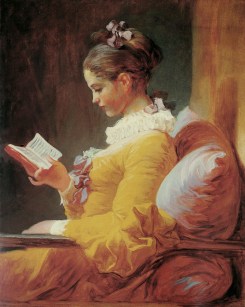
“The whole world stops as this stunning dancer rises,” Alessandro said, “and its beauty puts to shame all our doubts.”
As Alessandro, the protagonist in Mark Helprin’s A Soldier of the Great War, prepares to leave for university, his father tells him, “You’ll learn more in your journeys to and from Bologna, if you make them on horseback, than from all your professors combined.” Alessandro’s narratorial voice adds, “he had almost been right.”
A Soldier of the Great War is the tale of an Italian veteran of the First World War who recounts his life story years later during a long walk with a young man he meets by chance. It is, among other things, a book about beauty and the kind of attention to the world necessary to recognize it. Alessandro believes in the redemptive power of beauty and throughout the story he shows himself to be remarkably attuned to the instances of beauty that permeate our experience. Not only the beauty of a majestic moonrise, but also the beauty in more prosaic scenes.
In her absence, and in the absence of anyone like her, he was drawn to many things that, in being beautiful, were her allies — the blue of the stage-set in the floodlights, the grace of a cat as it turned its small lion-like face to question a human movement, a fire that blazed from within the dark of a blacksmith’s shop or a baker’s and caught his eye as he passed, a single tone arising from a cathedral choir to shock a jaded congregation with it unworldly beauty, the mountaintops as snow was lashed from them by blue winds, the perfect and uncontrived smile of a child.
In his Kenyon College commencement address from 2005, David Foster Wallace, with the kind of earnestness that he was uniquely capable of pulling off, similarly insisted that
The really important kind of freedom involves attention, and awareness, and discipline, and effort, and being able truly to care about other people and to sacrifice for them, over and over, in myriad petty little unsexy ways, every day. That is real freedom. The alternative is unconsciousness, the default-setting, the “rat race” — the constant gnawing sense of having had and lost some infinite thing.
Attention again. Attention to beauty, attention in order to love well. My worry is that the habits we form in a wired, connected, networked, always online, linked in world combat the sort of attention that Alessandro practices as well as the kind of attention that Wallace advocated. Nothing captures this more than the posture we are all so adept at striking now: head down, focused on a small screen, with the world going by all around us — unnoticed, unattended.
The devices themselves don’t demand this, and there are ways of using them so that they do not become the enemies of attention. Nonetheless, there does seem to be a propensity toward uses and practices that form habits of misdirected and fractured attention.
Helprin and Wallace, each in their own way, push us to look up and take notice; to come up out of the digital waters for breath and for beauty and for love. To see, to really see the world around us and to get out of our heads long enough to be attentive to others — that is our challenge.
… it’s the stuff that’s about what it feels like to live. Instead of being a relief from what it feels like to live.
That is how David Foster Wallace, in Although of Course You End Up Becoming Yourself, contrasted traditional literature with its coherent narrative and a satisfying sense of closure, to experimental or avant-garde literature which typically exhibits neither. I’ve been thinking about that contrast since I posted the passage a few weeks ago. Writing that is experienced as a relief from what it feels like to be alive and writing that reflects what it feels like to be alive — I’m wondering if that same distinction could also be usefully applied to teaching. Can teaching, in the same way, reflect what it feels like to be alive, rather than be a relief from it?
Literature and teaching are both components of the ongoing, ramshackle project we call our education. When I am most hopeful about what a teacher can do, I see it as not unlike what a very good book might also accomplish. We might describe it as the opening up of new and multiple vistas into both the world and ourselves. A good book offers a challenging engagement with reality, rather than the mere escapism that some literature proffers instead. To borrow a line from Bridge to Terabithia, good teaching, likewise, pushes students to see beyond their own secret countries, to see and to feel what lies beyond and within. Of course, on my less hopeful (read, more curmudgeonly) days, I feel that convincing students that a book can work in that way is itself the necessary task.
What, then, might it mean to teach so as to reflect what it feels like to be alive?
For one thing, it involves feeling; it is affective. It reaches beyond the transfer of information to the mind, and seeks to move the heart as well. This matters principally because while we go about the work and play of living we tend to lead with our hearts and not with our minds (for better and/or for worse).
But in order to move the heart, the heart must be susceptible to being moved. The numbness that threatens always to settle on us as wave upon wave of stimulation washes over us gently massaging us into a state of mildly amused indifference to reality must be overcome. This numbness itself might be self-protective, but, while self-knowledge has a distinguished place in the history of education, self-preservation seems a less noble aspiration. Teaching that leads to feeling must find a way to break this through this self-protective numbness. Of course, that numbness is itself part of what it feels like to be alive, but it is the part that must first be encountered, acknowledged, and transcended in order to feel all the rest.
Like the artist in Wallace’s view, the teacher has the license and the responsibility
to sit, clench their fists, and make themselves be excruciatingly aware of the stuff that we’re mostly aware of only on a certain level. And that if the writer [or teacher] does his job right, what he basically does is remind the reader [or student] of how smart the reader [or student] is.
The teacher, like the writer, must themselves be sensitive to what it feels like to be alive so as to teach to that feeling and help students understand it, understand themselves. Perhaps it is precisely here that teaching has failed students, in the inability to enter into the student’s world so as to speak meaningfully into it.
The trick, of course, is also to do so without falling into the equivalent of what Wallace calls “shitty avant garde,” literature that tries too hard and ignores the reader in its effort to be profound. Trying too hard to achieve this effect without authenticity is fatal. Likewise with teaching. Watching Lean on Me or Dead Poet’s Society one too many times will likely do more harm than good.
Good writing and good teaching are both grounded in a deep respect for the reader and the student, not in an inordinate desire to be inspiring. This is what finally stuck me most forcefully in Wallace’s comments. His work, his estimation of what literature could do, flowed from a remarkable confidence in the reader. Perhaps then this is also where good teaching must begin, with an equal respect for and confidence in the student.
Technology and consumerism coalesce to create disposable reality. Let’s try that idea on for a moment by drawing together observations made about each by Albert Borgmann and William Cavanaugh respectively.
Writing about technological culture, Borgmann distinguished between devices characterized by a “commodious,” accessible surface and a hidden, opaque machinery below the surface on the one hand and what he calls focal things on the other. Devices are in turn coupled with consumption and focal things are paired with focal practices. Focal things and practices, according to Borgmann, “gather our world and radiate significance in ways that contrast with the diversion and distraction afforded by commodities.” In short, we merely use devices while we engage with focal things.
With those distinctions in mind, Borgmann continues, “Generally, a focal thing is concrete and of commanding presence.” A commanding presence or reality is later opposed to “a pliable or disposable reality.” Further on still, Borgmann writes, “Material culture in the advanced industrial democracies spans a spectrum from commanding to disposable reality. The former reality calls forth a life of engagement that is oriented within the physical and social world. The latter induces a life of distraction that is isolated from the environment and from other people.” On that last point, bear in mind that Borgmann is writing in the early 2000s before the onset of social media. (Although, it is debatable whether or not his point still stands.)
Borgmann then addresses his analysis to human desire by noting that:
To the dissolution of commanding reality corresponds on the human side a peculiar restlessness. Since every item of cyberpresence can be x-rayed, zoomed into, overlayed, and abandoned for another more promising site, human desire is at every point at once satiated, disappointed, and aroused to be once more gorged, left hungry, and spurred on.
Writing about contemporary consumerism, William T. Cavanaugh observes, “What really characterizes consumer culture is not attachment to things but detachment. People do not hoard money; they spend it. People do not cling to things; they discard them and buy other things.” Furthermore, Cavanaugh adds, “Consumerism is not so much about having more as it is about having something else; that’s why it is not simply buying but shopping that is the heart of consumerism. Buying brings a temporary halt to the restlessness that typifies consumerism.”
Both Borgmann and Cavanaugh have identified an analogous pattern at the heart of both contemporary technology and the consumerist spirit: both render reality essentially disposable. Both also note how this disposable quality yields a restlessness or unsettledness that permeates our experience. This experience of reality as essentially disposable and its attendant restlessness are characteristic of what sociologist Zygmunt Bauman has termed, “liquid modernity.”
Interestingly, one of the focal things identified by Borgmann is the book with its corresponding focal practice, reading. While Cavanaugh did not make this observation, it seems to me that the book as object is one of the few commodities that resists his analysis of contemporary consumerism. That is to say that books tend to be purchased and kept. There are exceptions, of course. Many books turn out not to be worth keeping. We trade some books at used books stores for others. We also now sometimes sell certain books through services provided by Amazon.com and the like. Nonetheless, I would venture to say that those who purchase books often do so with an eye to keeping them. Where we would typically encounter detachment, with the book we find a measure of attachment. In a sea of technological, consumerist flux the book is a fixed point. It is an object that is engaged and not merely used, it is possessed rather than readily disposed; and perhaps, in modest measure, it tacitly alleviates our restlessness.
Perhaps this then provides one angle of approach to the analysis of electronic books and e-readers. Consider Matt Henderson’s recent observations regarding his children’s experience of “reading” Al Gore’s Our Choice, “Push Pop Press’s highly-anticipated first interactive book.” Henderson introduced Our Choice to his two children whom he describes as technologically savvy readers.
I showed them Our Choice, and just observed. They quickly figured out the navigation, and discovered all the interactive features. But… they didn’t read the content. Fascinated, they skipped through the book, hunting for the next interactive element, to see how it works. They didn’t completely watch a single video.
When they finished, I asked them to tell me about the book. They described how they could blow on the screen and see the windmill turn, how they could run their fingers across the interactive map and see colors changing. How they could pinch to open and close images. But they couldn’t recall much of what the book was about. They couldn’t recall the message intended to be communicated in any of the info-graphics (though they could recall, in detail, how they worked.)
Run through Borgmann’s grid this seems to be an instance of contrast between a focal thing with its attendant practice and a device with its attendant consumption. The Kindle comes off better in Henderson’s analysis, and in his children’s experience, and this makes sense since the Kindle’s interface lends itself more readily to focused engagement. And yet, the Kindle fails to provide the physical presence of books we keep which seems to be not insignificant as we search for anchors in an environment of manufactured restlessness and disposable realities. To borrow a line from T. S. Eliot, nostalgia for the book in this case is just our pursuit of a “still point of the turning world.”
I’ve been reading Although Of Course You End Up Becoming Yourself: A Road Trip with David Foster Wallace, a book that amounts to a running transcript of David Lipsky’s five days with Wallace back in the mid-1990s during a book tour for Wallace’s then recently released Infinite Jest. I’ve not read anything by Wallace leading up to this, but I had been drawn to his personality by the numerous mentions of Wallace I’d come across over the last year or so. I’ve not been disappointed. It has been an odd thing to feel a deep sadness for the loss of a person you’ve never met, or, in a certain sense, only just met, overheard really. Reading this record of Lipsky’s time with Wallace, you feel as though you were eavesdropping, and the conversation is so engaging that you can’t quite walk away. Wallace thus far comes across as a remarkably sensitive, intelligent, and kind individual with genuine insight into what it feels like to be alive.
I wanted to excerpt a passage or two that I thought spoke to some of the issues that I’ve written about here, particularly the sense of being overwhelmed by stimulation and distraction or the fractured, alienated feel of contemporary life. Remember as you read the selections that this is a transcript of a conversation and so it will not have the polish of prose. But it makes up for the lack of polish with a certain immediacy and affect that I thought was compelling.
We pick up Wallace discussing traditional narrative with Lipsky. Lipsky has suggested that literature in the mold of Leo Tolstoy does the best job of capturing the reality of life. Wallace disagrees:
And I don’t know about you. I just — stuff that’s like that, I enjoy reading, but it doesn’t feel true at all. I read it as a relief from what’s true. I read it as a relief from the fact that, I received five hundred thousand discrete bits of information today, of which maybe twenty-five are important. And how am I going to sort those out, you know?
Lipsky is not sold, he remarks that he is more taken by the continuity of life, rather than the discontinuity. Wallace continues:
Huh. Well you and I just disagree. Maybe the world just feels differently to us. This is all going back to something that isn’t really clear: that avant-garde stuff is hard to read. I’m not defending it, I’m saying that stuff — this is gonna get very abstract — but there’s a certain set of magical stuff that fiction can do for us. There’s maybe thirteen things, of which who even knows which ones we can talk about. But one of them has to do with the sense of, the sense of capturing, capturing what the world feels like to us, in the sort of way that I think that a reader can tell “Another sensibility like mine exists.” Something else feels this way to someone else. So that the reader feels less lonely.
There’s really really shitty avant-garde, that’s coy and hard for its own sake. That I don’t think it’s a big accident that a lot of what, if you look at the history of fiction — sort of, like, if you look at the history of painting after the development of the photography — that the history of fiction represents this continuing struggle to allow fiction to continue to do that magical stuff. As the texture, as the cognitive texture, of our lives changes. And as, um, as the different media by which our lives are represented change. And it’s the avant-garde or experimental stuff that has the chance to move the stuff along. And that’s what’s precious about it.
And the reason why I’m angry at how shitty most of it is, and how much it ignores the reader, is that I think it’s very very very very precious. Because it’s the stuff that’s about what it feels like to live. Instead of being a relief from what it feels like to live.
That struck me as a rather astute analysis of the power of literature and the potential (and pitfalls) of the avant-garde. I was especially struck by his contrast between traditional narrative in Tolstoy’s mold which Wallace experiences as a relief from what it feels like to live, and disjointed, discontinuous contemporary literature that reflects what it feels like to live.
Wallace goes on to describe once again the feel of life that contemporary fiction should attempt to capture. Keep in mind that although this dialog feels fresh and contemporary it is over 15 years old and was spoken at the dawn of the Internet age.
… I think a lot of people feel — not overwhelmed by the amount of stuff they have to do. But overwhelmed by the number of choices they have, and by the number of discrete, different things that come at them. And the number of small … that since they’re part of numerous systems, the number of small insistent tugs on them, from a number of different systems and directions. Whether that’s qualitatively different than the way life was for let’s say our parents or our grandparents, I’m not sure. But I sorta think so. At least in some way — in terms of the way it feels on your nerve endings.
Finally, here is a brief comment on the privilege and responsibility of the writer which gives us a sense of Wallace’s striking confidence in and respect for the reader:
What writers have is a license and also the freedom to sit — to sit, clench their fists, and make themselves be excruciatingly aware of the stuff that we’re mostly aware of only on a certain level. And that if the writer does his job right, what he basically does is remind the reader of how smart the reader is. Is to wake the reader up to stuff that the reader’s been aware of all the time.
In 1903, E. M. Forster imagined the future. Teleconferencing, instant global communication, and televisions all make an appearance. Forster envisioned a networked world in which every person lived physically isolated from, yet at the same time, mechanically connected to every other person. Humanity had driven itself under ground and each person lived in a habitation like the one Forster describes at the start of his story, The Machine Stops:
Imagine, if you can, a small room, hexagonal in shape, like the cell of a bee. It is lighted neither by window nor by lamp, yet it is filled with a soft radiance. There are no apertures for ventilation, yet the air is fresh. There are no musical instruments, and yet, at the moment that my meditation opens, this room is throbbing with melodious sounds. An armchair is in the centre, by its side a reading-desk-that is all the furniture. And in the armchair there sits a swaddled lump of flesh-a woman, about five feet high, with a face as white as a fungus. It is to her that the little room belongs.
The action begins when the woman is contacted by her son who lives on the other side of the globe. His call is taken as a great inconvenience because it requires the mother to silence the music, dim the lights, and disconnect from the flow of networked communication. The constant wall of sound and sight is the norm, and the woman must press the “isolation knob” in order to speak exclusively with one person. We discover that this person to person communication takes place with the help of a device which projects a holographic image of the other person. The son, we learn, wants to see the mother face to face, and in the following exchange we begin to recognize the nature of the third main character in the story, The Machine:
“I want to see you not through the Machine,” said Kuno. “I want to speak to you not through the wearisome Machine.”
“Oh, hush!” said his mother, vaguely shocked. “You mustn”t say anything against the Machine.”
“Why not?”
“One mustn”t.”
“You talk as if a god had made the Machine,” cried the other. “I believe that you pray to it when you are unhappy. Men made it, do not forget that. Great men, but men. The Machine is much, but it is not everything. I see something like you in this plate, but I do not see you. I hear something like you through this telephone, but I do not hear you.”
In the world Forster has created ideas rule; physicality is taken as a great encumbrance. Explaining why she would rather not travel to see her son, the mother whose name we learn is Vashti, explains, “I dislike seeing the horrible brown earth, and the sea, and the stars when it is dark. I get no ideas in an air- ship.” And it is the ideas that everyone is after.
Each day they awake, they are bathed automatically, they are fed artificial food, and they tap into the network in search of ideas. They gather virtually for “lectures” to hear about ideas; Vashti herself delivers lectures on the history of music. When the artificial day is done, a bed emerges so that they may sleep and do it all over again tomorrow. People rarely emerge from their cocoons where everything is brought to them and from which they may communicate with everyone else. The “clumsy system of public gatherings had been long since abandoned” and while an earlier age made machines to take people to things, this age had learned the real purpose of machines was to bring things to people. They were “funny old days, when men went for change of air instead of changing the air in their rooms!”
Finally unable to convince Vashti to make the journey, the son disconnects, Vashti re-enters the flow of networked communication, and “all the accumulations of the last three minutes burst upon her.” Time goes on and Vashti carries on, delivering lectures and searching for ideas, all from her armchair. Meanwhile the “Machine hummed eternally,” yet no one noticed the noise for they had heard it from birth. Vashti, finally moved by a tempered maternal compassion, decides that she must go to see her son. It would not be hard since a system of airships still ran across the globe. Few ever used it, however, “for, thanks to the advance of science, the earth was exactly alike all over … What was the good of going to Peking when it was just like Shrewsbury?”
Travel in the airships exposed people to more physical stimulation than they were used to and it was taken as a great annoyance. The glimmer of light from the sun or the stars, the sight of others, god forbid the touch of others, and the smell – it was all nearly unbearable. Vashti regretted her decision, but pressed on. As she glides over the earth the narrator informs us that “all the old literature, with its praise of Nature, and its fear of Nature, rang false as the prattle of a child.”
As the story unfolds we come to understand that the Machine and the book that explains how to use the Machine to satisfy every need are treated with nearly religious veneration even though religion had long since been exposed as a superstition. Occasionally, the characters in the story break into liturgical exchanges:
How we have advanced, thanks to the Machine!”
“How we have advanced, thanks to the Machine!” said Vashti.
“How we have advanced, thanks to the Machine!” echoed the passenger …
Passing over one place and then another, Vashti sighs, “No ideas here.” Later she looks again, “They were crossing a golden sea, in which lay many small islands and one peninsula. She repeated, ‘No ideas here,’ and hid Greece behind a metal blind.”
When Vashti finally arrives at her son’s room, he informs her that he had been to the surface. Strictly speaking this was not forbidden and one could request a respirator with which to travel momentarily to the outside world whose air was taken to be unbreathable. The son, however, had found his own way out through an old ventilation shaft, and because of his impudence he was now being threatened with homelessness. Homelessness, we later learn, was akin to a death sentence imposed by exposure and abandonment on the earth’s surface.
The story goes on to its stirring climax, which the title already suggests, but I will not give away anymore of the plot here. Take an hour or so and read the whole thing for yourself. It is thought provoking and entertaining in equal measure. Like most dystopian visions of the future, it is exaggerated. And like Orwell’s 1984, the evil lies in a centralized, authoritarian power represented by the Machine and its Committee. But in a Huxleyean mode, it is a power that humanity has acquiesced to in its pursuit of comfort and its flight from material reality.
The body is the victim in Forster’s tale. The body has been starved while the mind has been indulged. The senses have atrophied in a world of ideas, or we might say, of Information. Even sex is uninteresting, having been reduced to merely a proscribed and mechanical act for the sake of propagating the race. At one point the narrator informs us that, “by these days it was a demerit to be muscular.” In one of the more striking exchanges in the story, the son tells of his first experience with genuine physical activity:
You know that we have lost the sense of space. We say “space is annihilated”, but we have annihilated not space, but the sense thereof. We have lost a part of ourselves. I determined to recover it, and I began by walking up and down the platform of the railway outside my room. Up and down, until I was tired, and so did recapture the meaning of “Near” and “Far”. “Near” is a place to which I can get quickly on my feet, not a place to which the train or the air-ship will take me quickly. “Far” is a place to which I cannot get quickly on my feet; the vomitory is “far”, though I could be there in thirty-eight seconds by summoning the train. Man is the measure. That was my first lesson. Man’s feet are the measure for distance, his hands are the measure for ownership, his body is the measure for all that is lovable and desirable and strong.
This is a remarkable passage for the way that it insists that our embodied experience is an essential component of our apprehension of reality. It anticipates the later philosophical work of Maurice Merleau-Ponty and the even later cognitive science that has revealed the degree to which our thinking and experience of reality depends on our embodied interactions with the world and with others. Forster’s imagined world, however, was a Cartesian paradise. Ideas and abstractions reigned. The further removed from experience and the more abstract an idea could become, the better:
Those who still wanted to know what the earth was like had after all only to listen to some gramophone, or to look into some cinematophote. And even the lecturers acquiesced when they found that a lecture on the sea was none the less stimulating when compiled out of other lectures that had already been delivered on the same subject. “Beware of first- hand ideas!” exclaimed one of the most advanced of them.
Contemporary readers, as you may have already guessed, tend to read the Machine as a prescient allegory of the Internet. It is not a perfect allegory for, among other reasons, Forster’s network is not quite wireless, but it is remarkably suggestive nonetheless. Most striking perhaps is the degree of dependence upon the network of telecommunications exhibited by all of the characters except the son, as well as the ubiquity of the Machine’s stimulation represented by the constant, unnoticed hum. As he approaches the surface, the son explains,
The light helped me for a little, and then came darkness and, worse still, silence which pierced my ears like a sword. The Machine hums! Did you know that? Its hum penetrates our blood, and may even guide our thoughts. Who knows! I was getting beyond its power.
Many will also be jolted into startled recognition by the degree of agency that was handed over to the Machine. In a passage that reminds us of The Matrix, we read:
We created the Machine, to do our will, but we cannot make it do our will now. It was robbed us of the sense of space and of the sense of touch, it has blurred every human relation and narrowed down love to a carnal act, it has paralysed our bodies and our wills, and now it compels us to worship it. The Machine develops – but not on our lies. The Machine proceeds – but not to our goal. We only exist as the blood corpuscles that course through its arteries, and if it could work without us, it would let us die.
Later on we also catch a warning about the alienation from humanity and the exploitation of nature, all in the name of efficiency:
Year by year it was served with increased efficiency and decreased intelligence. The better a man knew his own duties upon it, the less he understood the duties of his neighbour, and in all the world there was not one who understood the monster as a whole … Humanity, in its desire for comfort, had over-reached itself. It had exploited the riches of nature too far. Quietly and complacently, it was sinking into decadence, and progress had come to mean the progress of the Machine.
Still tempted to go on telling more of the story, I’ll content myself by leaving you with this last line:
“Quicker,” he gasped, “I am dying – but we touch, we talk, not through the Machine.” He kissed her. “We have come back to our own. We die, but we have recaptured life …”
Now go read the rest, and then take a walk outside and hug someone — not necessarily in that order.

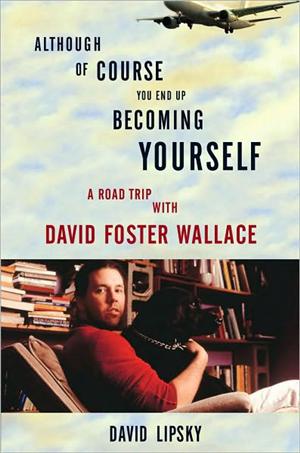
 , a book that amounts to a running transcript of David Lipsky’s five days with Wallace back in the mid-1990s during a book tour for Wallace’s then recently released
  . I’ve not read anything by Wallace leading up to this, but I had been drawn to his personality by the numerous mentions of Wallace I’d come across over the last year or so. I’ve not been disappointed. It has been an odd thing to feel a deep sadness for the
 L.M. Sacasas