Weekend Reading, 8/26/2011

So there was a modest, but positive response to last week’s “Weekend Reading” post, enough encouragement for me to try to make this a regular feature. Without further ado then, here are links to a few of the more interesting articles I came across this week.

“Why Are Finland’s Schools Successful” by LynNell Hancock in Smithsonian: Profile of the Finnish educational system which over the past 20-30 years has become one of the best in the world. Happily, only scant mention of technology in the classroom; emphasis is elsewhere.

“Print vs. Online” by Jack Shafer at Slate: An anecdotal endorsement of print reading’s advantages over digital with a study or two thrown in.

“Does This Technology Serve Human Purposes?” (Part One and Part Two and Part Three) Henry Jenkins interviews Sherry Turkle at Aca-Fan: Three part interview with Turkle, MIT professor and author most recently of Alone Together: Why We Expect More from Technology and Less from Each Other. Jenkins himself is a highly regarded scholar of new media and popular culture.

“Reading is Elemental” by Helen Vendler in Harvard Magazine: Ostensibly an unlikely plan for reforming elementary education, but, in fact, an impassioned commendation of reading and the humanities. “Without reading, there can be no learning. The humanities are essentially a reading practice.”

“Literature Brings the Physical Past to Life” by Scott Herring at The Chronicle of Higher Education: Professor encourages his colleagues to view literature as an opportunity to rediscover the materiality of the past. “Knowing the past means knowing what people carried in their pockets, what they did with their sewage, where their dogs slept.” Told in part through a moving personal anecdote.

“Team Bonding Suffers in Tech Age” by Adrian Dater in Sports Illustrated: A look at the impact of social media and smart phones in on sports teams. Some advantages noted, but also contributing to the erosion of team chemistry and camaraderie. (h/t: Mr. Bailey)

_____________________________________________________________________

Disclaimer: Unless it’s clear from my brief comments, passing on these links should not necessarily be taken as an endorsement.

Making Sense Out of Life: Early Modern and Digital Reading Practices

When I wrote the About page for this blog I cited an article by Alan Jacobs from several years ago in which he likened blogs to commonplace books. Commonplace books, especially popular during the sixteenth century when printing first began to yield an avalanche of relatively affordable books, served as a means of ordering and making sense out of the massive amounts of information confronting early modern readers. As is frequently noted, the dismay and disorientation they experienced is not altogether unlike the angst that sometimes accompanies our recent and ongoing digital explosion of available information. And so, taking a cue from Jacobs, I intended for this blog to be something akin to a commonplace book.

As it turned out, the analogy was mostly suggestive. Much that I write here does not quite fit the commonplace genre. Nonetheless, something of the spirit, if not the law, persists. The commonplace genre would find a nearer kin in Tumblr than in traditional blogs.

In a 2000 essay reprinted in The Case for Books (2009), historian of the book Robert Darnton also reflects on commonplace books and the scholarly attention they attracted. The attention was not misplaced.  Commonplace books offered a window into the reading practices and mental landscape of their users; and for an era in which they were widely kept, they could offer a glimpse at the mental landscape of whole segments of society as well.  In the spirit of the commonplace book, here are some excerpts from Darnton’s essay with a few reflections.

Describing the practice of commonplacing:

“It involved a special way of taking in the printed word. Unlike modern readers, who follow the flow of a narrative from beginning to end (unless they are digital natives and click through texts on machines), early modern Englishmen read in fits and starts and jumped from book to book.  They broke texts into fragments and assembled them into new patterns by transcribing them in different sections of their notebooks.

Then they reread the copies and rearranged the patterns while adding more excerpts. Reading and writing were therefore inseparable activities. They belonged to a continuous effort to make sense of things, for the world was full of signs: you could read your way through it; and by keeping an account of your readings, you made a book of your own, one stamped with your own personality.”

What is only a parenthetical aside in Darnton’s opening paragraphs was for me a key insight. Darnton’s description of commonplacing could easily be applied to the forms of reading practiced with digital texts, all the way down to the personalization. What is missing, of course, and this is no small thing, is the public or social dimension.

On what commonplace books reveal:

“By selecting and arranging snippets from a limitless stock of literature, early modern Englishmen gave free play to a semi-conscious process of ordering experience. The elective affinities that bound their selections into patterns reveal an epistemology at work below the surface.”

That last sentence could easily function as a research paradigm for analysis of social media. Map the “elective affinities” of what Facebook or Twitter or Google+ users link and post and the emergent patterns will be suggestive of underlying epistemologies. Although here again the social dimension complicates the matter considerably. The “elective affinities” on display in social networking sites are performative in a way that private commonplacing was not, thus injecting a layer of distorting self-reflexivity.  But, then, that performative dimension is interesting on its own terms.

Commonplacing as reading for action:

“But they read in the same way — segmentally, by concentrating on small chunks of text and jumping from book to book, rather than sequentially, as readers did a century later, when the rise of the novel encouraged the habit of perusing books from cover to cover. Segmental reading compelled its practitioners to read actively, to exercise critical judgment, and to impose their own pattern on their reading matter. It was also adapted to ‘reading for action,’ an appropriate mode for men like Drake, Harvey, [etc.] and other contemporaries, who consulted books in order to get their bearings in perilous times, not to pursue knowledge for its own sake or to amuse themselves.”

Again the resemblance between early modern reading practices as described by Darnton and digital reading practices is uncanny. The rise of sustained, linear reading is often attributed to the appearance of printing. Darnton, however, would have us connect sustained, cover-to-cover reading with the later rise of the novel. In this case, the age of the novel stands as an interlude between early modern and digital forms of reading which are more similar to one another than either is to reading as practiced in the age of the novel.

The idea of “reading for action” is also compelling as it suggests the agonistic character of both early modern English politics and early 21st century American politics. I suspect that a good deal of online reading today is done in the spirit of loading a gun. At least this is often the ethos of the political blogosphere.

Nonetheless, Darnton would have us see that this form of reading, at least in its early modern manifestation, had its merits in what it required from the reader as an active agent.

Finally, on reading and the attempt to make sense of out of experience:

“… we may pay closer attention to reading as an element in what used to be called the history of mentalities — that is, world views and ways of thinking. All the keepers of commonplace books, from Drake to Madan, read their way through life, picking up fragments of experience and fitting them into patterns. The underlying affinities that held those patterns together represented an attempt to get a grip on life, to make sense of it, not by elaborating theories but by imposing form on matter.”

Early modern Britons and those of us who are living through the digital revolution (an admittedly overplayed phrase) share a certain harried and anxious disposition. It was, after all, the early modern poet John Donne, who wrote of his age, “Tis all in pieces, all coherence gone.” Early moderns deployed the commonplace book as a means of collecting some of the pieces and putting them together once more. If we follow the analogy, and this is always a precarious move, it would suggest that the impulses at work in contemporary digital commonplacing practices — which have not only written information, but lived experience as the field from which fragments are culled — are deeply conservative. They would amount to an effort to impose order on the chaotic flux of live.

Midnight in Paris: Learning to Live With the Past

The past may be a foreign country where they do things differently as the L. P. Hartley line has it, but it is one to which many would readily immigrate given the opportunity. If you are among them, Woody Allen’s Midnight in Paris will likely enchant and delight you. (Warning: some spoilers ahead.) Gil, the main character played charmingly by Owen Wilson, and his fiancée tag along with her parents who have come to Paris on a business trip. She and her parents are crassly materialistic, he is a romantic — a romantic in love with the city, particularly its Jazz Age past. Having been a successful, but disenchanted Hollywood film writer he is determined to write real literature, even if it means surrendering the upscale lifestyle his fiancée craves. While they shop for chairs that cost as much as a moderately priced four-door sedan, he frequents outdoor shops that sell vintage vinyl records and works on his novel about a man who owns a nostalgia shop. The theme of his would-be novel tracks closely with Gil’s own sensibilities. He obsesses over the past and its artifacts, and his obsession is an index of his dissatisfaction with the present.

Without even a gesture toward explantation, and all the better for it, a vintage Peugeot filled with revelers stops to pick up Gil just after a clock has struck midnight. Gil, with some hesitation, joins the merry crowd and finds himself transported back to the 1920’s and the Paris of his dreams. Endearingly awestruck throughout the experience, he meets the Fitzgeralds, Hemingway, Gertrude Stein, T. S. Eliot, Picasso, Dali, Cole Porter, and a host of other luminaries just entering into the fullness of their legend. Each night he rides into the past, and each morning he finds himself again in the present, a progressively unfulfilling present.

When he is in the past, Gil comes alive. The characters are inspired: Adrien Brody plays a delightfully quirky Salvador Dali and Corey Stoll is almost absurdly intense as Hemingway. Kathy Bates’ Gertrude Stein provides Gil with straightforward counsel regarding life and writing. Gil, as he becomes increasingly at ease in the past, offers Luis Buñuel a suggestion for a film in which guests find themselves unable to leave a room. Buñuel, perplexed, wonders why they cannot simply walk out.  He also finds in Picasso’s lover Adriana, a woman who stirs his heart and a kindred spirit. Simply put, the past rekindles Gil’s passion.

Yet, Allen finally wants to critique nostalgia and reaffirm the present. The film builds up to an overly didactic moment when Gil, realizing that he cannot remain in the past indefinitely, launches into a not quite moving appreciation of the present. Allen foreshadows the moment throughout the film. While delivering one of his impromptu lectures, Paul, a pedantic intellectual and friend of Gil’s fiancee, pontificates about the “Golden Age Fallacy,” the unsubstantiated belief that the greatness  of some prior historical era eclipses the present, a chronological version of the grass is always greener. The character of Adriana is herself unimpressed with the ’20s and nostalgic for 1890s Paris, La Belle Époque. When Gil and Adriana, Inception-like, delve even further into the past via horse-drawn carriage they meet up with Degas, Gauguin, and Toulouse-Lautrec just as La Belle Époque commences.  But we find those  artists similarly dismissive of their own age believing it pales in comparison with the Renaissance. And it is then that Gil realizes the futility of inordinately longing for another age.

He returns to the present, reorders his life, and walks off happily ever after in the Paris rain. And we, likewise, leave the theater, returning to our own present, cured of our nostalgic longings, and determined to seize the moment. Yet, the film lingers in our minds and as we revisit it, we find ourselves charmed. It works its magic as we turn it over in our memory. Wasn’t the “Golden Age Fallacy” introduced by the most unlikeable, pompous character in the film? Wasn’t the past portrayed in delightful, vivacious, enchanting fashion? Wasn’t Gil, in fact, nourished and invigorated by his dalliances with the past? While Gil chose to return to his present, did not Adriana choose to stay in La Belle Époque? Finally, wasn’t Gil’s other climatic epiphany (that I will not spoil) revealed in the past?

Certainly, the past is shown to be complex and disordered in its own way. In one of the few more sober scenes, Gil and Adriana, on a moonlit stroll through the city, come upon Zelda Fitzgerald very near to taking her own life. Yet, even here there is ambiguity. Gil offers Zelda Valium which we learn he has been taking to cope with the anxieties of an impending wedding. Are we to conclude that while the past bequeaths great art and literature to the present, the best the present can offer the past is Valium? Not quite I suppose, I do recall penicillin also being mentioned at some point.

Midnight in Paris takes nostalgia as its theme, but the difficulty with any exploration of nostalgia is that in common usage the word indiscriminately names too many sensibilities, unfortunately dismissing appropriate and enriching ways of being with the past. Altogether, the film helpfully suggests that there is more than one way to have a disordered relationship to the past. We may succumb to the “Golden Age” fallacy and refuse the present, or we might also reject the past altogether uprooting ourselves from that which gives depth of field to lived experience. While Gil chooses the present, it is clear that the past nourished and educated him. While he has chosen not to live in the past, he has not abandoned it either. He will not live in it, but he will live with it.

It was Buñuel who wrote in his autobiography,

You have to begin to lose your memory, if only in bits and pieces, to realize that memory is what makes our lives.  Life without memory is no life at all …  Our memory is our coherence, our reason, our feeling, even our action.  Without it, we are nothing.

Thus we may turn the commonplace on its head and suggest that the past is the only place we can live.
Offloaded Memory and Its Discontents (or, Why Life Isn’t a Game of Jeopardy)

It is not surprising to learn that we are taking the time to remember less and less given the ubiquitous presence of the Internet and the consequent ability to “Google it” when you need it whatever “it” happens to be.  A new study in the journal Science affirms what most of us have already witnessed or experienced.  According to one report on the study:

Columbia University psychologist Betsy Sparrow and her colleagues conducted a series of experiments, in which they found that people are less likely to remember information when they are aware of its availability on online search engines …

“Our brains rely on the Internet for memory in much the same way they rely on the memory of a friend, family member or co-worker. We remember less through knowing information itself than by knowing where the information can be found,” said Sparrow.

If you sense that something of significance is lost in the transition from internal memory to prosthetic memory, you may also find that it takes a little work to pin point and articulate that loss.  Nicholas Carr, commenting on the same study, also has reservations and he puts them this way:

If a fact stored externally were the same as a memory of that fact stored in our mind, then the loss of internal memory wouldn’t much matter. But external storage and biological memory are not the same thing. When we form, or “consolidate,” a personal memory, we also form associations between that memory and other memories that are unique to ourselves and also indispensable to the development of deep, conceptual knowledge. The associations, moreover, continue to change with time, as we learn more and experience more. As Emerson understood, the essence of personal memory is not the discrete facts or experiences we store in our mind but “the cohesion” which ties all those facts and experiences together. What is the self but the unique pattern of that cohesion?

I’ve articulated some questions about off-loaded memory and the formation of identity in the past few months as well, along with thoughts on the relationship between internal memory and creativity.  Here I want to draw on an observation by Owen Barfield in Saving the Appearances.  Barfield is writing about perception when he notes:

I do not perceive any thing with my sense-organs alone, but with a great part of my whole human being. Thus, I may say, loosely, that I ‘hear a thrush singing’. But in strict truth all that I ever merely ‘hear’ — all that I ever hear simply by virtue of having ears — is sound. When I ‘hear a thrush singing’, I am hearing, not with my ears alone, but with all sorts of other things like  mental habits, memory, imagination, feeling and (to the extent at least that the act of attention involves it) will.  Of a man who merely heard in the first sense, it could meaningfully be said that ‘having ears’ (i. e. not being deaf) ‘he heard not’.

Barfield reminds us that our perception of reality is never merely a function of our senses.  Our perception, which in some respects is to say our interpretation of reality into meaningful experience, is grounded in, among other things, our memory, and certainly not our offloaded memory.  Offloaded memory is not ready-to-hand for our minds to use in its remarkable work of meaning-making.  Perception in this sense is impoverished by our willingness to offload what we might otherwise have internalized.

All of this leads me to ask, What assumptions are at play that make it immediately plausible for so many to believe that we can move from internalized memory to externalized memory without remainder?  It would seem, at least, that the ground was prepared by an earlier reduction of knowledge to information or data.  Only when we view knowledge as the mere aggregation of discreet bits of data, can we then believe that it makes little difference whether that data is stored in the mind or in a database.

We seem to be approaching knowledge as if life were a game of Jeopardy which is played well by merely being able to access trivial knowledge at random.  What is lost is the associational dimension of knowledge which constructs meaning and understanding by relating one thing to another and not merely by aggregating data.  This form of knowledge, which we might call metaphorical or analogical, allows us to experience life with the ability to “understand in light of”, to perceive through a rich store of knowledge and experience that allows us to see and make connections which richly texture and layer our experience of reality.

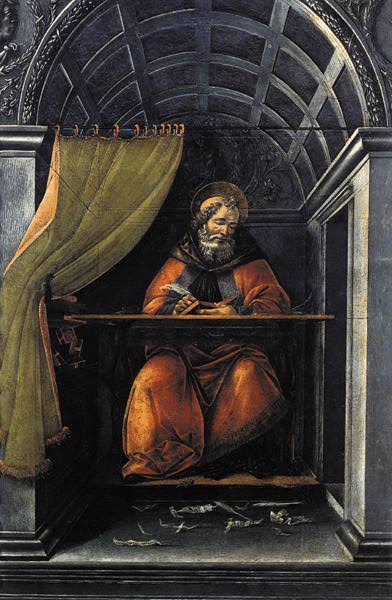
Augustine famously described memory as a vast storehouse in which there are treasures innumerable. It is our experience of life that is enriched by drawing on the treasures deposited into the storehouse of memory.

____________________________________________________

Update:  Also see “The Extended Mind — How Google Affects Our Memories” and Johah Lehrer’s post on the study.

Writing Cannot Be Taught, But It Can Be Learned

Serendipitously, I encountered two book reviews yesterday containing very sound advice on the art of writing.  I expected as much out of the first review in which Joseph Epstein, whose prose I’ve long admired, politely begs to differ with Stanley Fish on how one ought to go about the process of writing well.  The second piece, a review of two books on higher education by Louis Menand, himself a more than competent stylist, offered its comments on writing incidentally to its main point.  I took both to be very near the truth of the matter.

Epstein opens his review of Stanley Fish’s How to Write a Sentence with the following  observations:

After thirty years of teaching a university course in something called advanced prose style, my accumulated wisdom on the subject, inspissated into a single thought, is that writing cannot be taught, though it can be learned—and that, friends, is the sound of one hand clapping. A. J. Liebling offers a complementary view, more concise and stripped of paradox, which runs: “The only way to write is well, and how you do it is your own damn business.”

Learning to write sound, interesting, sometimes elegant prose is the work of a lifetime. The only way I know to do it is to read a vast deal of the best writing available, prose and poetry, with keen attention, and find a way to make use of this reading in one’s own writing. The first step is to become a slow reader. No good writer is a fast reader, at least not of work with the standing of literature. Writers perforce read differently from everyone else. Most people ask three questions of what they read: (1) What is being said? (2) Does it interest me? (3) Is it well constructed? Writers also ask these questions, but two others along with them: (4) How did the author achieve the effects he has? And (5) What can I steal, properly camouflaged of course, from the best of what I am reading for my own writing? This can slow things down a good bit.

A bit further into the review he adds:

First day of class I used to tell students that I could not teach them to be observant, to love language, to acquire a sense of drama, to be critical of their own work, or almost anything else of significance that comprises the dear little demanding art of putting proper words in their proper places. I didn’t bring it up, lest I discourage them completely, but I certainly could not help them to gain either character or an interesting point of view. All I could do, really, was point out their mistakes, and, as someone who had read much more than they, show them several possibilities about deploying words into sentences, and sentences into paragraphs, of which they might have been not have been aware. Hence the Zenish koan with which I began: writing cannot be taught, but it can be learned.

In “Live and Learn:  Why We Have College”, Louis Menand reviews two recent books on the state of higher education and along the way offers his own well-considered thoughts  on the subject.  One of the two books, In the Basement of the Ivory Tower: Confessions of an Accidental Academic (which began its life as an article in The Atlantic)  contained, in Menand’s estimation, sound thoughts on writing:

When he is not taking on trends in modern thought, Professor X is shrewd about the reasons it’s hard to teach underprepared students how to write. “I have come to think,” he says, “that the two most crucial ingredients in the mysterious mix that makes a good writer may be (1) having read enough throughout a lifetime to have internalized the rhythms of the written word, and (2) refining the ability to mimic those rhythms.” This makes sense. If you read a lot of sentences, then you start to think in sentences, and if you think in sentences, then you can write sentences, because you know what a sentence sounds like. Someone who has reached the age of eighteen or twenty and has never been a reader is not going to become a writer in fifteen weeks.

For Menand and Epstein, the secret, if there is one, of good writing appears to be attentive reading, and a lot of it.