From Awe to Complacency

Today, we no longer approach our many machines with awe; in fact, the more personalized and individualized our machines have become, the less humility we feel in using them . . .  Rather than awe-inspiring symbols of man’s power, they are merely extensions of ourselves, like the cell phone that helps us communicate or the microwave that speeds the cooking of our dinner. They are servants of our whims rather than objects of reverence.

In light of my posts the past few days and because Christine Rosen consistently offers thought provoking analysis take a look at Awe and the Machine at In Character, A Journal of Everyday Virtues.

Gods of Love and War

She was beautiful and alluring.  He was ugly and crippled.  Their marriage had been arranged and she resented it.  She began sleeping with his brother, and he caught them in a net — literally.  Having  caught them, he exposed them to public shame.

In rough outline this was the story of Greek god and goddess, Hephaestus and Aphrodite.  He was variously associated with blacksmiths, craftsmen, artisans, metallurgy, and fire.  In short, he made tools and weapons.  He was a god of technology.  She was the goddess of beauty, love, and sexuality.  She was the goddess of desire.  Her affair had been with Ares, god of war and Hephaestus’ own brother.  Although sorting out the different accounts on this point is difficult, in some versions of the story Eros, god of sexual desire and love, is born of the union of Hephaestus and Aphrodite; in others he is the child of Aphrodite and Ares.  Hephaestus is also regarded as the creator of Pandora and her infamous box.  It was also out of Hephaestus’ furnace that Prometheus stole fire to give to humanity and it was  Hephaestus in turn who is called upon by Zeus to forge the chains that bind Prometheus to his eternal fate.

Say what you will about the Greeks and their gods with their sordid sex lives and petty rivalries, their stories certainly had a way of touching the universal.  In the stories surrounding Hephaestus there is laid out for us a vision of technology in its various relationships to love, sex, beauty, war, disaster, hubris, death, and desire.

It was no doubt the image of Hephaestus, crippled from birth, that inspired the quip, “Technology is a god that limps.”  And while I would be stretching the details of the story to say that he fashioned a prosthetic for himself — he was technically missing no limbs — he did nonetheless fashion crutches and other instruments to help him move about when needed, certainly extensions of himself in some sense.  In the image of Hephaestus then, my posts “A God That Limps” and “Prosthetic Gods” are linked.  I did not set out to write a triptych of thematically linked posts, but having written the first two and then recognizing the symbolic significance of Hephaestus, I felt compelled to tie them together with this last reflection.

Embedded in these ancient myths is another answer to the question that began these reflections:  “Why do we react so defensively when we hear someone criticize our technologies?”  The metaphor of technology as prosthesis suggests that our defensiveness has its roots in our identification with our technologies.  The best of them become a part of us.  The network of myths surrounding Hephaestus suggests that our defensiveness lies in the complicity of our technologies with our most deeply and passionately held desires.

The marriage Hephaestus and Aphrodite suggests that the genesis of technology sometimes lies in a desire for beauty and love.  That Ares steals away Aphrodite reminds us that the warrior, whole in body and virile, is more apt to have the desire fulfilled (whether justly or not).  That Hephaestus is a maker of armor and shields and other implements of war suggests that the origins of technology are sometimes implicated in the military-industrial complex.  One here need only think of the Internet.  The Internet, might otherwise be linked to Eros; the tool fashioned as an aid to war famously becomes a site for the generation of sexual desire.  That Hephaestus is the maker of Pandora calls to mind the sight of oil-dark seas, rather than Homer’s wine-dark seas.  That he fashions the chains that bind Prometheus, the ancient symbol of human hubris, suggests a fruitless cycle wherein we turn to ever more sophisticated technologies in order to solve the problems engendered by our earlier technologies.  We create our technologies to fulfill our desires, and yet it may be that our technologies fan rather than fulfill, intensify rather than satisfy those same desires.

It was to Hephaestus that Thetis, mother of Achilles, came seeking a shield and armor for her son.  That scene inspired W. H. Auden’s mid-20th century poem, “The Shield of Achilles.” In its lines Auden poignantly captured the sense of profound disappointment that attended a generation which having placed its hopes in Hephaestus found those hopes smoldering in the ashes of smoking cities from London to Hiroshima.  In its closing stanza we read,

The thin-lipped armorer,
Hephaestos, hobbled away,
Thetis of the shining breasts
Cried out in dismay
At what the god had wrought
To please her son, the strong
Iron-hearted man-slaying Achilles
Who would not live long.

To avoid the same fate we would do well to resist technologies that discourage us from fashioning a world where, as Auden put it, “promises were kept” and “one could weep because another wept.”

Prosthetic Gods

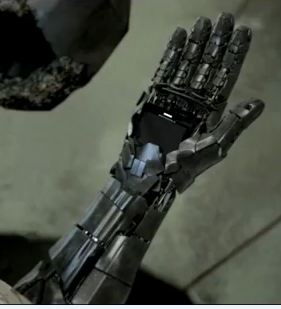
A cadre of people decked out in half space suits, half combat armor walk through a desolate, arid wilderness toward a bunker.  A door opens revealing a passageway into an abandoned underground installation.  On a platform elevator they descend hundreds of feet.  As they continue through hexagonal corridors they notice a helmet, not unlike theirs, lying ominously on the ground.  Finally, they enter a room where a solitary metallic object suspended in mid-air spins on its axis.  One man removes his armor from his right arm and extends his now bare arm into an opening in the object.  The object stops spinning.  His comrades look on with apprehension; the man pulls out his arm.  As he does so his arm morphs into a mechanical, cyborg arm.  Then, and this is the climax, from the palm of his newly mechanized arm, the Droid X emerges.

Now there’s a commercial, and if you haven’t already seen it, you can watch for yourself at the end of this post.  I first saw this commercial sitting in the theater waiting for Inception to begin, only I didn’t immediately realize it was a commercial.  Had I walked in just then I would have assumed the previews had started.  A bit over-the-top perhaps, but maybe not.

There’s a lot that can be said about this elaborate piece of sci-fi marketing, but let’s take it at face value.  It is actually a rather straightforward dramatization of an important and intriguing metaphor:  technology as prosthesis.  Marshall McLuhan, patron saint of media studies, popularized the concept that our tools or technologies function as prosthetic extensions of our bodies.  For example, the hammer functions as an extension of the hand, the wheel as an extension of the foot, or electric technology functions as an extension of the nervous system.  McLuhan, however, was neither the first nor the last to employ the metaphor.  In Civilization and Its Discontents, Sigmund Freud suggested that,  “Man has, as it were, become a kind of prosthetic god.”   But man also wore his prosthetic divinity awkwardly.  Freud goes on to say, “When he puts on all his auxiliary organs he is truly magnificent; but those organs have not grown on to him and they still give him much trouble at times.”

Technology as a prosthetic enhancement has been a rich concept deployed by a variety of philosophers and critics including Martin Heidegger, Jacques Derrida, and Donna Haraway.  In her “Cyborg Manifesto,” Haraway in particular argued that our technologies have been making the line between natural and artificial, machine and organism, cyborg and human more than a little fuzzy.  Often the idea of technology as prosthetic is paired with the related metaphor of amputation — something gained, something lost — so that on the whole there is a certain ambiguity about our prosthetic tools.  You can read more about the concept in a well-written overview here, but I want to focus on the very simple idea that our technologies became a part of us.

Think about this in light of the question that I asked in yesterday’s post, “A God that Limps.” Why do we react so defensively when we hear someone criticize our technologies?  The concept of prosthesis suggests a compelling response:  because we take it not as a criticism of some object apart from us, but rather as an object that has become in some sense a part of us.  We hear such criticism as a criticism of ourselves.

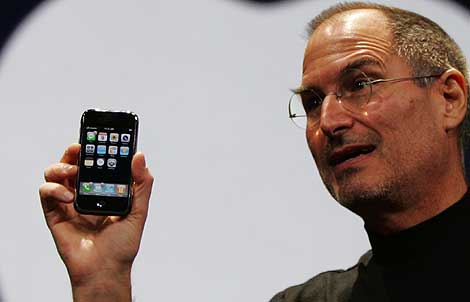
The more seamlessly a technologies blends in with our bodies, the more attached we become.  Take the Blue Tooth enhanced cell phone, for example, responsible for all those people seemingly talking to themselves.  Notice how this metaphor helps explain that odd development.  The device has become transparent, we forget it is even there.  This makes the communication seem almost unmediated consequently causing us to act as naturally as if we were in the person’s presence (and only that person’s presence).  Or take the iTouch/iPhone/iPad that allows us to magically touch the Internet; now that is an extension of the central nervous system!  Gone is the clunky mouse or keyboard, we now appear to be touching the information itself, the layers of mediation seem to be peeling away.

The better these tools work, the more invisible they become; or, as the Droid X commercial suggests, the more they become a part of us.  Tweaking Arthur C. Clarke’s Third Law just a little, we might say that any sufficiently advanced technology is indistinguishable from our bodies.  Naturally, we are pretty defensive of our bodies; not surprisingly we tend to be pretty defensive of our technologies as well.

Parodying our Self-referential Obsessions

Folks at The Onion are masters of parody.  In this very funny clip they target World of Warcraft players, but they do so in a way that gets painfully close to all of us for whom the pleasures of Web 2.0 are tinged with a dash of narcissism.  It may be that charm of social media lies in watching other people watch us so that ultimately we are captivated by our own reflection.

h/t:  Mr. Gladding

A God that Limps

Our technologies are not unlike our children; we react with reflexive and sometimes intense defensiveness if either is criticized.  Several years ago while teaching at a small private high school I forwarded an article to my colleagues.  This was a mistake.  The article raised some questions about the efficacy of computers in education.  I didn’t think then, nor do I now, that it was at all controversial.  In fact, I imagined that given the setting it would be of at least passing interest.  The article appeared in a respectable journal, was judicious in its tone, and cautious in its conclusions.  However, within a handful of minutes — hardly enough time to skim, much less read, the article — I was receiving rather pointed and even angry replies.

I was mystified, and not a little amused, by the responses.  Mostly though I began to think about why this measured and cautious article evoked such a passionate and visceral response.  Around the same time I stumbled upon Wendell Berry’s essay titled, somewhat provocatively, “Why I am Not Going to Buy a Computer.” More arresting than the essay itself, however, were the letters that came in to Harper’s where the essay had been reprinted.  These letters, which now typically appear alongside the essay whenever it is anthologized, were caustic and condescending.  In response Berry wrote,

The foregoing letters surprised me with the intensity of the feelings they expressed. According to the writers’ testimony, there is nothing wrong with their computers; they are utterly satisfied with them and all that they stand for. My correspondents are certain that I am wrong and that I am, moreover, on the losing side, a side already relegated to the dustbin of history. And yet they grow huffy and condescending over my tiny dissent. What are they so anxious about?

Precisely my question.  Whence the hostility, defensiveness, agitation, and indignant, self-righteous anxiety?

I’m typing these words on a laptop and they will appear on a blog that exists on the Internet.  Clearly I am not, strictly speaking, a Luddite.  (Although, in light of Thomas Pynchon’s analysis of the Luddite as Badass, there may be a certain appeal.)  Yet, I do believe an uncritical embrace of technology may prove fateful, if not Faustian.
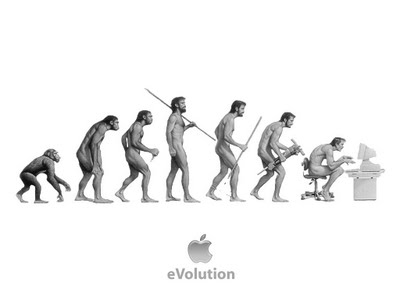
The stakes are high.  We can hardly exaggerate the revolutionary character of certain technologies throughout history:  the wheel, writing, the gun, the printing press, the steam engine, the automobile, the radio, the television, the Internet.  And that is a very partial list.  Katherine Hayles has gone so far as to suggest that as a species we have “codeveloped with technologies; indeed, it is no exaggeration,” she writes in Electronic Literature, “to say modern humans literally would not have come into existence without technology.”

We are, perhaps because of the pace of technological innovation, quite conscious of the place and power of technology in our society and in our own lives.  We joke about our technological addictions, but it is sometimes a rather nervous punchline.  It makes sense to ask questions.  Technology, it has been said, is a god that limps.  It dazzles and performs wonders, but it can frustrate and wreak havoc.  Good sense seems to suggest that we avoid, as Thoreau put it, becoming tools of our tools.  This doesn’t entail burning the machine; it may only require a little moderation.  At a minimum it means creating, as far as we are able, a critical distance from our toys and tools, and that requires searching criticism.

And we are back where we began.  It is that kind of searching criticism of our technologies that we seem allergic to.  So here is my question again:  Why do we react so defensively when we hear someone criticize our technologies?  Or, and this is entirely possible, is this not at all the case outside of my own quite limited experience?