I want to draw your attention to a couple of recent essays on technology in education. The first, “Step 1: give every kid a laptop. Step 2: learning begins?” by Cyrus Farivar, appeared a few days ago in Ars Technica. The second, “Apple for Teacher” by Kieran Healy, was posted at the blog Crooked Timber. I would describe both as reasonably skeptical of two specific approaches to employing technology in the classroom. Farivar examines the success of 1:1 lap top programs and Healy comments on Apple’s recently announced plans for the education market.
I won’t try to summarize either of the pieces, I encourage you to click through and read each if education and technology is of interest to you. Feel free to post your thoughts below if you do.
Here are a couple of interesting excerpts.
Farivar cites Jeff Mao, the learning technology policy director for the state of Maine which operates the most extensive 1:1 program in the country, who makes the following observation:
“Test Scores and one-to-one are tough to link. The deployment of one-to-one technologies alone doesn’t change outcomes. As we discussed, it’s the teaching and learning practices that really make the change.”
This strikes me as an honest and chastened position to take; no hint of techno-utopianism there and that’s a good thing. Here is Mao again on his state’s 1:1 program:
“Since our beginnings, we’ve always looked at notions of creation,” Mao said. “It’s not about consumption of content, it’s about the creation of knowledge.”
Now that, I’m afraid, strikes me as a string of buzz words with little meaning. But perhaps that’s too harsh. I certainly would need to hear what constituted the “creation of knowledge.”
In his piece, Farivar makes the following observation:
“Schools have been down the techno-salvation path before with other kinds of hardware and software. It’s worth remembering just how many technologies we already have that were supposed to transform education beyond all recognition. Radio, the television, the VCR, the personal computer, email, the Internet and the web … All of these have been trumpeted by someone as having the power to make education What It Really Ought To Be. The same goes for smaller developments within larger technological shifts. Chatrooms, MUDs, bulletin boards, blogs, FaceBook, Twitter, on and on.”
It’s good to keep this history in mind. I say that not to diminish the real possibilities that new technologies may offer, but rather to emphasize the importance of smart implementation. The mere appearance of this or that technology will not, cannot by itself transform education. Correction: it may very well transform education, but not for the better. Technology must be paired with the practical wisdom of good teachers if it is to enhance learning.
One last thought. I suspect that our educational dysfunctions are not susceptible to a technological fix. They are linked to the incoherence of our responses to a very straightforward question, What is an education for?
Tacit answers to that question lie beneath and shape most of our discussions about technology in schools, as they do most discussions related to educational policy. At this stage of our history it would probably be impossible to formulate a consensus response that was also substantive. At the very least, though, we should get these more philosophical assumptions on the table rather than bracketing them or otherwise allowing them to remain unspoken.
Here’s a moment in time from which one could build a book.
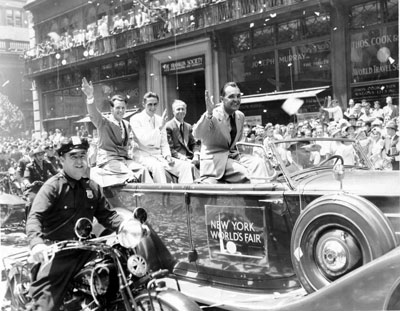
In 1938, a preview parade for the New York World’s Fair with its corporate modernist ethos wound its way through the city. The parade was ten miles long and it included cars from every state in the union.
At the intersection of Thirteenth Street and Seventh Avenue it was cut off by a 50,000-100,000 strong parade celebrating May Day.
Sources: Robert Rydell mentions the incident in World of Fairs: The Century of Progress Expositions. He cites a 1938 NY TImes article, “Divided Leftists in Quiet May Day,” and “Red Light for May Day March” in World-Telegram.
Had I been really ambitious with yesterday’s post, I would have attempted to draw in a little controversy over the practice of flânerie earlier this week. You may be wondering what flânerie is, or if you know what it is, you may be wondering why on earth it would spark controversy.
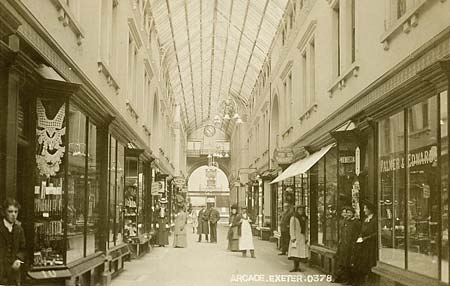
Short answers today. First, flânerie is the practice of being a flâneur. The flâneur is a figure from the city streets of nineteenth century Paris who made his way through the crowded avenues and arcades watching and observing, engaging in what we could call peripatetic social criticism. He was popularized in the work of the poet Charles Baudelaire and the literary critic Walter Benjamin.
Morozov is a champion of the open, chaotic web of the early Internet. He is a fierce critic of the neat, closed web of Google, Facebook, and apps. Here is the gist of his argument (although, as always, I encourage you to read the whole piece):
“It’s easy to see, then, why cyberflânerie seemed such an appealing notion in the early days of the Web. The idea of exploring cyberspace as virgin territory, not yet colonized by governments and corporations, was romantic; that romanticism was even reflected in the names of early browsers (“Internet Explorer,” “Netscape Navigator”).
Online communities like GeoCities and Tripod were the true digital arcades of that period, trading in the most obscure and the most peculiar, without any sort of hierarchy ranking them by popularity or commercial value. Back then eBay was weirder than most flea markets; strolling through its virtual stands was far more pleasurable than buying any of the items. For a brief moment in the mid-1990s, it did seem that the Internet might trigger an unexpected renaissance of flânerie.
….
Something similar has happened to the Internet. Transcending its original playful identity, it’s no longer a place for strolling — it’s a place for getting things done. Hardly anyone “surfs” the Web anymore. The popularity of the “app paradigm,” whereby dedicated mobile and tablet applications help us accomplish what we want without ever opening the browser or visiting the rest of the Internet, has made cyberflânerie less likely. That so much of today’s online activity revolves around shopping — for virtual presents, for virtual pets, for virtual presents for virtual pets — hasn’t helped either. Strolling through Groupon isn’t as much fun as strolling through an arcade, online or off.”
Further on, Morozov lays much of the blame on Facebook and the quest for frictionless sharing. All told it seems to me that his critique centers on the loss of anonymity and the lack of serendipity that characterize the Facebook model web experience.
For her part, Goldstien, who has done graduate work on nineteenth century flânerie, questioned whether anonymity was essential to the practice. Morozov cited Zygmunt Bauman’s line, “The art that the flâneur masters is that of seeing without being caught looking.” Goldstein on the other hand writes, “The historian Della Pollock, contra Morozov and Bauman, describes flânerie as ‘observing well and…being well worth observing’ in turn.”
Yet, even if we did grant Bauman’s characterization of flânerie, Goldstein still believes that much of what we do online qualifies as such:
“Seeing without being caught looking. Is there any better description for so much of what we do online? Admit it: You’re well acquainted with your significant other’s ex’s Facebook page. You’ve dived deep into the search results for the name of the person you’re dating, the job applicant you’re interviewing, the prospective tenant or roommate. On the dating site OkCupid, you can even pay for the privilege of “enhanced anonymous browsing,” in which you can see who checks out your profile, but no one can see which profiles you’ve looked at yourself. On Facebook, one of the most common spam bots promises to reveal who’s been looking at your profile. It’s so tempting! People click and the spam spreads, but it’s a trick: Facebook conceals users’ browsing histories from one another.”
I should say that I have no particular expertise in the study of the flâneur beyond a little reading of Benjamnin here and there. My hunch, however, is that the tradition of flânerie is wide enough to accommodate the readings of both Morozov and Goldstein. Moreover, I suspect that perhaps a metaphor has been unhelpfully reified. After all, cyber-space (who knew we would be using “cyber” again) and physical space are only metaphorically analogous. That metaphor is suggestive and has generated insightful analysis, but it is a metaphor that can be pushed too far. Cyberflânerie and, what shall we call it, brick-and-mortar flânerie — these two are also only metaphorically analogous. Again, it is a rich and suggestive metaphor, but it will have its limits. Phenomenologically, clicking on a link is not quite the same thing as turning a corner. The way each presents itself to us and acts on us is quite different.
Additionally, to complicate matters, it might also be interesting to draw into the conversation related practices such the dérive popularized by Guy Debord and the Situationists. That, however, will remain only a passing observation, except to note that intention is of great consequence. Why are we engaging in this practice or that? That seems to me to be the question. Stalking, flânerie, and the dérive may have structural similarities (particularly to the outside observer, the one watching the watcher as it were, but not knowing why the watcher watches), but they are distinguished decisively by their intent. Likewise, online analogs should be distinguished according to their intent.
Although, having just written that, it occurs to me that the dérive analogy does have an interesting dimension to offer. Regardless of our intentions, when we go online we do often find ourselves very far afield from whatever our initial reason for going online might have been. This is something the dérive assumes as an integral part of the practice. Also, while varieties of flânerie involve acting to see and to be seen in debatable portions, the dérive, in analogy with psychotherapy, is less focused on the seeing and being seen altogether. Here is Debord on the dérive:
“One of the basic situationist practices is the dérive, a technique of rapid passage through varied ambiences. Dérives involve playful-constructive behavior and awareness of psychogeographical effects, and are thus quite different from the classic notions of journey or stroll.
“In a dérive one or more persons during a certain period drop their relations, their work and leisure activities, and all their other usual motives for movement and action, and let themselves be drawn by the attractions of the terrain and the encounters they find there. Chance is a less important factor in this activity than one might think: from a dérive point of view cities have psychogeographical contours, with constant currents, fixed points and vortexes that strongly discourage entry into or exit from certain zones.”
This practice seems to better fit (metaphorically still) the online experience of either the early web or its more recent iteration. The difference, it would seem, lies in the object of study. Flânerie oscillates between social criticism and performance. The dérive takes one’s own psychic state as the object of study insofar as it is revealed by the manner in which we negotiate space, online and off.
“Over the last few weeks, I’ve been noticing that about 1/3 of people walking, crossing streets, or standing on the sidewalk, are ON their cell phones. In most cases, they are not just talking; they are texting or emailing — attention fully focused on the little screen in front of them. Tsunami warning? They’d miss it.
With an iPod, at least as the person listens, they visually attend to where they’re going. For those walking while texting or sending an email, attention to the world outside of the screen is absent. The primary intimacy is with the device and it’s possibilities.”
I suspect that you would be able to offer similar anecdotal evidence. I know that this kind of waking somnambulation characterizes a good part of those making their way about the campus of the very large university I attend.
Stone offered these comments by way of introducing a link to a video that you may have seen making its way around the Internet lately, going viral I believe we call it. The video documents Jake P. Reilly’s 90 day experiment in disconnection. He called it The Amish Project and you can watch it unfold here:
Needless to say, Riley was very pleased with what he found on the other side of the connected life. Asked in an interview whether this experience changed his life, Reilly had this to say:
“It’s definitely different, but I catch myself doing exactly what I hated. Someone is talking to me and I’m half-listening and reading a text under the table. For me, it’s trying to be more aware of it. It kind of evolved from being about technology to more of just living in the moment. I think that’s what my biggest thing is: There’s not so much chasing for me now. I’m here now, and let’s just enjoy this. You can be comfortable with yourself and not have to go to the crutch of your phone. For me, that’s more what I will take away from this.”
Although not directly addressing Riley’s experiment, Jason Farman has written a thoughtful piece at The Atlantic that calls into question the link between online connectivity and disconnection from lived experience. In “The Myth of the Disconnected Life”, Farman takes as his foil William Powers’ book, Hamlet’s Blackberry, which I’ve mentioned here a time or two. In his work, Powers commends the practice of taking Digital Sabbaths. If you’ve been reading this blog since its early days, you may remember my own post on technology Sabbaths from 2010; a post, incidentally, which also cited Linda Stone. It’s a healthy practice and one I don’t implement enough in my own experience.
Farman has good things to say about Powers’ work and technology Sabbaths (in fact, his tone throughout is refreshingly irenic):
“For advocates of the Digital Sabbath, the cellphone is the perfect symbol of the always-on lifestyle that leads to disconnection and distraction. It epitomizes the information overload that accompanies being tethered to digital media. Advocates of Digital Sabbaths note that if you are nose-deep in your smartphone, you are not connecting with the people and places around you in a meaningful way.
Ultimately, the Digital Sabbath is a way to fix lifestyles that have prioritized disconnection and distraction and seeks to replace these skewed priorities with sustained attention on the tangible relationships with those around us.”
Nonetheless, he does find the framing of the issue problematic:
“However, using ‘disconnection’ as a reason to disconnect thoroughly simplifies the complex ways we use our devices while simultaneously fetishizing certain ways of gaining depth. Though the proponents of the Digital Sabbath put forth important ideas about taking breaks from the things that often consume our attention, the reasons they offer typically miss some very significant ways in which our mobile devices are actually fostering a deeper sense of connection to people and places.”
Farman then discusses a variety of mobile apps that in his estimation deepen the experience of place for the smartphone equipped individual rather than severing them from physical space. His examples include [murmur], Broadcastr, and an app from the Museum of London. The first two of these apps allow users to record and listen to oral histories of the place they find themselves in and the latter allows users to overlay images of the past over locations throughout London using their smartphones.
In Farman’s view, these kinds of apps provide a deeper experience of place and so trouble the narrative that simplistically opposes digital devices to connection and authentic experience:
“Promoting this kind of deeper context about a place and its community is something these mobile devices are quite good at offering. A person can live in a location for his or her whole life and never be able to know the full history or context of that place; collecting and distributing that knowledge – no matter how banal – is a way to extend our understanding of a place and a gain a deeper connection to its meanings.
Meaning is, after all, found in the practice of a place, in the everyday ways we interact with it and describe it. Currently, that lived practice takes place both in the physical and digital worlds, often through the interface of the smartphone screen.”
Finally, Farman’s concluding paragraph nicely sums up the whole:
“Advocates of the Digital Sabbath have the opportunity to put forth an important message about practices that can transform the pace of everyday life, practices that can offer new perspectives on things taken for granted as well as offering people insights on the social norms that are often disrupted by the intrusion of mobile devices. We absolutely need breaks and distance from our routines to gain a new points of view and hopefully understand why it might come as a shock to your partner when you answer a work call at the dinner table. Yet, by conflating mobile media with a lack of meaningful connection and a distracted mind, they do a disservice to the wide range of ways we use our devices, many of which develop deep and meaningful relationships to the spaces we move through and the people we connect with.”
My instinct usually aligns me with Stone and Powers in these sorts of discussions. Yet, Farman makes a very sensible point. I’m all for recognizing complexity and resisting dichotomies that blind us to important dimensions of experience. And it is true that debates about technology do tend to gloss over the use to which technologies are actually put by the people who actually use them.
All of this calls to mind the work of Michel de Certeau on two counts. First, de Certeau made much of the use to which consumers put products. In his time, the critical focus had fallen on the products and producers; consumers were tacitly assumed to be passive and docile recipients/victims of the powers of production. De Certeau made it a point, especially in The Practice of Everyday Life, to throw light on the multifarious, and often impertinent, uses to which consumers put products. In many respects, this also reflects the competing approaches of internalists and social constructionists within the history of technology. For the former the logic of the device dominates analysis, for the latter, the uses to which devices are put by users. Farman, likewise, is calling us to be attentive to what some users at least are actually doing with their digital technologies.
De Certeau also had a good deal to say about the practice of place, how we experience places and spaces. Some time ago I wrote about one chapter in particular in The Practice of Everyday Life, “Walking the City”, that explicitly focused on the manner in which memories haunted places. If I may be allowed a little bit of self-plagiarization, let me sum up again the gist of de Certeau’s observations.
Places have a way of absorbing and bearing memories that they then relinquish, bidden or unbidden. The context of walking and moving about spaces leads de Certeau to describe memory as “a sort of anti-museum: it is not localizable.” Where museums gather pieces and artifacts in one location, our memories have dispersed themselves across the landscape, they colonize. Here a memory by that tree, there a memory in that house. De Certeau develops a notion of a veiled remembered reality that lies beneath the visible experience of space.
Places are made up of “moving layers.” We point, de Certeau says, here and there and say things like, “Here, there used to be a bakery” or “That’s where old lady Dupuis used to live.” We point to a present place only to evoke an absent reality: “the places people live in are like the presences of diverse absences.” Only part of what we point to is there physically; but we’re pointing as well to the invisible, to what can’t be seen by anyone else, which begins to hint at a certain loneliness that attends to memory.
Reality is already augmented. It is freighted with our memories, it comes alive with distant echoes and fleeting images.
Digitally augmented reality functions analogously to what we might call the mentally augmented reality that de Certeau invokes. Digital augmentation also reminds us that places are haunted by memories of what happened there, sometimes to very few, but often to countless many. The digital tools Farman describes bring to light the hauntedness of places. They unveil the ghosts that linger by this place and that.
For me, the first observation that follows is that by contrast with mental augmentation, digital augmentation, as represented by two of the apps Farman describes, is social. In a sense, it appears to lose the loneliness of memory that de Certeau recognized.
De Certeau elaborates on the loneliness of memory when he approvingly cites the following observation: “‘Memories tie us to that place …. It is personal, not interesting to anyone else …’” It is like sharing a dream with another person: its vividness and pain or joy can never be recaptured and represented so as to affect another in the same way you were affected. It is not interesting to anyone else, and so it is with our memories. Others will listen, they will look were you point, but they cannot see what you see.
I wonder, though, if this is not also the case with the stories collected by apps such as [murmur] and Broadcastr. Social media often seeks to make the private of public consequence, but very often it simply isn’t. Farman believes that our understanding of a place and a deeper connection to its meanings is achieved by collecting and distributing knowledge of that place, “no matter how banal.” Perhaps it is that last phrase that gives me pause. What counts as banal is certainly subjective, but that is just the point. The seemingly banal may be deeply meaningful to the one who experienced it, but it strikes me as rather generous to believe that the banal that takes on meaning within the context of one’s own experience could be rendered meaningful to others for whom it is banal and also without a place within the narrative of lived experience out of which meaning arises.
The London Museum app seems to me to be of a different sort because it links us back, from what I can gather, to a more distant past or a past that is, in fact, of public consequence. In this case, the banality is overcome by distance in time. What was a banal reality of early twentieth century life, for example, is now foreign and somewhat exotic — it is no longer banal to us.
Wrapped up in this discussion, it seems to me, is the question of how we come to meaningfully experience place — how a space becomes a place, we might say. Mere space becomes a place as its particularities etch themselves into consciousness. As we walk the space again and again and learn to feel our way around it, for example, or as we haunt it with the ghosts of our own experience.
I would not go so far as to say that digital devices necessarily lead to a disconnected or inauthentic experience of place. I would argue, however, that there is a tendency in that direction. The introduction of a digital device does necessarily introduce a phenomenological rupture in our experience of a place. What we do with that device, of course, matters a great deal as Farman rightly insists. But most of what we do does divide our attentiveness and mindfulness, even when it serves to provide information.
Perhaps I am guilty, as Farman puts it, of “fetishizing certain ways of gaining depth.” But I am taken by de Certeau’s conception of walking as a kind of enunciation that artfully actualizes a multitude of possibilities in much the same way that the act of speaking actualizes the countless possibilities latent in language. Like speaking, then, walking, that is inhabiting a space is a language with its own rhetoric. Like rhetoric proper, the art of being in a place depends upon an acute attentiveness to opportunities offered by the space and a deft, improvised actualization of those possibilities. It is this art of being in a place that constitutes a meaningful and memorable augmentation of reality. Unfortunately, the possibility of unfolding this art is undermined by the manner in which our digital devices ordinarily dissolve and distribute the mindfulness that is its precondition.
I suspect that when you think about World’s Fairs, if ever you do, you think about those that have already receded into the modestly distant past. Arguably, the last notable fair held in the US — with apologies to Knoxville and New Orleans — was the unsanctioned New York Fair of 1964-65.
Unsanctioned because that fair did not receive the approval of the Bureau International des Expositions (International Bureau of Expositions, although I suspect the translation was rather self-evident). The fair, of course, proceeded in any case under the leadership of Robert Moses who was not one to take “no” for an answer. For the record, the US ended its membership in the Bureau International des Expositions in June 2001.
World’s fairs and expositions, however, are still held around the globe. Since we tend to get rather little news about international happenings unless they are tragic or otherwise immediately relevant to American affairs, the fairs tend to get little notice. Case in point: I was blissfully unaware until fairly recently that an ambitious and impressive fair was held in Shanghai in 2010, Expo Shanghai. (If you follow the link, you’l be taken to an interactive map from which you can virtually experience the many exhibits at the Expo). And in the tradition of the 1939 New York Fair, the Shanghai Expo featured a sizable “Pavilion of the Future.”
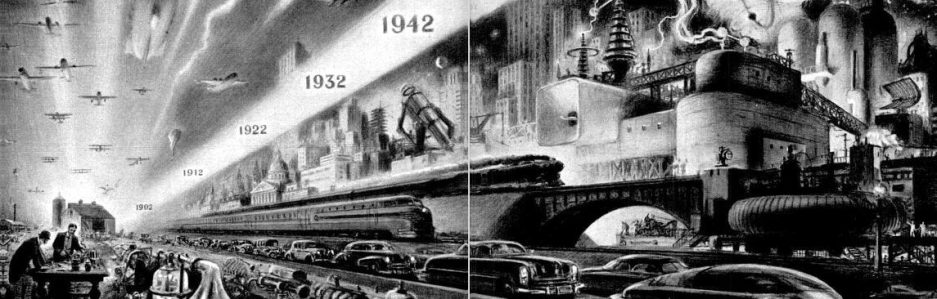
General Motors, the corporation that sponsored the original Futurama in 1939 and its sequel in 1964, is apparently not altogether out of the business of shaping the vision of transportation for the world of tomorrow. At the Shanghai Expo, GM debuted its EN-V concept car pictured below. The EN-V is equipped with a sophisticated navigation system that is intended to render it virtually accident proof. In this it shares in a vision already articulated in the 1939 Futurama which predicted the appearance of cars which would be kept at safe distances from each other by radio control while careening down as yet unbuilt interstate highways.
What’s more, the car, if we can call it that (and I don’t mean that disparagingly), is set to play an important role in a working “city of the future,” the Tianjin Eco-City, a joint effort by the governments of China and Singapore. If you click the image below, you’ll be taken to a slide show of Eco-City concept drawings. The story linked just above gives this brief description:
“Located on the outskirts of one of China’s largest existing metropolises, the Tianjin Eco-City was conceived as a large-scale prototype for sustainable, high-density communities. A reliance on renewable energy sources and mass transit are key elements in its environmentally-friendly design.
But even though its creators are planning for 90 percent of its eventual population of 350,000 to get around town using a light rail system, there will still be a need for individual point to point transportation, and that’s where GM comes in.”
It’s a long way from realization, but I’ve got to say, it’s an impressive project.
It would seem that we have out-sourced the future.

 L.M. Sacasas