Well all sorts of things, naturally: air, water, food, and other items that readily come to mind. But our body’s desires are not only of the ready made, basically biological variety. We could also speak of learned desires which, while having an embodied platform, are also culturally or socially conditioned. These are desires which may emerge when patterns or circuits of action and reward become habitual leading to the formation of desire for the action. And mostly, I’m intrigued by how our tools and technologies participate in these sorts of desire forming practices.
Here’s a possible illustration. A few years ago people started noticing what came to be called phantom vibration syndrome. If you’ve had a cell phone for any amount of time, you’ve probably experienced what you thought was your phone vibrating only to pick it up and realize that, in fact, no call or message had come in. The vibration was a phantom. There are a number of explanations for this phenomenon all stemming from how our bodies become attentive to certain stimuli. Our bodies in a sense are waiting to receive this particular stimuli and sometimes they misinterpret data as a result. The body/brain jumps the sensory gun as it were.
I want to take this a little bit further and ask about what I’m going to guess is another familiar phenomenon for cell phone users — frequently reaching for the phone for no particular reason, preemptively putting your hand in your pocket to feel your phone, constantly looking over at your phone after you’ve set it prominently before you. These are not just a matter of feeling a phantom vibration and reaching because you thought you had a message coming in. In other words, these are not reactive or responsive actions. My suggestion is that these are actions of a body desiring, wanting, hoping for a certain stimuli.
We are embodied creatures, living in a diverse and complex bio-cultural environment throughout which our tools and technologies are intertwined. Understanding our desires involves exploring our conscious wants; it also means exploring the patterns of our habituated technologically mediated actions and interactions. My guess is that we’ll find all sorts of habituated desires that float just below the level of our conscious awareness and yet impact our actions and thoughts in countless, barely discernible ways.
Our tools don’t only help us satisfy our wants and desires, they are also implicated in the formation and development of those wants.
A few days ago I posted some reflections on Matt Ritchel’s NY Times article, “Growing Up Digital,” and committed to posting some further thoughts. So here they are. But first some clarification. I closed the last post with the following:
Parent missing the point:
“If you’re not on top of technology, you’re not going to be on top of the world.”
Insightful students who know what is really going on:
“Video games don’t make the hole; they fill it.”
“Facebook is amazing because it feels like you’re doing something and you’re not doing anything. It’s the absence of doing something, but you feel gratified anyway.”
Jim Wilson/The New York Times
Two things always strike me when I hear parents talking about their kids and technology. The first is a palpable anxiety about their kids getting left behind in a world of rapidly changing technology. But this is a misplaced fear, or rather, it is a fear particular to the digital immigrant, not the digital native. Part of the skill set that comes with having grown up digital is a certain facility with new technologies. It comes “naturally.” Try to remember the last time you witnessed someone under the age of 30 reading an instruction manual. Exactly.
The second is the reduction of technology to a means of achieving financial security. I take this to be what the parent quoted above meant by “being on top of the world” (or else they’ve watched Titanic one time too many). But students recognize that there is something deeper going on. Their ubiquitous technologies are nothing short of accessories to their humanity. The intensity of the withdrawal symptoms experienced when these tools are for some reason taken away or are disconnected suggests that without these tools those who have grown up digital have little idea of how to be in the world. Or rather, it is as if world is no longer the one they know and are comfortable inhabiting. You might as well be cutting off their oxygen. Reducing the significance of technology to some silly “you’ll need these skills to get a good job” pep talk does not come close to doing justice to the place these tools have in student’s lives.
On to the new stuff:
Students say that their parents, worried about the distractions, try to police computer time, but that monitoring the use of cellphones is difficult. Parents may also want to be able to call their children at any time, so taking the phone away is not always an option . . .
He says he sometimes wishes that his parents would force him to quit playing and study, because he finds it hard to quit when given the choice.
Two things here. This is an instance of what Thomas de Zengotita has labeled “Justin’s Helmet Principle.” Sure Justin looks ridiculous riding down the street with his training wheels on, more pads than a lineman, and a helmet that makes him look like Marvin the Martian, but do I want the burden of not decking out Justin in this baroque assemblage of safety equipment, have him fall, and seriously injure himself? No probably not. So on goes the safety crap. Did we sense that there was something a little off when we started sending off our first graders to school with cell phones, just a fleeting moment of incongruity perhaps? Maybe. Did we dare risk not giving them the cell phone and have them get lost or worse without a way of getting help? Nope. So there goes Johnny with the cell phone.
Then there’s this matter about not being able to quit, even wishing parents would impose limits. Your instinct may be to say, “Get over it, find the off button, and get to work.” Right, cut off the oxygen and tell them to breathe. Easier said than done. I’m not interested in eliminating personal responsibility, nor do I believe that these tools are by themselves the cause of the problem as if they were conscious agents. But . . . embodied creatures that we are, our mind is not simply an organ of disembodied, spontaneous will. This is to say that our will is intertwined with the action of our body in such a way that habituated action shapes our disposition and ability to make choices. We shape our will by repeated and then habitual practices. This is not new information — Aristotle knew this in his own way — although it is being reinforced by recent cognitive scientific research.
Sam Crocker, Vishal’s closest friend, who has straight A’s but lower SAT scores than he would like, blames the Internet’s distractions for his inability to finish either of his two summer reading books.
“I know I can read a book, but then I’m up and checking Facebook,” he says . . . He concludes: “My attention span is getting worse.”
Internet use and attention span is a big issue so I’ll simply point you to a recent interview of Linda Stone on Henry Jenkins’ blog and an important essay on the issue by N. Katherine Hayles. Something is going on with our brains and our attention; it seems fair to say that much. What exactly and why may not yet be entirely clear. But we should remember, as Hayles points out, deep attention is probably not the biological default. More likely it was a learned behavior associated with the advent of literacy. A different form or style of attention is likely emerging along with our immersion in digital media environments. Ritchel cites a couple of studies exploring this development:
The researchers looked at how the use of these media affected the boys’ brainwave patterns while sleeping and their ability to remember their homework in the subsequent days. They found that playing video games led to markedly lower sleep quality than watching TV, and also led to a “significant decline” in the boys’ ability to remember vocabulary words. The findings were published in the journal Pediatrics . . .
In that vein, recent imaging studies of people have found that major cross sections of the brain become surprisingly active during downtime. These brain studies suggest to researchers that periods of rest are critical in allowing the brain to synthesize information, make connections between ideas and even develop the sense of self.
Researchers say these studies have particular implications for young people, whose brains have more trouble focusing and setting priorities . . . . Like Dr. Rich, he says he believes that young, developing brains are becoming habituated to distraction and to switching tasks, not to focus.
Back to the optimistic principal:
Mr. Reilly says that the audio class provides solid vocational training and can get students interested in other subjects.
“Today mixing music, tomorrow sound waves and physics,” he says. And he thinks the key is that they love not just the music but getting their hands on the technology. “We’re meeting them on their turf.”
Mr. Reilly hopes that the two can meet — that computers can be combined with education to better engage students and can give them technical skills without compromising deep analytical thought.
As I indicated last time, this is the hope. Sometimes I share it. In my own teaching, I’ve sought to avoid the introduction of technology for technology’s sake, but I have also experimented with class blogs, Wikis, multi-media presentations, Facebook related projects, etc. Results have been decidedly . . . mixed.
More often than not, I tend to think that immersion in our digital media environment may very well erode (or more dramatically, cannibalize) the skills and dispositions associated with print so that it cannot be merely a matter of adding one skill set to the other.
. . . in Vishal’s case, computers and schoolwork seem more and more to be mutually exclusive.
This is not the final word, of course. We have still to ask what difference does this make? The answer to that question will be relative to the ends we are interested in pursuing, to the vision of the good life and human flourishing that animates us. In other words, actually to borrow Keith Thomas’ words, “We cannot determine the purpose of the universities without first asking, “What is the purpose of life?”
Likewise, I would suggest that we cannot determine the purpose of technology in education without first asking, “What is the purpose of life?”
When I think of gratitude, I think of G. K. Chesterton. I can think of few others who appeared to be always animated by a deep and inexhaustible gratitude for life and all that it entailed. With that in mind, here are few lines from Chesterton on the theme of gratitude and thanks:
“I would maintain that thanks are the highest form of thought, and that gratitude is happiness doubled by wonder.”
“You say grace before meals. All right. But I say grace before the concert and the opera, and grace before the play and pantomime, and grace before I open a book, and grace before sketching, painting, swimming, fencing, boxing, walking, playing, dancing and grace before I dip the pen in the ink.”
“When it comes to life the critical thing is whether you take things for granted or take them with gratitude.”
And then I am also reminded of the closing line of a poem by Wendell Berry. The poem is inspired by a poignant scene in Shakespeare’s “King Lear”:
I think of Gloucester, blind, led through the world
To the world’s edge by the hand of a stranger
Who is his faithful son. At the cliff’s verge
He flings away his life, as of no worth,
The true way lost, his eyes two bleeding wounds—
And finds his life again, and is led on
By the forsaken son who has become
His father, that the good may recognize
Each other, and at last go ripe to death.
We live the given life, and not the planned.
“We live the given life, and not the planned.” That line etched itself into my mind the moment I first read it. Simple and profound, an antidote to the disorders of our time.
It would make a great difference, would it not, if our posture toward life were such that we received it as a gift with gratitude and wonder; if our hands were open to receive and to give in turn rather than clutched to take and to keep?
A few days ago the NY Times ran a piece by Matt Richtel called “Growing Up Digital” which remains at the moment the most emailed, most blogged, and most commented article on their site. The piece does not necessarily break any new ground, but nicely summarizes some concerns that are on the minds of parents, teachers, and anyone who is just a bit unsettled by the emerging shape of the digital mode of being in the world. This will be the first of probably two posts featuring excerpts from the Times story accompanied by a few elaborations beginning with . . .
Students have always faced distractions and time-wasters. But computers and cellphones, and the constant stream of stimuli they offer, pose a profound new challenge to focusing and learning.
An often overlooked or dismissed point. Many people seem to take some comfort from saying, “this sort of thing has always been around” or “kids have always had distractions” and the like. But while placing phenomenon on a spectrum is sometimes helpful for the sake of understanding and perspective, it often masks real transformations. Sufficient difference in quantity can amount to a difference in quality. A hurricane is not just a stronger breeze. On the color spectrum it may be hard to pinpoint where the transition takes place, but at some point you are no longer orange, but blue. Differences in scale have put us in new territory.
Researchers say the lure of these technologies, while it affects adults too, is particularly powerful for young people. The risk, they say, is that developing brains can become more easily habituated than adult brains to constantly switching tasks — and less able to sustain attention.
Adults writing on this topic who find that they have entered the digital world and believe themselves to have retained their print-literate skills often fail to recognize the difference it might make to be a digital native rather than a digital immigrant. Adults above the age of 35 or so were brought up with a non-digital skill set associated with print (although television had already been altering the skill-scape). Those who can’t remember not having a smart-phone or 24/7 access to the Internet are in a very different situation. They have the digital skill set, but never picked up more than the remnants of the print skill set. They are not in the same position as the older generation who naively look at the situation and say, “Well, I can do both, so they should be able to also … no problem here.”
But even as some parents and educators express unease about students’ digital diets, they are intensifying efforts to use technology in the classroom, seeing it as a way to connect with students and give them essential skills. Across the country, schools are equipping themselves with computers, Internet access and mobile devices so they can teach on the students’ technological territory.
Done uncritically and re-actively this amounts to digging your own grave (please note the qualifiers at the start of the sentence before becoming angry and dismissive). To borrow and re-appropriate a line from Postman, it is not unlike “some turn-of-the-century blacksmith who not only is singing the praises of the automobile but who also believes that his business will be enhanced by it.”
The principal, David Reilly . . . is determined to engage these 21st-century students. He has asked teachers to build Web sites to communicate with students, introduced popular classes on using digital tools to record music, secured funding for iPads to teach Mandarin and obtained $3 million in grants for a multimedia center.
Engaging 21st-century students is the goal, however, the question remains: To what end? Our collective cultural mind seems divided on this point without knowing it. If we want to engage students with the goal of cultivating the mind set, skills, and sensibilities associated with print, then we’d better think twice about a bait and switch approach. The tools of engagement will undermine the goal of engagement. However, if we want to instill skills and sensibilities that we might loosely label digital literacy (or, following Gregory Ulmer, electracy) then the tools and the goals will be in sync.
The hope of many, including myself on my more optimistic days, is that 21st century education at its best will be able to impart both skills sets — traditional and digital literacy. On my more pessimistic days, I’m not so sure this is going to work. In any case, the two are not the same and the tools for each tend to work against the ends of the other. More on this later.
Several recent studies show that young people tend to use home computers for entertainment, not learning, and that this can hurt school performance, particularly in low-income families. Jacob L. Vigdor, an economics professor at Duke University who led some of the research, said that when adults were not supervising computer use, children “are left to their own devices, and the impetus isn’t to do homework but play around.”
Really? I could have saved them the grant money. He goes on to note that even when homework is being done it is usually accompanied by continuous text messaging and sporadic Internet use. Whatever homework is done under those conditions is probably of little or no value. Mind you, depending on the assignment, the homework might have been of little or no value anyway, but that is another matter.
At Woodside, as elsewhere, students’ use of technology is not uniform. Mr. Reilly, the principal, says their choices tend to reflect their personalities. Social butterflies tend to be heavy texters and Facebook users. Students who are less social might escape into games, while drifters or those prone to procrastination, like Vishal, might surf the Web or watch videos . . . . “The technology amplifies whoever you are,” Mr. Reilly says.
Interesting and important point that isn’t noted frequently enough. Every personality type is a complex mix of strengths and weaknesses. What is being amplified by the technology? The examples given in the article are not exactly encouraging:
For some, the amplification is intense. Allison Miller, 14, sends and receives 27,000 texts in a month, her fingers clicking at a blistering pace as she carries on as many as seven text conversations at a time . . .
Some shyer students do not socialize through technology — they recede into it. Ramon Ochoa-Lopez, 14, an introvert, plays six hours of video games on weekdays and more on weekends . . . Escaping into games can also salve teenagers’ age-old desire for some control in their chaotic lives. “It’s a way for me to separate myself,” Ramon says. “If there’s an argument between my mom and one of my brothers, I’ll just go to my room and start playing video games and escape.”
I’m going to wrap up this first post on the article by suggesting that parents often miss the point on this issue, but students can be quite introspective about the really significant dynamic.
Parent missing the point:
“If you’re not on top of technology, you’re not going to be on top of the world.”
Insightful students who know what is really going on:
“Video games don’t make the hole; they fill it.”
“Facebook is amazing because it feels like you’re doing something and you’re not doing anything. It’s the absence of doing something, but you feel gratified anyway.”
What follows is a thought experiment. Comments/criticisms welcome.
In an influential 2001 book, The Language of New Media, theorist Lev Manovich presented his “attempt at both a record and a theory of the present” with regards to digital media. He explains that his “aim” is to “describe and understand the logic driving the development of the language of new media.” But he is quick to add,
I am not claiming that there is a single language of new media. I use “language” as an umbrella term to refer to a number of various conventions used by designers of new media objects to organize data and structure the user’s experience.
The final product is an engaging and provocative study. For the moment, however, I want to reflect on the notion of a “language” of digital media — it’s a suggestive metaphor. Early in the book, Manovich explains his rationale for the term,
I do not want to suggest that we need to return to the structuralist phase of semiotics in understanding new media. However, given that most studies of new media and cyberculture focus on their sociological, economic, and political dimensions, it was important for me to use the word language to signal the different focus of this work: the emergent conventions, recurrent design patterns, and key forms of new media.
Manovich states explicitly that he is not claiming that there is a single, monolithic language of new media. At a recent conference, media anthropologist John Postill made a similar point. We do not have, he suggested,
a totalising ephocal ‘logic’ but rather ever more differentiated Internet ‘technologies, practices, contexts’ ([Miller and Slater] 2000: 3). The evidence provided in the reviewed texts strongly suggests that the Internet – and indeed the world – is becoming ever more plural and that no universal ‘logic of practice’ … is gaining ascendancy at the expense of all other logics.
I take his “logics” to be roughly parallel to Manovich’s “language,” although Postill is focusing on the practices that emerge from digital media, less so on the internal logic of the given platform. The two, however, are surely interrelated. So while we do not have a single language of digital media, we may still speak of languages or logics of particular platforms or interfaces. Now in an associative leap, I want to connect this with the recent conversations surrounding Guy Deutscher’s Through the Language Glass: Why the World Looks Different in Other Languages. Judging from reviews and interviews, I have not yet read the book, Deutscher has written a fascinating study. More specifically though, it is his defense of linguist Roman Jakobson’s maxim concerning the difference languages make that I want to think with here. According to Jakobson, “Languages differ essentially in what they must convey and not in what they may convey.” In other words, languages do not necessarily constrain a native speaker’s ability to think or comprehend certain concepts, but languages do force their speakers to make certain things explicit. In Deutscher’s words,
Languages differ in what types of information they force the speakers to mention when they describe the world. (For example, some languages require you to be more specific about gender than English does, while English requires you to be more specific about tense than some other languages. Some require you to be more specific about color differences, and so on.) And it turns out that if your language routinely obliges you to express certain information whenever you open your mouth; it forces you to pay attention to certain types of information and to certain aspects of experience that speakers of other languages may not need to be so attentive to. These habits of speech can then create habits of mind that go beyond mere speech, and affect things like memory, attention, association, even practical skills like orientation.
Now what if we press the language of digital media platforms/interfaces metaphor and ask if the Jakobson principle holds? My initial thought is that something like the inverse of Jakobson’s principle ends up being more useful. I could be wrong here, this is just an initial refection, but what seems most interesting about a particular platform is its specific limitations and how the user is constrained to work (often imaginatively) within those constraints. Consider as an example Twitter’s 140 character limit or the limited symbols available for text messages. Facebook allows greater flexibility and more media options for communication, but it is still limited. Second Life has its own logic or language with its own particular possibilities and limitations. And so on.
These limits are, of course, inevitable. Every medium has its limits, nothing new there. Yet it is worth asking what these limits are because there is always an implicit risk in becoming habituated to communication with a given medium and internalizing these limitations. Both Manovich and Deutscher allude to this possibility. In the excerpt above, Deutscher suggests that, “These habits of speech can then create habits of mind that go beyond mere speech, and affect things like memory, attention, association, even practical skills like orientation.” For his part Manovich, considering the way the “language” of new media objectifies the mind’s operations, concludes,
. . . we are asked to follow pre-programmed, objectively existing associations. Put differently, in what can be read as an updated version of French philosopher Louis Althusser’s concept of “interpellation,” we are asked to mistake the structure of somebody else’s mind for our own . . . . The cultural technologies of an industrial society — cinema and fashion — asked us to identify with someone else’s bodily image. Interactive media ask us to identify with someone else’s mental structure. If the cinema viewer, male and female, lusted after and tried to emulate the body of the movie star, the computer user is asked to follow the mental trajectory of the new media designer.
So to sum up:
Digital media platforms exhibit something like a particular language or logic.
Borrowing and tweaking Jakobson’s maxim, “Languages of digital media platforms differ essentially in what they cannot (or, encourage us not to) convey and not in what they may convey.”
For consideration: What assumptions and limitations are internalized by the habitual use of particular digital media platforms? What communicative structures could we be internalizing and what are their limitations? Do we then import these limitations into other areas of our thinking and communication in the world?

 Well all sorts of things, naturally: air, water, food, and other items that readily come to mind. But our body’s desires are not only of the ready made, basically biological variety. We could also speak of learned desires which, while having an embodied platform, are also culturally or socially conditioned. These are desires which may emerge when patterns or circuits of action and reward become habitual leading to the formation of desire for the action. And mostly, I’m intrigued by how our tools and technologies participate in these sorts of desire forming practices.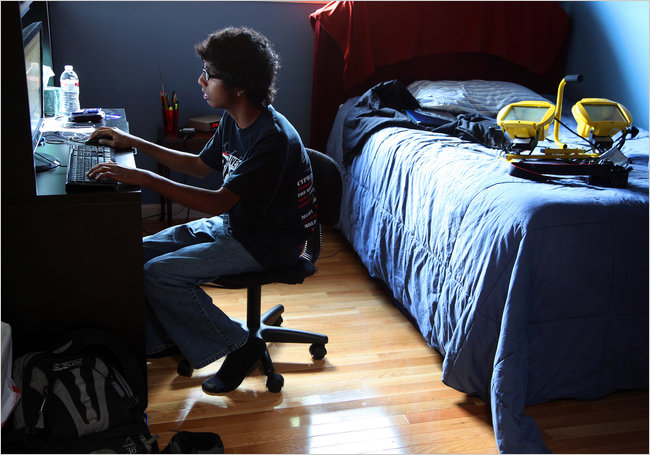


 , theorist Lev Manovich presented his “attempt at both a record and a theory of the present” with regards to digital media. He explains that his “aim” is to “describe and understand the logic driving the development of the language of new media.” But he is quick to add,
 . Judging from
  L.M. Sacasas