

E-books Go to School

Article first published as E-books Go to School – What is the Plan for Implementation? on Blogcritics.

On Monday, text book publisher McGraw-Hill rolled out its first digital, cloud-based textbook.   While McGraw-Hill had previously sold digital supplements to print curriculum, this will be the first all-digital effort available to the K-12 market.  It comes as something of a surprise that it has taken so long, but the hardware limitations frequently faced by schools had until recently presented enough of an obstacle to discourage publishers.  According to Sarah Kessler at Mashable, the e-books will be part of a complete online curriculum for K-12 math and 7-12 science which will also allow students to “participate in Facebook-like conversations that stay with the text.”  Polly Stansell, of McGraw-Hill, explains, “We’re trying to meet students and teachers where they’re at digitally.”

A recent study, however, suggests that this may not necessarily be the wisest strategy, at least as far as educational effectiveness is concerned.  The University of California Libraries recently released the findings of a 2010 survey of e-book users which included graduate and undergraduate students as well as post-doctoral researchers and faculty members.  Surprisingly, the youngest participants registered the strongest preference for print.  Undergraduates reported the highest percentage of participants, 58%, preferring print textbooks over e-books.  Altogether, 44% of the participants said they preferred print, while only 35% said they preferred e-books.

Participants were also asked to explain their preference, and their responses were summarized by Nicholas Carr as follows, “The answers suggest that while students prefer e-books when they need to search through a book quickly to find a particular fact or passage, they prefer printed books for deep, attentive reading.”  One response in particular, also cited by Carr, was especially illuminating:

I answered that I prefer print books, generally. However, the better answer would be that print books are better in some situations, while e-books are better in others. Each have their role – e-books are great for assessing the book, relatively quick searches, like encyclopedias or fact checking, checking bibliography for citations, and reading selected chapters or the introduction. If I want to read the entire book, I prefer print. If I want to interact extensively with the text, I would buy the book to mark up with my annotations; if I want to read for background (not as intensively) I will check out a print book from the library if possible. All options have their place …”

Practical, sensible flexibility of this sort implies the freedom to fit a technology to the educational situation.  Unfortunately, it is more often the case that the educational situation must conform to the technology.  Education is often driven by a certain faddishness, and this seems to be especially true when it comes to technology.  There is long and undistinguished list of tools and devices that were all intended to revolutionize the field and deployed into classrooms precipitously and with little evidence of their value.

This drive to implement new technologies is often accompanied by the rhetoric of choice and freedom for students and teachers, but choice is often precisely what gets left behind.  An all online, cloud based curriculum certainly expands the materials available to students and teachers, but it would almost certainly eliminate the kind of flexibility enjoyed by the student cited in the University of California study.  When schools buy in to new technologies the financial investment yields a corresponding pressure to implement what has been purchased.  This pressure is typically a function of avoiding the appearance of wasted money rather than evidence that education would be made more effective.

The educational value of e-books will likely be uneven as is often the case with any technology, even print; only time will tell. Ideally, the implementation of e-books will be guided by a willingness to perceive the circumstances under which they offer a genuine advance over print and where print still retains the advantage. In part, this is a matter of bending the tool to the needs of the student, rather than bending the student to fit the demands of the tool. Buying into (literally and figuratively) the ideology of educational technology fed by industry marketing undermines the discernment necessary to make just those kinds of judgments.
Internet Pleasures

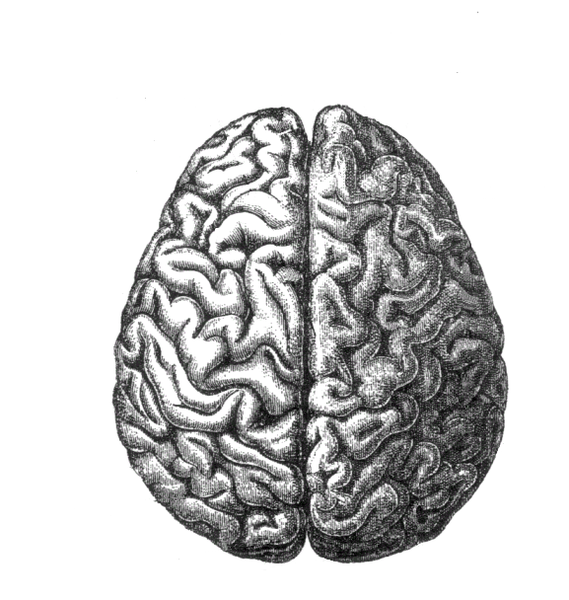
Brain science is an endlessly fascinating field.  Each day, it seems,  a new neurological study is published revealing a link between this or that activity and this or that region of the brain, or that a certain neurotransmitter is related to the regulation of a certain behavior, and so on.  Yesterday’s encounter with the wonders of neurology came while listening to David Linden, professor of neuroscience at the Johns Hopkins University School of Medicine, being interviewed on NPR.  Linden’s new book, The Compass of Pleasure: How Our Brains Make Fatty Foods, Orgasm, Exercise, Marijuana, Generosity, Vodka, Learning, and Gambling Feel So Good, as the inelegant subtitle more than suggests, explores the role of the brain in the experience of pleasure.

Much of the interview focuses on a discussion of the neurology of addiction leading Linden to warn,

“Any one of us could be an addict at any time,” Linden says. “Addiction is not fundamentally a moral failing — it’s not a disease of weak-willed losers. When you look at the biology, the only model of addiction that makes sense is a disease-based model, and the only attitude towards addicts that makes sense is one of compassion.”

Initially, I was struck by two considerations after listening to the interview, both relating to the practical consequences of the science Linden discussed.  First, how oddly Aristotelian all the practical considerations come out sounding:  virtues and vices, habits, and moderation.   Secondly, how little difference this knowledge made for Linden in his own lived experience.  Here is the very last exchange from the interview:

NPR: Since you have studied pleasure and the pleasure circuitry of the brain, has that affected your own relationship with pleasure and the things that you seek or try not to get pleasure from?

Linden: Well, I try deeply not to let it do that.  I certainly — when I’m enjoying a glass of wine I don’t want to be thinking about dopamine levels and, for the most part, fortunately I have been able to avoid doing that. I’m blessed with not having a particularly addictive personality — although I’m a bit of a hedonist — so it hasn’t actually made t0o much of an impact on my own life.

This is a rather jarring note on which to wrap up the interview.  I’ve ordinarily been one to subscribe to A.E. Housman’s line, “All Human Knowledge is precious whether or not it serves the slightest human use.”  And mostly, I would still want to defend something like that claim.  Yet, there is something peculiar about our coming to know more about the biological and neurological base of human life, purportedly the real stuff on which all human life and action rests, only to find that for an ordinary, healthy adult steeped in this knowledge, it makes not much of a difference at all, and, in fact, that he consciously tries to disassociate his knowledge from his experience.  This bears more reflection, but there was one final thought, more directly related to the usual themes on this blog that I wanted to note.

Understanding the Internet’s personal and social consequences involves venturing into the territory mapped out by Linden and others in his field.  Pleasure of some sort — whether benign,  problematic, or illicit — is involved in our daily interactions with the Internet.  If there is a certain compulsiveness to our online experience, then it is because our internet experience shares in an economy of desire, pleasure, and cycles of stimulation and diminishing return that potentially lead  to addictive behavior.

We know that society tolerates certain addictive behaviors more than others, sometimes in seemingly arbitrary fashion.  Internet addiction may carry only a slight social stigma if any at all;  one is tempted rather to conclude that it carries a certain social cachet.  Whether socially acceptable or not, compulsive (or addictive, take your pick) Internet use does appear to have certifiably negative physical consequences in the brain.  A study just published in PLoS ONE suggests that heavy Internet use, particularly online gaming, leads to significant alterations in brain structure with detrimental consequences for cognitive function.  You can read more about the study here, here, and here.

Perhaps not surprisingly, the first of those three articles concludes its report with an appeal to the ancient Roman writer Petronius: “Moderation in all things, including moderation.”  I’m not sure if the writer meant to endorse Petronius’ playful, perhaps satirical tone; more likely it was intended as a straightforward prescription of moderation.

Writing Cannot Be Taught, But It Can Be Learned

Serendipitously, I encountered two book reviews yesterday containing very sound advice on the art of writing.  I expected as much out of the first review in which Joseph Epstein, whose prose I’ve long admired, politely begs to differ with Stanley Fish on how one ought to go about the process of writing well.  The second piece, a review of two books on higher education by Louis Menand, himself a more than competent stylist, offered its comments on writing incidentally to its main point.  I took both to be very near the truth of the matter.

Epstein opens his review of Stanley Fish’s How to Write a Sentence with the following  observations:

After thirty years of teaching a university course in something called advanced prose style, my accumulated wisdom on the subject, inspissated into a single thought, is that writing cannot be taught, though it can be learned—and that, friends, is the sound of one hand clapping. A. J. Liebling offers a complementary view, more concise and stripped of paradox, which runs: “The only way to write is well, and how you do it is your own damn business.”

Learning to write sound, interesting, sometimes elegant prose is the work of a lifetime. The only way I know to do it is to read a vast deal of the best writing available, prose and poetry, with keen attention, and find a way to make use of this reading in one’s own writing. The first step is to become a slow reader. No good writer is a fast reader, at least not of work with the standing of literature. Writers perforce read differently from everyone else. Most people ask three questions of what they read: (1) What is being said? (2) Does it interest me? (3) Is it well constructed? Writers also ask these questions, but two others along with them: (4) How did the author achieve the effects he has? And (5) What can I steal, properly camouflaged of course, from the best of what I am reading for my own writing? This can slow things down a good bit.

A bit further into the review he adds:

First day of class I used to tell students that I could not teach them to be observant, to love language, to acquire a sense of drama, to be critical of their own work, or almost anything else of significance that comprises the dear little demanding art of putting proper words in their proper places. I didn’t bring it up, lest I discourage them completely, but I certainly could not help them to gain either character or an interesting point of view. All I could do, really, was point out their mistakes, and, as someone who had read much more than they, show them several possibilities about deploying words into sentences, and sentences into paragraphs, of which they might have been not have been aware. Hence the Zenish koan with which I began: writing cannot be taught, but it can be learned.

In “Live and Learn:  Why We Have College”, Louis Menand reviews two recent books on the state of higher education and along the way offers his own well-considered thoughts  on the subject.  One of the two books, In the Basement of the Ivory Tower: Confessions of an Accidental Academic (which began its life as an article in The Atlantic)  contained, in Menand’s estimation, sound thoughts on writing:

When he is not taking on trends in modern thought, Professor X is shrewd about the reasons it’s hard to teach underprepared students how to write. “I have come to think,” he says, “that the two most crucial ingredients in the mysterious mix that makes a good writer may be (1) having read enough throughout a lifetime to have internalized the rhythms of the written word, and (2) refining the ability to mimic those rhythms.” This makes sense. If you read a lot of sentences, then you start to think in sentences, and if you think in sentences, then you can write sentences, because you know what a sentence sounds like. Someone who has reached the age of eighteen or twenty and has never been a reader is not going to become a writer in fifteen weeks.

For Menand and Epstein, the secret, if there is one, of good writing appears to be attentive reading, and a lot of it.

Marx, Freud, and … McLuhan

Just wanted to pass along Jeet Heer’s piece, “Divine Inspiration” in The Walrus, on Marshall McLuhan, his legacy, and his Catholicism.  Excerpts below.  Click through for the whole piece which is not long at all.

  • It’s a measure of McLuhan’s ability to recalibrate the intellectual universe that in this debate, [Norman] Mailer — a Charlie Sheen–style roughneck with a history of substance abuse, domestic violence, and public mental breakdowns — comes across as the voice of sobriety and sweet reason. Mailer once observed that McLuhan “had the fastest brain of anyone I have ever met, and I never knew whether what he was saying was profound or garbage.”
  • Indeed, his faith made him a more ambitious and far-reaching thinker. Belonging to a Church that gloried in cathedrals and stained glass windows made him responsive to the visual environment, and liberated him from the textual prison inhabited by most intellectuals of his era. The global reach and ancient lineage of the Church encouraged him to frame his theories as broadly as possible, to encompass the whole of human history and the fate of the planet. The Church had suffered a grievous blow in the Gutenberg era, with the rise of printed Bibles leading to the Protestant Reformation. This perhaps explains McLuhan’s interest in technology as a shaper of history. More deeply, the security he felt in the promise of redemption allowed him to look unflinchingly at trends others were too timid to notice.
  • Like Marx and Freud, he was an intellectual agitator, a conceptual mind expander, the yeast in the dough. After Marx, we can no longer ignore the reality of class difference; after Freud, we can’t pretend that our mental life isn’t saturated with sexual impulses; after McLuhan, we can’t imagine that technology is just a neutral tool. Moreover, like Darwin and Marx, McLuhan is no longer just one man but rather a living and evolving body of thought.

A few months ago I posted a link to a YouTube clip of the Mailer/McLuhan debate here, and here is a piece on Chesterton’s influence on McLuhan.

Incidentally, while pairing McLuhan with the likes of Marx, Darwin, and Freud is in some respects incongruous, what they do have in common is an awareness, sometimes overplayed, of the external forces shaping and influencing human thought  and personality.  What may set McLuhan apart on this score is his unwillingness to slide into determinism:

“There is absolutely no inevitability as long as there is a willingness to contemplate what is happening.”  — Marshall McLuhan, The Medium is the Massage

The Unsettledness at the Heart of our Experience

Unsettled — I’m beginning to think that is a helpful word to capture what it feels like to be alive at present.

[Okay, fair warning, what follows is more speculative and exploratory than what I usually feel comfortable writing on here.  Thoughts and criticism welcome.]

Unsettled is usually used in conversation to mean something like troubled or worried or disconcerted.  More literally it suggests being unanchored, untethered, without grounding, deracinated, adrift, without center.  To view it another way, it is to speak of alienation.

Is it legitimate to speak of alienation in the context of ubiquitous social networks and communication?  Might it be that our connectedness veils a deeper alienation that bubbles up to the surface of consciousness as a pervasive unsettledness?  This is my hypothesis for the moment.

We have known for a long time that as moderns we are no longer connected to place in any significant sense.  Mobility and the autonomy that it purchases come at a cost.  We hardly expect to die in the place we were born.  Most of us will move many times, from city to city, or state to state, or even country to country, before we finally move to Florida or Arizona.  Each move uproots us.  With each move we start over again to some degree.  Many of us are hard pressed to name our home in any traditional sense, so home is simply where we happen to be.  We are, then, spatially or geographically unsettled.

Is there a sense in which we are also temporally unsettled?  Is there an alienation at the heart of our experience of time as well as place?  Here I am thinking again of our mediated experience of the present.  Consider what we might call simply lived experience as a kind of baseline.  Life carried on with a certain immediacy, life lived as a subject interacting with the world beyond our skin.  Now consider what I’m going to call, perhaps problematically*, mediated experience.  This is life lived with a view to its own (re)presentation, life as conscious performance — for the camera, for Facebook, for our blog, etc.  At such times it seems we have inserted a layer of mediation between the present and our experience of it.  If so, might we then speak of a temporal alienation, a temporal unsettledness? Are we not only untethered from place, but also from time?

When we experience life with a view to its future presentation, with what Nathan Jurgenson has aptly called “documentary vision”, we are no longer in the moment as subject.  We are, so to speak, no longer acting in our own life, we are directing; we have become spectators of our own lives.  In a sense we have objectified ourselves; we are looking at our selves. In my memories of events, I often see only the image of pictures I am in.  The memory is not my own first person memory, it is an image that stands in for my own lived experience of the event in which I am an object and not the subject — perhaps because I was not, properly speaking, experiencing the event as a lived experience.

If there is, in fact, a vague unsettled quality to our experience, perhaps it is because we have managed to uproot ourselves not only from place and the stability it brings, but also from the flow of time, from the lived present, in such a way that there is something like an oddly disjointed quality to our sense of self — as if we were watching a film with a time lag between the image and the sound.

While not exactly what T. S. Eliot had in mind, we might say that this begins to answer his poetic query, “Where is the Life we have lost in living?”

_______________________________________________________________________

* I say “problematically” because at some level, in some sense all experience is mediated even if only by our own use of language in our minds.