“Gratitude Is Happiness Doubled By Wonder”

When I think of gratitude, I think of G. K. Chesterton. I can think of few others who appeared to be always animated by a deep and inexhaustible gratitude for life and all that it entailed. With that in mind, here are few lines from Chesterton on the theme of gratitude and thanks:

  • “I would maintain that thanks are the highest form of thought, and that gratitude is happiness doubled by wonder.”
  • “You say grace before meals. All right. But I say grace before the concert and the opera, and grace before the play and pantomime, and grace before I open a book, and grace before sketching, painting, swimming, fencing, boxing, walking, playing, dancing and grace before I dip the pen in the ink.”
  • “When it comes to life the critical thing is whether you take things for granted or take them with gratitude.”

And then I am also reminded of the closing line of a poem by Wendell Berry.  The poem is inspired by a poignant scene in Shakespeare’s “King Lear”:

I think of Gloucester, blind, led through the world
To the world’s edge by the hand of a stranger
Who is his faithful son. At the cliff’s verge
He flings away his life, as of no worth,
The true way lost, his eyes two bleeding wounds—
And finds his life again, and is led on
By the forsaken son who has become
His father, that the good may recognize
Each other, and at last go ripe to death.
We live the given life, and not the planned.

“We live the given life, and not the planned.”  That line etched itself into my mind the moment I first read it.  Simple and profound, an antidote to the disorders of our time.

It would make a great difference, would it not, if our posture toward life were such that we received it as a gift with gratitude and wonder;  if our hands were open to receive and to give in turn rather than clutched to take and to keep?

I tend to think it would make all the difference.

_______________________________________________________________

Also consider my 2011 Thanksgiving post: “Gratitude as a Measure of Technology”
A God that Limps

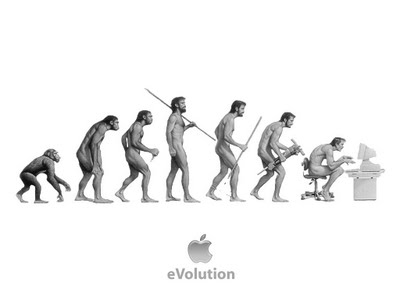
Our technologies are not unlike our children; we react with reflexive and sometimes intense defensiveness if either is criticized.  Several years ago while teaching at a small private high school I forwarded an article to my colleagues.  This was a mistake.  The article raised some questions about the efficacy of computers in education.  I didn’t think then, nor do I now, that it was at all controversial.  In fact, I imagined that given the setting it would be of at least passing interest.  The article appeared in a respectable journal, was judicious in its tone, and cautious in its conclusions.  However, within a handful of minutes — hardly enough time to skim, much less read, the article — I was receiving rather pointed and even angry replies.

I was mystified, and not a little amused, by the responses.  Mostly though I began to think about why this measured and cautious article evoked such a passionate and visceral response.  Around the same time I stumbled upon Wendell Berry’s essay titled, somewhat provocatively, “Why I am Not Going to Buy a Computer.” More arresting than the essay itself, however, were the letters that came in to Harper’s where the essay had been reprinted.  These letters, which now typically appear alongside the essay whenever it is anthologized, were caustic and condescending.  In response Berry wrote,

The foregoing letters surprised me with the intensity of the feelings they expressed. According to the writers’ testimony, there is nothing wrong with their computers; they are utterly satisfied with them and all that they stand for. My correspondents are certain that I am wrong and that I am, moreover, on the losing side, a side already relegated to the dustbin of history. And yet they grow huffy and condescending over my tiny dissent. What are they so anxious about?

Precisely my question.  Whence the hostility, defensiveness, agitation, and indignant, self-righteous anxiety?

I’m typing these words on a laptop and they will appear on a blog that exists on the Internet.  Clearly I am not, strictly speaking, a Luddite.  (Although, in light of Thomas Pynchon’s analysis of the Luddite as Badass, there may be a certain appeal.)  Yet, I do believe an uncritical embrace of technology may prove fateful, if not Faustian.

The stakes are high.  We can hardly exaggerate the revolutionary character of certain technologies throughout history:  the wheel, writing, the gun, the printing press, the steam engine, the automobile, the radio, the television, the Internet.  And that is a very partial list.  Katherine Hayles has gone so far as to suggest that as a species we have “codeveloped with technologies; indeed, it is no exaggeration,” she writes in Electronic Literature, “to say modern humans literally would not have come into existence without technology.”

We are, perhaps because of the pace of technological innovation, quite conscious of the place and power of technology in our society and in our own lives.  We joke about our technological addictions, but it is sometimes a rather nervous punchline.  It makes sense to ask questions.  Technology, it has been said, is a god that limps.  It dazzles and performs wonders, but it can frustrate and wreak havoc.  Good sense seems to suggest that we avoid, as Thoreau put it, becoming tools of our tools.  This doesn’t entail burning the machine; it may only require a little moderation.  At a minimum it means creating, as far as we are able, a critical distance from our toys and tools, and that requires searching criticism.

And we are back where we began.  It is that kind of searching criticism of our technologies that we seem allergic to.  So here is my question again:  Why do we react so defensively when we hear someone criticize our technologies?  Or, and this is entirely possible, is this not at all the case outside of my own quite limited experience?

What are universities for?

Not too long ago I noted two essays that appeared in the Times Literary Supplement, one by Martha Nussbaum and the other by Keith Thomas, on the topic of the humanities and the university.  In his piece, “What are universities for?”, Thomas regretted the loss of the art of teaching within the context of an academic culture that put a premium on research and publishing.

In a recent interview, Wendell Berry expressed similar concerns:

I think [the University of Kentucky] has gone astray first with its long emphasis on research instead of teaching. If you promote research, which can be quantified, and make it the paramount issue with promotion and tenure and salary raises, then you diminish the standing and importance of teaching necessarily, which can’t be quantified. … Administrators have to find a way to reward professors for teaching.

Berry’s comments came in the wake of his decision to remove his papers from the University of Kentucky’s archives  in protest against the university’s recent emphasis on becoming a Top 20 “research university” and their acceptance of a sizable donation from a major coal company. Later in the interview Berry makes the following reasonable assumption:

And so the University of Kentucky has for some time had a program to become a top-20 research institution. Every sizable university in the country has that program, as if the present top 20 is going to stand back while the others pass them. I don’t think that’s going to happen for most of them. Well, let me not speculate.

In his essay, Keith Thomas observed that

Only a minority of academics can hope to achieve any real advance in their discipline, but all have the possibility of making an enduring “impact” on the minds of their pupils.

Combining Berry and Thomas yields the following formulation: only a minority of universities can hope to become Top 20 research institutions, but all have the “possibility of making an enduring ‘impact’ on the minds of their pupils.”  But this can happen only if they make teaching and “scholarship,” to borrow Thomas’ term, a priority.

You can read more about Berry’s decision at University Diaries and the Lexington Herald-Leader.