Weekend Reading, 11/26/11

Happy Thanksgiving weekend everyone. I hope the past few days have been filled with good food, laughter, celebration, family and friends, and, of course, much gratitude. And here’s hoping that you all managed to stay clear of any Black Friday pepper-spray instances of “competitive shopping.”

We’ll start this week with a piece on cyber-security (is that still an acceptable use of “cyber-“?).

“Palantir, the War on Terror’s Secret Weapon” by Aslee Vance and Brad Stone in Business Week: Yes, Tolkien fans, you read that correctly. The highly-prized security software that had its start as PayPal’s anti-fraud program is named after the seeing-stones in The Lord of the Rings, and Palantir’s CEO unabashedly explains that the company’s mission is to “protect the Shire.” It’s an interesting company that seeks to keep its soul in what might be a seedy business. We hope they succeed, because as a friend and Tolkien enthusiast noted, “While the original Palantir were made by elves for the forces of good, they were eventually turned to evil ends. That may serve as a good allegory for those of us who get worried about Big Brother having infinite information about our lives.”

From the rather serious to a lighter piece.

“The Amazing History and the Strange Invention of the Bendy Straw” by Derek Thompson at The Atlantic: The history of technology — and yes, the bendy straw is a technology — is full of interesting and quirky stories like this which shows how much went into designing and making objects we take entirely for granted. It’s a quick read and you’ll have a great an interesting anecdote with which to bore entertain people every time they pull out a bendy straw.

And now for a slightly whimsical take on a rather profound matter.

“The Umbrella Man” produced by Errol Morris at the NY Times: This is a great little documentary, it comes in at under seven minutes, based on the “umbrella man” that mysteriously stood on the route of JFK’s motorcade the decidedly sunny day he was shot in 1963. It finally makes a great point about our understanding and study of history.

Now, in case you were tempted to join the Black Friday madness, here is a little inoculation for you.

“Rabbi Lets Consumerism Have It Between the i’s” by Jonathan Wynne-jones and Martin Beckford in The Sydney Morning Herald. This is not a new message, but it is stated once more with some force by a prominent British Rabbi and member of the House of Lords, Jonathan Sacks. While not wanting to invoke too much self-loathing, I did find it interesting that, as the article noted, “Although religious leaders have recently used increasingly strong language to condemn banks and politicians over the financial crisis and the gap between rich and poor, few have directly criticised ordinary people for their materialism.” There is a lot of finger pointing going on these days, but seemingly very little by way of introspection. I’ll leave it at that.

Speaking of which, if you place yourself right of center on the political spectrum, you may find these two pieces from prominent conservative writers instructive:

“A Caveman Won’t Beat a Salesman” by Peggy Noonan in the Wall Street Journal

and

“When Did the GOP Lose Touch with Reality” by David Frum in NY Magazine

If you are left of center, here is the companion piece to Frum’s:

“When Did Liberals Become So Unreasonable” by Jonathan Chait.

I’ll leave you to answer those two questions.

Moving from politics to a very political and technological issue: energy policy.

“The Myth of Renewable Energy” by Dawn Stover in The Bulletin of the Atomic Scientists: I’m far from expert on these matters, but this struck me as a rather grim, but well reasoned piece. The key point is straightforward: all renewable energies seem to have hidden and unsustainable factors worked in.

Not wanting to leave you on a downer this weekend, here is another sharp post from the folks at Cyborgology.

“Hipster Rivivalism: Authentic Technologies of Days Gone Past” by David Strohecker: Strohecker takes a look at the hipster fascination with vintage technologies and the quest for authenticity. It’s an interesting cultural trend as I’ve noted before here, and, I suspect, a symptom of the human condition groping for expression.

It’s a messy world out there right now, and storm clouds seem perpetually to be gathering on the horizon. At the risk of sounding trite, such times, for all of the angst they induce, can also have the effect of clarifying and reordering our priorities. I trust you still found much to be thankful for this week and, having already mentioned Tolkien, I’ll leave you with one of my favorite lines from the Two Towers. At the bleakest moment, Aragorn nonetheless manages to affirm, “Yet, dawn is ever the hope of men.”
Remembering George Kennan

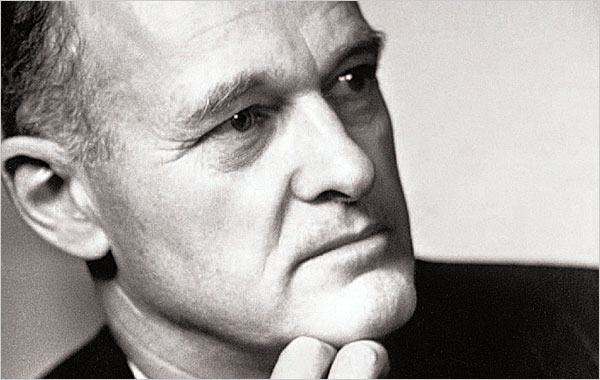
Early on in the life of this blog I wrote a couple of posts referencing George Kennan, the American diplomat and scholar who played a seminal role in the evolution of American foreign policy in the years following the close of the Second World War. Kennan’s “Long Telegram,” for example, is generally considered to be the ur-text of containment, even if Kennan later disavowed its application. Kennan’s influence later permeated the State Department under George C. Marshall. After the Truman administration, Kennan would serve from time to time in an advisory capacity but largely as an outsider — a status he keenly felt.

In the second of those posts last summer I noted the following observation from a review of Peter Beinhart’s The Icarus Syndrome: A History of American Hubris:

Kennan once set out to write a biography of Chekhov; as Beinart dryly observes, “Bush sent a man to run Iraq, L. Paul Bremer, who had never before been posted to the Arab world. To grasp the intellectual chasm between American foreign policy toward the U.S.S.R. in 1946 and American foreign policy toward Iraq in 2003, one need only try to envision Bremer writing a biography of an Iraqi writer, or, for that matter, being able to name one.”

Perhaps I may be forgiven for a certain nostalgic and perhaps romanticized longing for a foreign policy team that featured George C. Marshall and Dean Acheson along with George Kennan. Acheson, Kennan, and four other contemporaries feature in Walter Isaacson and Evan Thomas’ The Wise Men: Six Friends and the World They Made. And Kennan is the subject of a new biography by John Lewis Gaddis, dean of Cold War studies, titled George F. Kennan: An American Life.

It’s doubtful that I’ll get a chance to read Gaddis’ book any time soon, so I am glad for two long reviews that have appeared to give a taste of the whole: Louis Menand’s review in the New Yorker and Henry Kissinger’s in the NY Times. Here is the conclusion of Menand’s review:

“Still, buried within Kennan’s realism there is a moral view: that in relations of power, which is what he thought international relations ultimately are, people can’t be trusted to do the right thing. They will do what the scorpion does to the frog—not because they choose to but because it’s their nature. They can’t help it. This is an easy doctrine to apply to other nations, as it is to apply to other people, since we can always see how professions of benevolence might be masks for self-interest. It’s a harder doctrine to apply to ourselves. And that was, all his life, Kennan’s great, overriding point. We need to be realists because we cannot trust ourselves to be moralists.

This was the danger that the United States faced after Europe had destroyed itself in the Second World War. We had power over other nations to a degree unprecedented in our history, possibly in the world’s history, and it was natural for us to conclude that we deserved it. “Power always thinks it has a great soul,” as another Adams, John, once said. Containment was intended as a continual reminder that we do not know what is best for others. It is a lesson to be ignored only with humility.”

And this from Kissinger’s:

“In a turbulent era, Kennan’s consistent themes were balance and restraint. Unlike most of his contemporaries, he applied these convictions to his side of the debate as well. He testified before the Senate Foreign Relations Committee against the Vietnam War but on the limited ground that there was no strategic need for it. He emphasized that the threat posed by Hanoi was exaggerated and that the alleged unity of the Communist world was a myth. But he also warned elsewhere against ‘violent objection to what exists, unaccompanied by any constructive concept of what, ideally ought to exist in its place.’ He questioned the policy makers’ judgment but not their intent; he understood their dilemmas even as he both criticized and sought to join them.”

It is too easy to idealize historical figures after the more jagged edges of their performance on history’s stage have been smoothed over by the passage of time. But I cannot help but think that Kennan — and Acheson and Marshall — represented a seriousness that at times seems to be wholly absent from the present political scene.

Kennan had his contradictions and, being human, he was not without flaws and blind spots. And yet, we might safely conclude that he was no fool, and that, regrettably, seems to be more than we can say as we survey the population of our present political landscape. We are in the thrall of great frivolity and there is a disheartening lack of seriousness to our political discourse. And little wonder, we seem long ago to have lost the patience for intellectual rigor and nuance. That a diplomat would undertake the biography of a foreign literary figure is likely to strike us as a waste of resources.

The realities of lived, concrete experience demand a certain provisionality and openness, anchored by deep learning, that issues in practical wisdom. This wisdom coupled with moral courage is what the times demand. And, if I may be pardoned a moment of unseemly cynicism, it is precisely this package of virtues that our political discourse seems to forbid by the logic of the media ecosystem in which it plays out. In this environment our political options have calcified into grotesque parodies of themselves and it is at times hard to be hopeful.

In his 1994 memoir, Kennan wrote,

“… let us, acting on the principle that peoples tend, over the long run, to get the kind of government they deserve, leave the peoples of these ‘nondemocratic’ countries to be governed or misgoverned as habit and tradition may dictate …”

The principle that “peoples tend, over the long run, to get the kind of government they deserve” may not always be a fair historical assessment, but if there is even a grain of truth to it, as I suspect there is, then this does not bode well for us.

“Harry Truman” … the Song

Before they started belting out ’80s power ballads, the band Chicago put out more, how shall we say … politically interesting music.  Having recently heard David McCullough, Harry Truman had been on my mind, and today I remembered that Chicago released a song titled “Harry Truman” back in 1975.

In the wake of the Watergate scandal it’s easy to see why the song did so well on the charts, peaking at #13. Today it might race to #1.

“Harry Truman”

by Robert Lamm

America needs you
Harry Truman
Harry could you please come home
Things are looking bad
I know you would be mad
To see what kind of men
Prevail upon the land you love

America’s wondering
How we got here
Harry all we get is lies
We’re gettin’ safer cars
Rocket ships to mars
From men who’d sell us out
To get themselves a piece of power

We’d love to hear you speak your mind
In plain and simple ways
Call a spade a spade
Like you did back in the day
You would play piano
Each morning walk a mile
Speak of what was going down
With honesty and style

America’s calling
Harry Truman
Harry you know what to do
The world is turnin’ round and losin’ lots of ground
Oh Harry is there something we can do to save the land we love


Weekend Reading, 9/16/2011

A little bit of politics, religion, parenting, plagiarism … you know, all the stuff you’re not supposed to talk about at the dinner table.  Plus one surprise for you at the end. Hope you have a lovely weekend.

“Pew’s Must See Picture of US Politics” by Rod Dreher at The American Conservative: Dreher provides an overview of the recently released Pew Center Political Typology Report, its first since 2005. Some interesting, counter-intuitive findings. Follow his link to the Pew page and you can take the survey to find out where you are in the Pew Typology.

“Varieties of irreligious experience” by Jonathan Rée in New Humanist: “The dividing lines between religiosity and secularism, or between belief and disenchantment, are not getting any clearer as time goes by, and if there has been a lot of traffic travelling from the camp of religion to the camp of disbelief in the past couple of centuries, it has followed many different paths, and is bound for many different destinations.” Well written piece in a Jamesian key on the subtleties of dis-belief in traditional religion.

“The Evolution of Data Products” by Mike Loukides at O’Reilly Radar: Helpful piece on the evolution and future trajectory of data and data products. “Data products are striving for the same goal: consumers don’t want to, or need to, be aware that they are using data. When we achieve that, when data products have the richness of data without calling attention to themselves as data, we’ll be ready for the next revolution.”

“What if the Secret to Success is Failure” by Paul Tough at the NY Times Magazine: Longish piece on efforts to instill character education in schools. “This push on tests is missing out on some serious parts of what it means to be a successful human.” “Our kids don’t put up with a lot of suffering. They don’t have a threshold for it. They’re protected against it quite a bit. And when they do get uncomfortable, we hear from their parents.”

“Uncreative Writing” by Kenneth Goldsmith at the The Chronicle of Higher Ed: Be warned, this piece may make you angry. Author argues the virtues of plagiarism claiming that writing must adjust to the conditions brought about by the computer, although there is a trajectory leading to this moment that pre-dates the computer. Some interesting points — it’s not a “crazy” piece — but my response is mixed.

And, last but not least, an impressive and surprising rendition of the national anthem from someone you wouldn’t have guessed could pull it off: watch it here.

“The Past Is Never Dead”

In the wake of the Protestant Reformation, religious violence tore across Europe.  The Wars of Religion, culminating with the Thirty Years’ War, left the continent scarred and exhausted.  Out of ashes of war the secular nation state arose to establish a new political order which privatized religion and enshrined reason and tolerance as the currency of the public sphere ensuring an end to irrational violence.

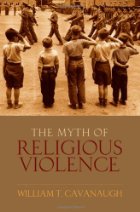
That is one of the more familiar historical narratives that we tell ourselves.  It is sweeping and elegant in its scope and compelling in its explanatory power.  There’s only one problem according to William Cavanaugh:  it’s not true.  Cavanaugh lays out his case in his most recent book, The Myth of Religious Violence: Secular Ideology and the Roots of Modern Conflict (Oxford UP, 2009).  Needless to say, he has his work cut out for him.  The narrative he seeks to deconstruct is deeply entrenched and we’ve staked a lot on it.  His point, to be clear, is not that religion has never been implicated in violence.  As he puts it elsewhere, “Given certain conditions, Christianity, Islam, and other faiths can and do contribute to violence.”  Rather, he is contesting the particular historical narrative whereby the secular nation state arises in response to religious violence in order to secure peace for society by marginalizing religious practice and discourse.
To begin with, Cavanaugh demonstrates that the very concept of religion is problematic and thus renders any neat parsing of violence into either religious or secular categories tenuous at best.  Moreover, the nation state precedes the so called wars of religion and is best seen as a contributing cause, not an effect of the wars.  The historical realities of the wars resist the simplistic “Wars of Religion” schema anyway.  For example, during the  Thirty Years’ War, Catholics were at times fighting other Catholics and sometimes in league with Protestants.  The Thirty Years’ War as it turns out was a scramble by competing dynasties and rising national governments to fill the power vacuum created by the collapse of the medieval political order.  Furthermore, Cavanaugh suggests that the state co-opted and assumed for itself many of  the qualities of the church creating, as one reviewer put it, “its own sacred space, with its own rituals, hymns, and theology, and its own universal mission.”  In the end, the secular nation state, particularly in its 20th century totalitarian apotheosis, hardly appears as the champion of reason, peace, and tolerance.  The nation state secured its status by monopolizing the use of coercive force.  In doing so, however, it clearly did not put an end to violence.

Cavanaugh presents a counter-intuitive thesis and he takes care to make his case.  It is a case he has been working out since 1995 when, as a graduate student, he published “‘A fire strong enough to consume the house:’ The Wars of Religion and the Rise of the Nation State.” In the intervening years he has honed and strengthened his argument which finds mature expression in the The Myth of Religious Violence.

Whether one ultimately agrees with Cavanaugh’s thesis or not, his work highlights two important considerations regarding historical narratives.  First, historical reality is usually more complex than the stories we tell, and the complexity matters.  We are living through a cultural moment when historical awareness is a rare commodity, so perhaps we shouldn’t complain too much about shallow historical knowledge when the alternative may be no historical knowledge.  But that said, much of what does pass for historical knowledge too frequently is filtered through Hollywood, the entertainment industry, or the talk-show circuit, and for all these subtlety must necessarily be sacrificed to the demands of the medium.  The big picture sometimes is painted at the expense of important details, so much so that the big picture is rendered misleading.

Perhaps most days of the week, this is not a terribly important consideration.  But it can become very significant under certain circumstances.  When a historical narrative is hotly contested and passionately defended it is usually because the real battle is over the present.  Consider heated debates about the Christian or secular origins of the American constitutional order, or arguments over the causes of the American Civil War and Southern identity.  Leaving the terrain of American history, consider the Armenian genocide, the Japanese atrocities at Nanking, or the the tangled history of the Balkans.  In each case the real issue is clearly not the accuracy of our historical memory so much as it is the perceived implications for the present.  In other words, we fight for our vision for the present on the battlefield of the past.  This raises a host of other questions related to the status of arguments from history, philosophies of history, and historiography.  These sorts of questions, however, are rarely raised at rallies or on television — it would be hard to fit them on a placard or in a 10 second sound bite.

A debate about the origins of the modern nation state is likewise about more than historical accuracy.  Critics of religion and the place of religion in public life, Christopher Hitchens and Sam Harris for example, have made the historical narrative we began with a key component of their case — religion kills, the secular state saves.  Cavanaugh has offered the compelling rejoinder.

Either way it appears Faulkner was right:  “The past is never dead.  It’s not even past.”

_____

You can listen to a lecture and link to a number of essays by Cavanaugh here.