
UPDATE: See the Borg Complex primer here.
______________________________________
“Resistance is futile.” This is what the Borg, of Star Trek fame, announces to its victims before it proceeds to assimilate their biological and technological distinctiveness. It is also what many tech gurus and pundits announce to their audiences as they dispense their tech-guru-ish wisdom. They don’t quite use those words,of course, but they might as well. This is why I’ve taken to calling this sort of rhetoric a Borg Complex.
I first wrote about the Borg Complex last June in response to an article on technology and religion which confidently announced that “religion will have to adapt.” The line, “Resistance is futile,” could have unobtrusively made its way into the article at any number of places.
Using this same article as a specimen, I identified six tell-tale symptoms of a Borg Complex.
1. Makes grandiose, but unsupported claims for technology
2. Uses the term Luddite a-historically and as a casual slur
3. Pays lip service to, but ultimately dismisses genuine concerns
4. Equates resistance or caution to reactionary nostalgia
5. Starkly and matter-of-factly frames the case for assimilation
6. Announces the bleak future for those who refuse to assimilate
These symptoms may occur singly or in some combination, and they may range form milder to more hysterical manifestations. Symptoms of the Borg Complex also tend to present with a smug, condescending tone, but this is not always the case. Those who suffer from a Borg Complex may also exhibit an earnest, pleading tone or one that is mildly annoyed and incredulous.
As a more recent example of symptom number 2, consider Tim Wu writing in the NY Times about the response of some communities to apps that allow one to book cabs or rent out an apartment: “But they’re considerably less popular among city regulators, whose reactions recall Ned Ludd’s response to the automated loom.” Clearly a bad thing in Wu’s view.
An interesting case of the Borg Complex was on display in a Huffington Post interview of Evernote CEO, Phil Libin. Libin is discussing Google Glasses when he says:
“I’ve used it a little bit myself and – I’m making a firm prediction – in as little as three years from now I am not going to be looking out at the world with glasses that don’t have augmented information on them. It’s going to seem barbaric to not have that stuff. That’s going to be the universal use case. It’s going to be mainstream. People think it looks kind of dorky right now but the experience is so powerful that you feel stupid as soon as you take the glasses off… We’re spending a good amount of time planning for and experimenting with those.”
“It’s going to seem barbaric to not have that stuff.” Here’s an instance of the Borg Complex that does not fit neatly within the symptoms described above. It’s some combination of 1, 5, and 6, but there is something more going on here. Context provides a little clarity though. This case of the Borg Complex is wrapped up in the potential sale of some future product. So the symptoms are inflected by the marketing motive. It is perhaps a more passive-aggressive form of the Borg Complex, “You will not want to be without __________________ because everyone else will have _________________ and you’ll feel inadequate without __________________.”
A more direct and intense variation of the Borg Complex was on display in Nathan Harden’s essay about the future of higher education. Here are the opening lines:
“In fifty years, if not much sooner, half of the roughly 4,500 colleges and universities now operating in the United States will have ceased to exist. The technology driving this change is already at work, and nothing can stop it.”
Harden sums up his introduction with the announcement, “The college classroom is about to go virtual.”
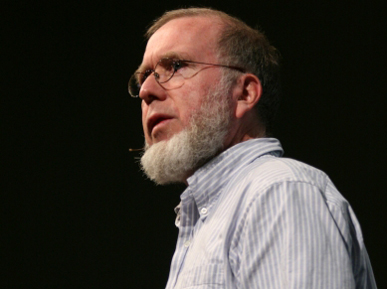
Kevin Kelly, a tech-guru par excellence and one of unbounded optimism, also exhibits Borg Complex symptoms in his much talked about essay for Wired, “Better Than Human” (the title, it is worth clarifying, was not chosen by Kelly). Early on Kelly writes,
“It may be hard to believe, but before the end of this century, 70 percent of today’s occupations will likewise be replaced by automation. Yes, dear reader, even you will have your job taken away by machines. In other words, robot replacement is just a matter of time.”
And perhaps it may be so. A diagnosis of Borg Complex does not necessarily invalidate the claims being made. The Borg Complex is less about the accuracy of predictions and claims than about the psychological disposition that leads one to make such claims and the posture toward technology in the present that it engenders.
The contrasts among Libin, Harden, and Kelly are also instructive. Libin’s case of Borg Complex is inflected by commercial considerations. I’m not sure the same can be said for either Harden or Kelly. This moves us beyond the work of identifying symptoms and leads us to consider the causes or sources of the Borg Complex. Libin’s case points in one plausible direction. In the case of Kelly, we might reasonably look to his philosophy of autonomous technology. But further consideration of causes will have to wait for a future post.
Until then, carry on with the work of intelligent, loving resistance were discernment and wisdom deem it necessary.


 L.M. Sacasas