
The Internet, the Body, and Unconscious Dimensions of Thought, Part II

The Embodied Unconscious

Part Two of Three. Part One.

Ulmer’s project — fashioning a heuristic apparatus that brings the social unconscious partly into view — focuses on the semiotic elements of the socially situated self. Yet, this is only one of the unconscious, or pre-cognitive, dimensions of identity and action. In How We Became Posthuman, Katherine Hayles drew attention to the relationship among embodiment, cognition, and subjectivity.  The group subject emerges, according to Hayles, not only out of the realm of image, symbol, and language, but also out of the matrix of embodied practice.

Ulmer’s unconscious may be labeled the semiotic (or iconic) unconscious.   Adapting Lacan’s psychic schema, Ulmer proposes to map the group subject by recognizing the pattern of recurring signifiers within the four discourses of what Ulmer calls the popcycle (Family, Entertainment, School, Career).   The recurring signifier, analogous to the Lacanian symptom, takes on the role of Guattari’s “existential refrain”: “An implication for electrate identity,” according to Ulmer, “is that a unique refrain, a singularity, may be the clasp that holds together a collectivity (that the nation, so to speak, ‘hangs by a thread’).” The emerging apparatus of electracy allows the group subject to be written, and thus to emerge, at least partially, from its blind spot.

Hayles supplements the semiotic unconscious with what may be called the embodied unconscious.  The embodied unconscious consists of “bodily practices” which have sedimented

into habitual actions and movements, sinking below conscious awareness.   At this level they achieve an inertia that can prove surprisingly resistant to conscious intentions to modify or change them. By their nature, habits do not occupy conscious thought; they are done more or less automatically, as if the knowledge of how to perform the actions resided in ones’ fingers or physical mobility rather than in one’s mind.
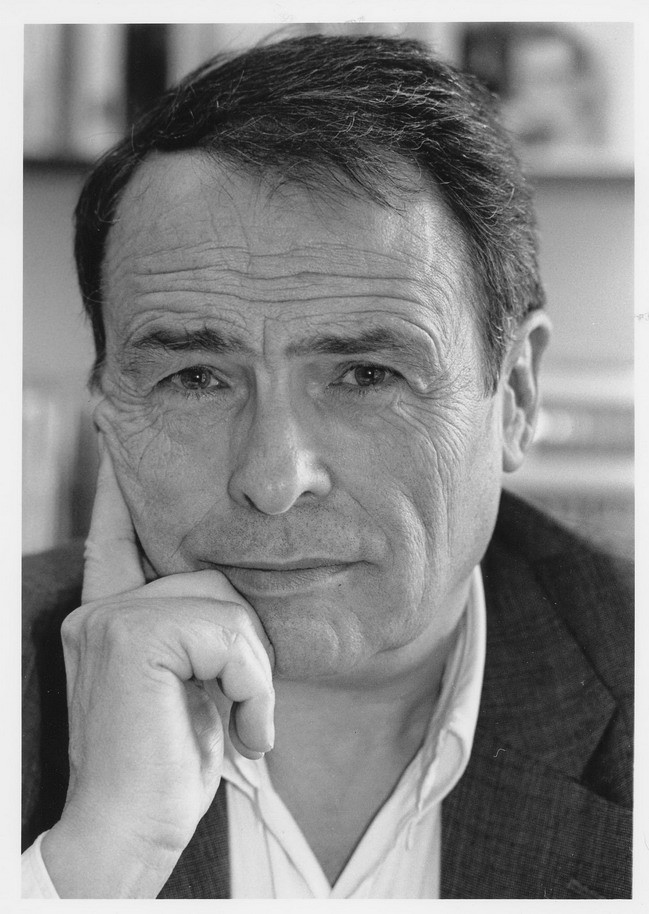
Pierre Bourdieu

In articulating the significance of the embodied unconscious, Hayles draws heavily on the work of French sociologist Pierre Bourdieu.  Bourdieu arrived at his conceptions of practice and embodied knowledge through his study of a group of Berber tribes known as the Kabyle living in North Africa.  Bourdieu observed that the seasonal rituals of the Kabyle conveyed considerable “understanding” about the world, but did so by communicating not “abstractions,” but “patterns of daily life learned by practicing actions until they become habitual.” Habitus, as Bourdieu put it, preserves “a past which survives in the present and tends to perpetuate itself into the future by making itself present in practices structured according to its principles,” and it does so by embedding this knowledge or remembering in the body.

In summarizing Bourdieu’s findings, Hayles concludes that his

work illustrates how embodied knowledge can be structurally elaborate, conceptually coherent, and durably installed without ever having to be cognitively recognized as such . . . The habitus, which is learned, perpetuated, and changed through embodied practices, should not be thought of as a collection of rules but as a series of dispositions and inclinations that are both subject to circumstances and durable enough to pass down through generations.  The habitus is conveyed through the orientation and movement of the body as it traverses cultural spaces and experiences temporal rhythms.

This durable knowledge carried in the body and yielding dispositions and inclinations is transmitted through the ritualized practices of a society.  Ulmer tends to associate embodied knowledge and its modes of acquisition with oral cultures and religious liturgies, consequently this form of subject formation is unfortunately marginalized in his analysis of literate and post-literate societies.  By contrast, Hayles forefronts this form of knowledge and argues for its ongoing significance.  She concludes her discussion of Bourdieu by identifying four key elements of embodied knowledge that emerged from his research:

First, incorporated [or, embodied] knowledge retains improvisational elements that make it contextual rather than abstract, that keep it tied to the circumstances of its instantiation.  Second, it is deeply sedimented into the body and is highly resistant to change.  Third, incorporated knowledge is partly screened from conscious view because it is habitual.  Fourth, because it is contextual, resistant to change, and obscure to the cogitating mind, it has the power to define the boundaries within which conscious thought takes place.

The fourth point is particularly significant in relation to ATH or blindness and Arendt’s call to think what we are doing.  Hayles explicitly links the obscurity of embodied knowledge with the contours within which conscious thought flows.
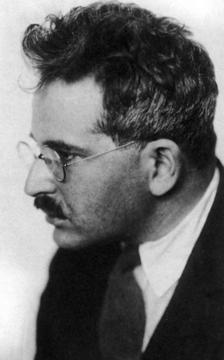
Walter Benjamin

Connecting embodied knowledge with blindness is not intended to disparage embodied knowledge.  In fact, without offloading certain procedures, interactions, and functions to the embodied unconscious, it would be difficult to function at all.  But the benefits of embodied knowledge come at a price.  Here it is helpful to recall Ulmer’s discussion of Walter Benjamin’s notion of the “optical unconscious”:

The capacity of the camera to separate itself from the human physical and mental eye, combined with the theories of psychoanalysis, produced the notion of the ‘optical unconscious’ (Benjamin).  The attitude toward truth as standpoint in the image apparatus of electracy is that clarity is an effect of repression, blindness (ATH).

“Clarity is an effect of repression” is a dictum that applies not only to the optical unconscious, but also to the embodied unconscious.  The benefits of the embodied unconscious come at the cost of installing habitual repression into our experience of the world.  Habituated forms of attention are simultaneously habituated forms of inattention.  Interestingly, the connection between repression and habituation appears in Rosalind Krauss’ analysis cited by Ulmer in his discussion of the optical unconscious:

As Rosalind Krauss explained, applying the poststructural psychoanalysis of Jacques Lacan, the ‘extimate’ inside-outside nature of the human subject installs an opaque obstacle “within the very heart of a diagrammatic clarity that is now a model both of vision’s claims and of vision’s failure . . . . The graph of an automatist visuality would show how the vaunted cognitive transparency of the ‘visual as such’ is not an act of consciousness but the effect of what is repressed:  the effect, that is, of seriality, repetition, the automation.”

Just as we often see through habituated acts of not seeing, we also often act through habituated acts of not thinking.


Material Faith: Gestures Toward a Theology of Technology

In his 2003 book, Power Failure: Christianity in the Culture of Technology, philosopher Albert Borgmann invites us to consider what a theology of technology might look like.  He suggests that “there is hope for a coming to terms with technology not in the vortex of the initial confrontation, but only after one has passed through it.”  Then he goes on to add,

A radical theology of technology would be one that, through the experience of technology, could call into question what now counts as unproblematic …. In short I believe that the experience of technology can awaken in us a new potentia oboedientialis, a new capacity to hear the word of God.

As I read him, Borgmann is suggesting that a theology of technology is enabled by the experience of technology to perceive aspects of human experience that would otherwise remain obscured.  Passing through the vortex allows us to see more clearly what we may have apprehended only vaguely, if at all.

So for example, it seems that the vortex of rapid technological change encourages us to become aware of technology’s cultural consequences in a way that those who experienced technological change at a glacial pace would have been unlikely to perceive.  When technology does not change markedly in a generation or more, it tends to blend into the presumed natural order of things.  The acceleration of technological change encourages awareness of the attendant disruptions of established patterns of life.  Such awareness is sometimes accompanied by anxiety, euphoria, or nostalgia.  At best, though, it is a first step toward a discerning, critical disposition aimed at faithfulness and wisdom.

Two elements of experience thrown into relief by passing through the technological vortex come to mind.  Theorists of technology, and of digital media in particular, have over the last decade drawn attention to the materiality of texts and to the embodied nature of knowledge.  It is a concern fostered by the apparent immateriality of digital media and the not-so-fringe visions of disembodied immortality that animate many in the Silicon Valley set.

The rhetoric of disembodied posthumanism, for example, led Katherine Hayles, a scholar of literature and computer science, to articulate a countervision which secures the significance of the body.  In doing so, Hayles drew on the work of Pierre Bourdieu and Paul Connerton.  Both Bourdieu and Connerton produced rich studies of embodied practices within traditional societies — practices geared toward the task of cultural remembrance.  Connerton cited, among other examples, the significance of the enacted Christian liturgy as an instance of embodied practice aimed at securing enduring social memory. The ascendency of digitized memory, then, is the figure against which the ground of embodied knowing and remembering becomes visible.

Along similar lines, Jerome McGann working within the field of literary studies and having pioneered the digital archive (Rossetti Archive) drew attention to the significance of materiality in the case of texts.  When texts become digital, it is suddenly important to ask what difference the material attributes of the book makes.  Reinforcing Borgmann’s point, the materiality of the book would have remained largely taken for granted had not the advent of digital texts and e-readers drawn our attention to it.

Similarly, a theology of technology will address itself to the new fields of human experience being disclosed by the rapid advance of technology.  This by no means amounts to a wholesale endorsement of all technological change and its consequences.  Marshall Mcluhan, for example, viewed the task of understanding technology as an act of resistance to that same technology:

I am resolutely opposed to all innovation, all change, but I am determined to understand what’s happening because I don’t choose just to sit and let the juggernaut roll over me.  Many people seem to think that if you talk about something recent, you’re in favor of it.  The exact opposite is true in my case.  Anything I talk about is almost certainly to be something I’m resolutely against, and it seems to me the best way of opposing it is to understand it, and then you know where to turn off the button.  (Understanding Me:  Lectures and Interviews, 101-102)

Of course, we need not take quite so oppositional a view either.  Rather, the point is to reckon with what technology discloses about itself, the world we inhabit, and the human condition – and to take theological account of such disclosure.

It is worth noting that the renewed focus on embodiment, materiality, and what amounts to liturgical forms of knowing and remembering accord well with prominent themes within the Christian tradition.  It is, however, a focus that the Christian tradition has historically struggled to maintain.  Strands of American evangelicalism in particular, but not exclusively, have tended to reduce faith and practice to assent to the intellectual content of propositional statements thus occluding the significance of the material and embodied conditions of Christian discipleship and worship.

Perhaps taking a cue from theorists of technology it is possible to look again at the significance of the body and the rich material culture of Christian faith and practice.  Moreover, resources within the Christian tradition may fruitfully be brought to bear upon contemporary discussions of embodiment and materiality yielding genuine engagement and dialog.  The Christian faith after all is a faith of bread and wine, water and wood, body and blood.  It is just the right time, then, to rediscover the body and materiality of faith.

iSpirituality: Religous Apps and Spiritual Practices

Religious apps for the iPhone and iPad have been in the news lately.  In “Religion on Your iPhone?”, Lisa Fernandez discusses a variety of apps created for Christians, Muslims, Jews, Hindus, and Buddhists.  The Apple app store is, if nothing else, an apparently ecumenical space.  Among the various religious apps, however, “Confession: A Roman Catholic App” has probably received the most attention and a good deal of it seemingly misguided.  The folks at Get Religion have broken down some of the misleading news stories related to the app and the Catholic League collected a few of the offending headlines including:

• “Can’t Make it to Confession? There’s an App for That”
• “Catholic Church Approves Confession by iPhone”
• “Bless Me iPhone for I Have Sinned”
• “Catholic Church Endorses App for Sinning iPhone Users”
• “Forgiveness via iPhone: Church Approves Confession App”
• “New, Church-Approved iPhone Offers Confession On the Go”
• “Confess Your Sins to a Phone in Catholic Church Endorsed App”
• “Catholics Can Now Confess Using iPhone App”

Bottom line: the app is intended to help prepare for confession and is not intended to substitute for face-to-face confession.  There is no virtual priest, and there is no virtual absolution.  As Terry Mattingly put it at Get Religion,

This app is actually a combination between a personal diary and the “examination of conscience” booklets and tracts that Catholic and Orthodox Christians have carried in their pockets, wallets and purses for generations.

You may also want to take a look at Maureen Dowd’s rather snarky take on the Confession app in her NY Times column, “Forgive Me, Father, For I Have Linked.”

Click image to see WSJ video report

The Wall Street Journal has also recently posted a video report on religious apps:  “From apps that let you tweet Bible verses to those that help you face Mecca or pray the right Hebrew blessings with the right foods, some of the pious are embracing mobile technology.”  The story follows the usual pattern:  new thing > positive reaction to new thing > negative reaction to new thing > conclusion offering moderating position.  Concerns, voiced mainly by a Christian pastor, include the danger of disengaging from the face-to-face community and misdirecting the focus of religious experience onto the device and away from God.

Professor Rachel Wagner, author of the forthcoming “Godwired: Religion, Ritual and Virtual Reality,” also appears in the report and frames the issue as a struggle between relevance to contemporary culture and faithfulness to ancient traditions.  She suggests that what is at issue is the degree of interactivity with the ritual or practice that the apps allow.  As she puts it, “Those religious groups that want to stay true to their traditions are going to allow less wiggle room.”  It’s not entirely clear from the segment what exactly Wagner means by interactivity, but I suspect she has in view the flexibility of the rituals.  In other words, interactivity implies that ancient rituals may be reshaped by their re-presentation in new media.

Putting the issue this way recalls Paul Connerton’s thesis in How Societies Remember.  In Connerton’s analysis,

Both commemorative ceremonies and bodily practices therefore contain a measure of insurance against the process of cumulative questioning entailed in all discursive practices.  This is the source of their importance and persistence as mnemonic systems.  Every group, then, will entrust to bodily automatisms the values and categories which they are most anxious to conserve.  They will know how well the past can be kept in mind by a habitual memory sedimented in the body.

In other words, embodied practices or rituals represent the most durable mode of remembering.  This is in part because they are less likely to be questioned and altered than knowledge encoded in spoken or written texts.  The core of a tradition’s identity then is wrapped up in its rituals and embodied practices; changes to the rituals and practices effect changes to collective memory and identity.

Consider, for example, that while the Reformation clearly involved the reformulation of key doctrines, it also restructured the embodied rituals of Catholic practice and re-ordered the material conditions of worship.  Bodily habits such as crossing oneself and material conditions such as the architecture of churches changed as much as doctrinal standards.  I suspect one could argue convincingly that for laymen and women, the changes in embodied practice and material conditions of worship were more significant than abstract doctrinal reformulations.

Anecdotally, I vividly recall some years ago being in a certain Protestant context and witnessing a young boy being pulled up rather brusquely from a kneeling posture during prayer with the very straightforward admonition, “We don’t do that here!”  It apparently smacked of Catholicism.  A particular vision of the faith was thereby inculcated by regulating the body.

With this in mind, then, the most interesting thing about religious apps may not be their content, but the way that they insert themselves into the embodied experience of worship and religious practice.  This may occur through the use of a cell phone to access the apps during worship.  (Remember how easy it is to spot someone who is being attentive to their cell phones by simply observing their posture.)  It may also occur through the way an app repackages a ritual or practice for digital mediation, perhaps abstracting bodily elements while preserving more mental components.  In either case, religious apps are likely leave their mark by subtly reshaping the way the body engages in worship and spiritual practice.

Social Memory, Social Order

“Concerning social memory in particular, we may note that images of the past commonly legitimate a present social order.  It is an implicit rule that participants in any social order must presuppose a shared memory.  To the extent that their memories of a society’s past diverge, to that extent its members can share neither experiences nor assumptions.  The effect is seen perhaps most obviously when communication across generations is impeded by different sets of memories.  Across generations, different sets of memories, frequently in the shape of implicit background narratives, will encounter each other; so that, although physically present to one another in a particular setting, the different generations may remain mentally and emotionally insulated, the memories of one generation locked irretrievably, as it were, in the brains and bodies of that generation …

… images of the past and recollected knowledge of the past … are conveyed and sustained by (more or less ritual) performances …

I believe, furthermore, that the solution to the question posed above — how is the memory of groups conveyed and sustained? — involves bring these two things (recollection and bodies) together …

If there is such a thing as social memory … we are likely to find it in commemorative ceremonies; but commemorative ceremonies prove to be commemorative only in so far as they are performative; performativity cannot be thought without a concept of habit; and habit cannot be thought without a notion of bodily automatisms.”

— Paul Connerton, How Societies Remember, 3-5.

Connerton’s observations, further developed throughout the rest of the book, raise interesting questions about the kind of social order that the personalization and digitization of memory yields.  If Connerton is correct in his claim that a social order rests upon shared memory and that this memory is fundamentally embodied in a quasi-liturgical mode, what becomes of the social order when the memories we most obviously sustain are strictly personal and digitized?

As Connerton also notes in his introduction, this is not merely a technical question, it is also a political question.  If social order hinges on social memory, then, to paraphrase Alasdair MacIntyre, it is worth asking, “Whose memory, which order?”

‘Haunted Places Are the Only Ones People Can Live In’

Places have a way of absorbing and bearing memories that they then relinquish, bidden or unbidden. In three artful paragraphs Michel de Certeau enchants us with a series of poignant reflections on place and memory built upon a string of evocative metaphors. The whole discussion appears near the conclusion of a chapter titled “Walking the City” in The Practice of Everyday Life.

The context of walking and moving about spaces leads de Certeau to describe memory as “a sort of anti-museum:  it is not localizable.”  Where museums gather pieces and artifacts in one location, our memories have dispersed themselves across the landscape, they colonize.  Here a memory by that tree, there a  memory in that house.  De Certeau is principally developing this notion of a veiled remembered reality that lies beneath the visible experience of space.

And not only spaces, for as he puts it, “objects and words also have hollow places in which a past sleeps,” suggesting then this metaphor:  “A memory is only a Prince Charming who stays just long enough to awaken the Sleeping Beauties of our wordless stories.”  But it is principally with places that de Certeau is concerned, places made up of “moving layers.”  We point here and there and say things like, “Here, there used to be a bakery” or “That’s where old lady Dupuis used to live.”  We point to a present place only to evoke an absent reality:  “the places people live in are like the presences of diverse absences.”  Only part of what we point to is there physically; but we’re pointing as well to the invisible, to what can’t be seen by anyone else, which begins to hint at a certain loneliness that attends to memory.  Reality is already augmented.  It is freighted with our memories, it comes alive with distant echoes and fleeting images.

The loneliness of memory is also captured in a comment incorporated by de Certeau:  “‘Memories tie us to that place …. It is personal, not interesting to anyone else …'”  It is like sharing a dream with another person: its vividness and pain or joy can never be recaptured and represented so as to affect another in the same way you were affected.  It is not interesting to anyone else, and so it is with our memories.  Others will listen, they will look were you point, but they cannot see what you see.

And perhaps it is this invisibility of memory stored away in places that inevitably suggests to de Certeau the haunting metaphor:  “There is no place that is not haunted by many different spirits hidden there in silence, spirits one can ‘invoke’ or not.”  But, he goes on to say, “Haunted places are the only ones people can live in.”

At this juncture de Certeau notes that this unseen, absent reality laid over our perception of present places “inverts the schema of the Panopticon.  This is a curious aside given that de Certeau is in conversation with Foucault, for whom the Panopticon becomes a metaphor for disciplinary society in Western cultures.  Rather than being seen by an unseen presence, we see an unseen absence.  Is this also then a form of resistance, a way to disperse the power of disciplinary society?  Do we invoke our memories inhabiting our spaces in order to inoculate ourselves against the pressures of conformity?  Our memories, especially perhaps childhood memories, are so particular that they reinforce the uniqueness of our experience.

Finally, de Certeau points to the embodied status of these memories:  “Places are fragmentary and inward-turning histories, pasts that others are not allowed to read … symbolizations encysted in the pain or pleasure of the body. ‘I feel good here’:  the well-being under-expressed in the language it appears in like a fleeting glimmer is a spatial practice.”  We not only see our memories, we feel them.  Of course, the proper vocalization of this feeling is not always, “I feel good here.”