Marx, Freud, and … McLuhan

Just wanted to pass along Jeet Heer’s piece, “Divine Inspiration” in The Walrus, on Marshall McLuhan, his legacy, and his Catholicism.  Excerpts below.  Click through for the whole piece which is not long at all.

  • It’s a measure of McLuhan’s ability to recalibrate the intellectual universe that in this debate, [Norman] Mailer — a Charlie Sheen–style roughneck with a history of substance abuse, domestic violence, and public mental breakdowns — comes across as the voice of sobriety and sweet reason. Mailer once observed that McLuhan “had the fastest brain of anyone I have ever met, and I never knew whether what he was saying was profound or garbage.”
  • Indeed, his faith made him a more ambitious and far-reaching thinker. Belonging to a Church that gloried in cathedrals and stained glass windows made him responsive to the visual environment, and liberated him from the textual prison inhabited by most intellectuals of his era. The global reach and ancient lineage of the Church encouraged him to frame his theories as broadly as possible, to encompass the whole of human history and the fate of the planet. The Church had suffered a grievous blow in the Gutenberg era, with the rise of printed Bibles leading to the Protestant Reformation. This perhaps explains McLuhan’s interest in technology as a shaper of history. More deeply, the security he felt in the promise of redemption allowed him to look unflinchingly at trends others were too timid to notice.
  • Like Marx and Freud, he was an intellectual agitator, a conceptual mind expander, the yeast in the dough. After Marx, we can no longer ignore the reality of class difference; after Freud, we can’t pretend that our mental life isn’t saturated with sexual impulses; after McLuhan, we can’t imagine that technology is just a neutral tool. Moreover, like Darwin and Marx, McLuhan is no longer just one man but rather a living and evolving body of thought.

A few months ago I posted a link to a YouTube clip of the Mailer/McLuhan debate here, and here is a piece on Chesterton’s influence on McLuhan.

Incidentally, while pairing McLuhan with the likes of Marx, Darwin, and Freud is in some respects incongruous, what they do have in common is an awareness, sometimes overplayed, of the external forces shaping and influencing human thought  and personality.  What may set McLuhan apart on this score is his unwillingness to slide into determinism:

“There is absolutely no inevitability as long as there is a willingness to contemplate what is happening.”  — Marshall McLuhan, The Medium is the Massage

iSpirituality: Religous Apps and Spiritual Practices

Religious apps for the iPhone and iPad have been in the news lately.  In “Religion on Your iPhone?”, Lisa Fernandez discusses a variety of apps created for Christians, Muslims, Jews, Hindus, and Buddhists.  The Apple app store is, if nothing else, an apparently ecumenical space.  Among the various religious apps, however, “Confession: A Roman Catholic App” has probably received the most attention and a good deal of it seemingly misguided.  The folks at Get Religion have broken down some of the misleading news stories related to the app and the Catholic League collected a few of the offending headlines including:

• “Can’t Make it to Confession? There’s an App for That”
• “Catholic Church Approves Confession by iPhone”
• “Bless Me iPhone for I Have Sinned”
• “Catholic Church Endorses App for Sinning iPhone Users”
• “Forgiveness via iPhone: Church Approves Confession App”
• “New, Church-Approved iPhone Offers Confession On the Go”
• “Confess Your Sins to a Phone in Catholic Church Endorsed App”
• “Catholics Can Now Confess Using iPhone App”

Bottom line: the app is intended to help prepare for confession and is not intended to substitute for face-to-face confession.  There is no virtual priest, and there is no virtual absolution.  As Terry Mattingly put it at Get Religion,

This app is actually a combination between a personal diary and the “examination of conscience” booklets and tracts that Catholic and Orthodox Christians have carried in their pockets, wallets and purses for generations.

You may also want to take a look at Maureen Dowd’s rather snarky take on the Confession app in her NY Times column, “Forgive Me, Father, For I Have Linked.”

Click image to see WSJ video report

The Wall Street Journal has also recently posted a video report on religious apps:  “From apps that let you tweet Bible verses to those that help you face Mecca or pray the right Hebrew blessings with the right foods, some of the pious are embracing mobile technology.”  The story follows the usual pattern:  new thing > positive reaction to new thing > negative reaction to new thing > conclusion offering moderating position.  Concerns, voiced mainly by a Christian pastor, include the danger of disengaging from the face-to-face community and misdirecting the focus of religious experience onto the device and away from God.

Professor Rachel Wagner, author of the forthcoming “Godwired: Religion, Ritual and Virtual Reality,” also appears in the report and frames the issue as a struggle between relevance to contemporary culture and faithfulness to ancient traditions.  She suggests that what is at issue is the degree of interactivity with the ritual or practice that the apps allow.  As she puts it, “Those religious groups that want to stay true to their traditions are going to allow less wiggle room.”  It’s not entirely clear from the segment what exactly Wagner means by interactivity, but I suspect she has in view the flexibility of the rituals.  In other words, interactivity implies that ancient rituals may be reshaped by their re-presentation in new media.

Putting the issue this way recalls Paul Connerton’s thesis in How Societies Remember.  In Connerton’s analysis,

Both commemorative ceremonies and bodily practices therefore contain a measure of insurance against the process of cumulative questioning entailed in all discursive practices.  This is the source of their importance and persistence as mnemonic systems.  Every group, then, will entrust to bodily automatisms the values and categories which they are most anxious to conserve.  They will know how well the past can be kept in mind by a habitual memory sedimented in the body.

In other words, embodied practices or rituals represent the most durable mode of remembering.  This is in part because they are less likely to be questioned and altered than knowledge encoded in spoken or written texts.  The core of a tradition’s identity then is wrapped up in its rituals and embodied practices; changes to the rituals and practices effect changes to collective memory and identity.

Consider, for example, that while the Reformation clearly involved the reformulation of key doctrines, it also restructured the embodied rituals of Catholic practice and re-ordered the material conditions of worship.  Bodily habits such as crossing oneself and material conditions such as the architecture of churches changed as much as doctrinal standards.  I suspect one could argue convincingly that for laymen and women, the changes in embodied practice and material conditions of worship were more significant than abstract doctrinal reformulations.

Anecdotally, I vividly recall some years ago being in a certain Protestant context and witnessing a young boy being pulled up rather brusquely from a kneeling posture during prayer with the very straightforward admonition, “We don’t do that here!”  It apparently smacked of Catholicism.  A particular vision of the faith was thereby inculcated by regulating the body.

With this in mind, then, the most interesting thing about religious apps may not be their content, but the way that they insert themselves into the embodied experience of worship and religious practice.  This may occur through the use of a cell phone to access the apps during worship.  (Remember how easy it is to spot someone who is being attentive to their cell phones by simply observing their posture.)  It may also occur through the way an app repackages a ritual or practice for digital mediation, perhaps abstracting bodily elements while preserving more mental components.  In either case, religious apps are likely leave their mark by subtly reshaping the way the body engages in worship and spiritual practice.

Vast Palaces of Memory and the Wonder of Being Human

I come to fields and vast palaces of memory, where are the treasures of innumerable images of all kinds of objects brought in by sense-perception.  Hidden there is whatever we think about …. When I am in this storehouse, I ask that it produce what I want to recall, and immediately certain things come out; some things require a longer search, and have to be drawn out as it were from more recondite receptacles.  Some memories pour out to crowd the  mind and, when one is searching and asking for something quite different, leap forward into the center as if saying ‘Surely we are what you want?’ With the hand of my heart I chase them away from the face of my memory until what I want is freed of mist and emerges from its hiding places.  Other memories come before me on demand with ease and without any confusion in their order.

This passage is from Augustine’s chapter on Memory in his Confessions, and to some degree it resonates with our own experience of memory.  I suspect, however, that at the same time it may seem as if Augustine’s memory is more expansive than our own and that he has achieved a greater organization and mastery over his memory than what we would claim over ours.  And this is probably about right.

In The Art of Memory,Francis Yates wonders,

It is as a Christian that Augustine seeks God in the memory, and as a Christian Platonist, believing that knowledge of the divine is innate in memory.  But is not this vast and echoing memory in which the search is conducted that of a trained orator?

The “vast palace of memory” that Augustine describes suggests to Yates a memory that has been trained in the artificial memory tradition associated with classical rhetoric.  It is a fascinating tradition that Yates elegantly chronicles in her classic work and which Joshua Foer has revisited in his recently published, Moonwalking with Einstein: The Art and Science of Remembering Everything. You can get an article length taste of Foer’s book in his piece for NY Times Magazine, “Secrets of  a Mind Gamer.”

This may become a well-worn topic around here in coming days, weeks, months, so I’ll apologize in advance for that.  At this point, though, I’ll only throw out the observation that in his rather dense, Memory, History, Forgetting, Paul Ricoeur considers various abuses of memory including artificial memory.

Coming back to Augustine, he goes on to write of memory,

It is a vast and infinite profundity.  Who has plumbed its bottom?  This power is that of my mind and is a natural endowment, but I myself cannot grasp the totality of what I am.  Is the mind, then, too restricted to compass itself, so that we have to ask what is that element of itself which it fails to grasp?  Surely that cannot be external to itself; it must be within the mind.  How then can it fail to grasp it?  This question moves me to great astonishment.  Amazement grips me.

This is a remarkable observation of the inability of memory, and the mind more generally, to encompass itself.  His wonder at the complexity and opaqueness of the “inward man” is one of Augustine’s most significant and enduring contributions to the Western tradition. The recognition that there is an element of itself that the mind fails to grasp, that “the mind knows things it does not know it knows,” predates the Freudian unconscious by a good 1500 years.

Finally, this astonishment and amazement also lead Augustine to question why we are not all equally amazed by the mystery and wonder that is a human being:

People are moved to wonder by mountain peaks, by vast waves of the sea, by broad waterfall on rivers, by the all-embracing extent of the ocean, by the revolutions of the stars.  But in themselves they are uninterested.

A good reminder that the most amazing thing about the universe that contains such wonders may be the creature who is able to contemplate them, be moved by them, and hold them in memory.

Information Overload and the Possibilities of Digital Asceticism

Sharon Begley’s Newsweek piece, “I Can’t Think,” tackles the problem of information overload with the help of some recent neurological studies.  Perhaps not surprisingly, “With too much information, ” according to one researcher, “people’s decisions make less and less sense.”  Most of us are all too familiar with the mounting sense of indecision and even anxiety the more information we collect regarding an important decision, so this won’t come as too much of a surprise.  Here is one interesting note, however, analogous to the observations noted a couple of days ago about memory and creativity:

“If you let things come at you all the time, you can’t use additional information to make a creative leap or a wise judgment,” says Cantor. “You need to pull back from the constant influx and take a break.” That allows the brain to subconsciously integrate new information with existing knowledge and thereby make novel connections and see hidden patterns. In contrast, a constant focus on the new makes it harder for information to percolate just below conscious awareness, where it can combine in ways that spark smart decisions.

On the same topic, Nicholas Carr has offered a helpful distinction in a recent blog post.  The problem with information used to be not having enough of it and designing good filters to find the relevant stuff.  This is no longer the issue.

Situational overload is the needle-in-the-haystack problem: You need a particular piece of information – in order to answer a question of one sort or another – and that piece of information is buried in a bunch of other pieces of information. The challenge is to pinpoint the required information, to extract the needle from the haystack, and to do it as quickly as possible. Filters have always been pretty effective at solving the problem of situational overload …

Situational overload is not the problem. When we complain about information overload, what we’re usually complaining about is ambient overload. This is an altogether different beast. Ambient overload doesn’t involve needles in haystacks. It involves haystack-sized piles of needles. We experience ambient overload when we’re surrounded by so much information that is of immediate interest to us that we feel overwhelmed by the never ending pressure of trying to keep up with it all.

As is often noted, given the choice between the problems attending information scarcity and those attending information over-abundance, better to opt for the latter.  It may ultimately be difficult to argue with this point.  But problems are problems and so we feel their force and long for solutions.  Given that this is Ash Wednesday, one is tempted to suggest that perhaps what is needed are new personal practices of digital asceticism informed by our (evolving) understanding of the conditions under which the human mind and body best function and flourish.  These are some of the possible choices that may inform such a set of practices, at least as they come to my mind:

  • Intentionally aim for the temperate use of digital media
  • Allow for periods of silence
  • Seek digitally unmediated interactions with others
  • Accept that we cannot keep up with all of it
  • Acknowledge the goodness of certain limitations associated with embodiment
  • Practice separation from devices that make you anxious by their absence

More suggestions welcome.

McLuhan, Chesterton, and the Pursuit of Joy

The ability to attract the attention, sustain the interest, and even earn the admiration of readers from diverse and even antithetical intellectual and moral traditions is surely suggestive of an impressive mind and a generous personality.    That G. K. Chesterton can count the radical, critical theorist Slavoj Zizek and the traditionalist Catholic Marshall McLuhan among those who have engaged his work with penetrating insight tells us a great deal about Chesterton, who also happens to be the source of this blog’s tag line.

After posting a link to Nicholas Carr’s review of Douglas Coupland’s new biography of McLuhan, I decided to pull out my copy of an older, well regarded biography by W. Terrence Gordon, Marshall McLuhan: Escape into Understanding.  While rather aimlessly perusing through the biography I was struck by Chesterton’s significance for the development of McLuhan’s thought:
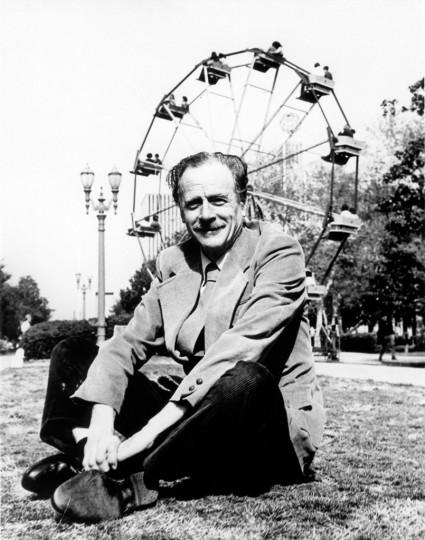
Nearly forty years later [from his time in Cambridge], McLuhan said: “I know every word of [Chesterton]: he’s responsible for bringing me into the church.  He writes by paradox — that makes him hard to read (or hard on the reader).”  Chesterton and St. Thomas Aquinas, he said, were his two biggest influences.  He loved Chesterton’s rhetorical flourishes, imbibed his playfulness, turned his impulse to try out new combinations of ideas into the hallmark of the McLuhan method.  (54)

No doubt many have said the same about McLuhan’s paradoxical and gnomic style as well as the relative (un)ease McLuhan presents for the reader.

The significance McLuhan gives to Aquinas parallels his estimation of Plato and Aristotle.  Speaking of an influential Cambridge professor, McLuhan wrote:

Lodge is a decided Platonist, and I learned [to think] that way as long as I was trying to interpret Christianity in terms of comparative religion.  Having perceived the sterility of that process, I now realize that Aristotle is the soundest basis for Christian doctrine. (53)

Aristotle, of course, is the philosopher whose thought Aquinas brought into synthesis with Christian doctrine, and among Chesterton’s expansive corpus is a short, insightful biography of Aquinas, Saint Thomas Aquinas: The Dumb Ox.

Demonstrating early on his characteristically wide-ranging and, in Gordon’s words, “synthesizing impulses,” McLuhan links Platonism with Protestantism:

Plato was, of course, a Puritan in his artistic views, and his philosophy when fully developed as by the 15th century Augustinian monks (of whom Luther was one) leads definitely to the Calvinist position. (51)

And while Aristotle, Thomas, and Chesterton receive high marks from McLuhan, Protestants get a lashing:

Catholic culture produced Don Quixote and St. Francis and Rabelais . . . Everything that is especially hateful and devilish and inhuman about the conditions and strains of modern industrial society is not only Protestant in origin, but it is their boast (!) to have originated it.  (55)

These insights and formulations from McLuhan give us a sense that in his religious thought and cultural criticism he is after something we might simply call joy.  The link between his cultural criticism and religious thought is explicit and centered on Chesterton:

He opened my eyes to European culture and encouraged me to know it more closely.  He taught me the reasons for all that in me was blind anger and misery . . . . (56)

He goes on to write,

You see my ‘religion-hunting’ began with a rather priggish ‘culture-hunting.’ I simply couldn’t believe that men had to live in the mean, mechanical, joyless, rootless fashion that I saw in Winnipeg . . . . It was a long time before I finally perceived that the character of every society, its food, clothing, arts, and amusements are ultimately determined by its religion — It was longer still before I could believe that religion was as great and joyful as these things which it creates — or destroys.  (56)

His criticisms of Protestantism and its consequences also circle around the affective sensibilities he perceives it to engender.  In a letter McLuhan writes of “the dull dead daylight of Protestant rationalism which ruinously bathes every object from a beer parlour to a gasoline station . . . ” (56)

In all of this, the appeal of Chesterton who appears continuously mesmerized by the sheer gratuity and giftedness of existence becomes apparent.  Borrowing Chesterton’s own words and re-applying them to Chesterton himself, McLuhan noted that he “had somehow made a giant stride from babyhood to manhood, and missed that crisis in youth when most of us grow old.” (59)  Likewise, Gordon is correct in reapplying McLuhan’s words regarding Chesterton to McLuhan himself,

There is no hue of meaning amidst the dizziest crags of thought that is safe from his swift, darting pursuit. (60)

And ultimately, it appears that it was the pursuit of joy.