Doing a little traveling during late May. Posting should pick up again in another week or so.
Cheers!
Doing a little traveling during late May. Posting should pick up again in another week or so.
Cheers!
Well, long by blogging standards. It’s been 10 days since my last post and I’m happy to say that most of those days were spent enjoying a tech-lite vacation in western North Carolina. It was, as you might expect, refreshing and reinvigorating.
Not only was online time cut to just a few minutes per day, I also did without a GPS throughout the trip. Over the last few years I’d grown accustomed to relying on a GPS during longer road trips. I thought I’d try this trip without one to see if there’d be some noticeable difference in my experience. This is as they say strictly anecdotal, but I am prepared to report that I felt more familiar with my surroundings and more comfortable navigating through the region. I found myself more attentive to the landscape and the features of the human-built environment. And without a constantly updated “time to my destination” displayed, I found the drive up to be on the whole more enjoyable. I’m sure there’s more to be said, but I’ll leave it at that. (Although, I’ll take the opportunity to link once more to Ari Schulman’s excellent essay, “GPS and The End of the Road”.)
Oh, and upon returning I cleared out all the unread items in my Google Reader that had accumulated over several days of inattention. So if there was anything that you think I shouldn’t miss, feel free to send me a link.
You can expect more regular posting in the days ahead. As always, thanks for reading.
Cheers!
It is, I’m afraid, quite likely that the unusually light posting over the last couple of weeks will be the norm rather than the exception for the foreseeable future. Lots going on this semester to keep me busy. But perhaps that is for the better, maybe lighter posting means better writing and better reading.
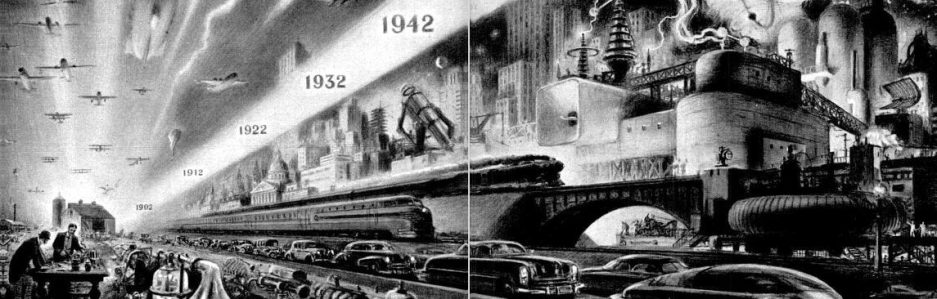
In any case, one of the activities that is keeping me busy for the next few months is an internship with the Synthetic Reality Lab at the University of Central Florida’s Institute for Simulation and Training. Specifically, I’ll be conducting research for a rather cool project, a virtual recreation of the 1964-65 New York World’s Fair. Check out the website for more on the project: Come Back to the Fair.
I’m sure you’ve noticed that the World’s Fairs have been on my mind the past few months. As things stand right now, the ’39 New York Fair will serve as a case study of sorts for my dissertation. It is all still very much a work in progress, but my hope is to tie together some work on embodiment and spatial practices by Pierre Bourdieu, Henri Lefebvre, and Mark Johnson among others with a view to better understanding the social construction of technology.
I know, I know … I’ve got to figure out a way of talking about all of that so that it doesn’t sound dry as dirt. In fact, I’m quite excited about the whole thing. And, if you stick around, I’m sure you’ll get a feel for the whole project as it develops over the coming months. Stay tuned.
Audience, as the etymology suggests, originally involved hearing and, hence, speaking face-to-face; in which case you would know exactly who you were communicating to and, presumably, to what end. The paradox of referring to the “audience” of written communication reminds us of the more difficult task of communicating when the parties involved have been abstracted from one another in space and time.
So who’s my audience?
I know a few personally, I’ve come to know a few virtually through comments, but for the most part it is an invisible audience that I nonetheless find myself wanting to address in a meaningful manner.
Having said this, I’m curious to know why you take the time to read The Frailest Thing.
I was reminded by a comment today that most of the readers of this blog are “silent readers,” and that is fine of course. I’m not a very loud reader myself. But as I think about what to write, it couldn’t hurt to have some ideas of the kind of posts that readers find most helpful. What would you like to read more about? Which posts do you just skip over? What can I do to improve the quality of posts? Are there topics I don’t write enough about? Topics I write about too much? In short, what would make this a better blog? No need to pull punches.
If you have the time to spare, drop me a comment below or send me an email — LMSacasas at gmail dot com.
And of course, for whatever reason you do so, thanks for reading!
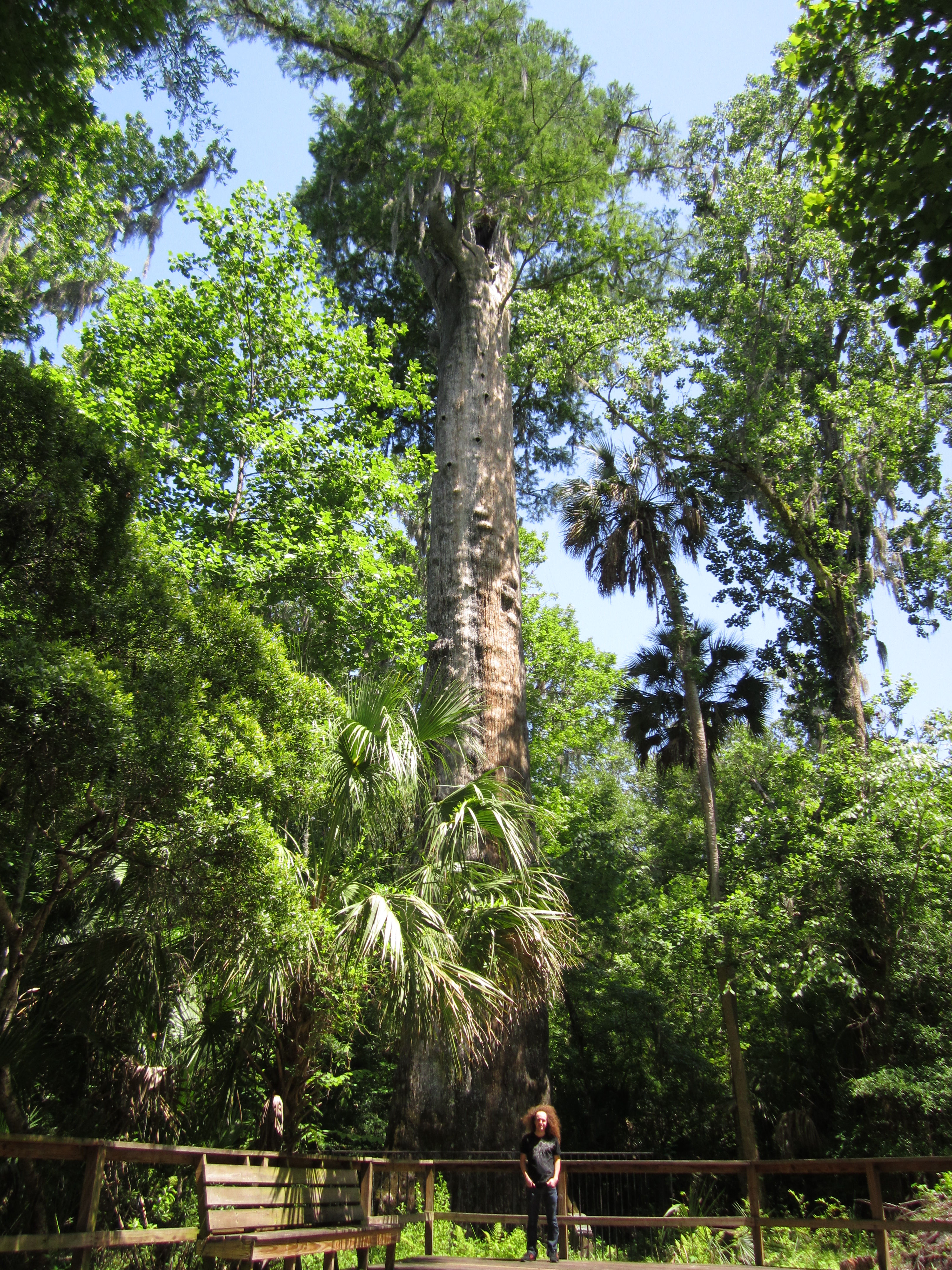
Within driving distance of where I live stood one of the oldest living trees in the world, until today.
“The Senator,” as the tree was known, held its ground for an estimated 3,500 years. Monday morning it caught fire and collapsed. The cause of the fire is unknown.
This was terribly sad news. How odd to consider that something that lasted for so long and endured so much came to its end in one’s own lifetime.
But how do we begin to asses this sort of loss? It points out the woeful inadequacy of our preference for quantifiable measures, none of which could possibly account for the passing of old trees.
One measure of the tree’s significance suggested itself to me when a local station interviewed a woman who came to the fallen tree this morning with an old black and white photograph. Coming to the tree had been a part of her family’s history. The tree marked time for her. In one sense, it marks time for all of us.
America is not a land of ruins that might engrave in our imagination a feeling for the depth of history. There is very little by which we might take the measure of our lives, and less still that might suggest to us the ephemeral nature of the days with which we have been gifted and to discourage us from adopting the pretensions of presumed timelessness.
This tree, when it was looked upon and thought of, did just that.
Ursula Le Guin once wrote of one of her characters, “he believed that the wise man is one who never sets himself apart from other living things, whether they have speech or not, and in later years he strove long to learn what can be learned, in silence, from the eyes of animals, the flight of birds, the great slow gestures of trees.”
That seems just about right.