An incoming link to my synopsis of Melvin Kranzberg’s Six Laws of Technology alerted me to a short post on Quartz about a new book by an author named Michael Harris. The book, The End of Absence: Reclaiming What We’ve Lost in a World of Constant Connection
Harris’s book is focused on the generation, a fuzzy category to be sure, that came of age just before the Internet exploded onto the scene in the early 90s. Here’s Harris:
“If you were born before 1985, then you know what life is like both with the internet and without. You are making the pilgrimage from Before to After.”
“If we’re the last people in history to know life before the internet, we are also the only ones who will ever speak, as it were, both languages. We are the only fluent translators of Before and After.”
It would be interesting to read what Harris does with this framing. In any case, it’s something I’ve thought about often. This is my fifteenth year teaching. Over the years I’ve noticed, with each new class, how the world that I knew as a child and as a young adult recedes further and further into the murky past. As you might guess, digital technology has been one of the most telling indicators.
Except for a brief flirtation with Prodigy on an MS-DOS machine with a monochrome screen, the Internet did not come into my life until I was a freshman in college. I’m one of those people Harris is writing about, one of the Last Generation to know life before the Internet. Putting it that way threatens to steer us into a rather unseemly romanticism, and, knowing that I’m temperamentally drawn to dying lights, I want to make sure I don’t give way to it. That said, it does seem to me that those who’ve known the Before and After, as Harris puts it, are in a unique position to evaluate the changes. Experience, after all, is irreducible and incommunicable.
One of the recurring rhetorical tropes that I’ve listed as a Borg Complex symptom is that of noting that every new technology elicits criticism and evokes fear, society always survives the so-called moral panic or techno-panic, and thus concluding, QED, that those critiques and fears, including those being presently expressed, are always misguided and overblown. It’s a pattern of thought I’ve complained about more than once. In fact, it features as the tenth of my unsolicited points of advice to tech writers.
Now while it is true, as Adam Thierer has noted here, that we should try to understand how societies and individuals have come to cope with or otherwise integrate new technologies, it is not the case that such negotiated settlements are always unalloyed goods for society or for individuals. But this line of argument is compelling to the degree that living memory of what has been displaced has been lost. I may know at an intellectual level what has been lost, because I read about it in a book for example, but it is another thing altogether to have felt that loss. We move on, in other words, because we forget the losses, or, more to the point, because we never knew or experienced the losses for ourselves–they were always someone else’s problem.
To be very clear and to avoid the pedantic, sanctimonious reply–although, in all honesty, I’ve gotten so little of that on this blog that I’ve come to think that a magical filter of civility vets all those who come by–let me affirm that yes, of course, I certainly would’ve made many trade-offs along the way, too. To recognize costs and losses does not mean that you always refuse to incur them, it simply means that you might incur them in something other than a naive, triumphalist spirit.
Around this time last year, an excerpt from Jonathan Franzen’s then-forthcoming edited work on Karl Krauss was published in the Guardian; it was panned, frequently and forcefully, and deservedly so in some respects. But the conclusion of the essay struck me then as being on to something.
“Maybe … apocalypse is, paradoxically, always individual, always personal,” Franzen wrote,
“I have a brief tenure on earth, bracketed by infinities of nothingness, and during the first part of this tenure I form an attachment to a particular set of human values that are shaped inevitably by my social circumstances. If I’d been born in 1159, when the world was steadier, I might well have felt, at fifty-three, that the next generation would share my values and appreciate the same things I appreciated; no apocalypse pending.”
But, of course, he wasn’t. He was born in the modern world, like all of us, and this has meant change, unrelenting change. Here is where the Austrian writer Karl Kraus, whose life straddled the turn of the twentieth century, comes in: “Kraus was the first great instance of a writer fully experiencing how modernity, whose essence is the accelerating rate of change, in itself creates the conditions for personal apocalypse.” Perhaps. I’m tempted to quibble with this claim. The words of John Donne, “Tis all in pieces, all coherence gone,” come to mind. Yet, even if Franzen is not quite right about the historical details, I think he’s given honest voice to a common experience of modernity:
“The experience of each succeeding generation is so different from that of the previous one that there will always be people to whom it seems that the key values have been lost and there can be no more posterity. As long as modernity lasts, all days will feel to someone like the last days of humanity. Kraus’s rage and his sense of doom and apocalypse may be the anti-thesis of the upbeat rhetoric of Progress, but like that rhetoric, they remain an unchanging modality of modernity.”
This is, perhaps, a bit melodramatic, and it is certainly not all that could be said on the matter, or all that should be said. But Franzen is telling us something about what it feels like to be alive these days. It’s true, Franzen is not the best public face for those who are marginalized and swept aside by the tides of technological change, tides which do not lift all boats, tides which may, in fact, sink a great many. But there are such people, and we do well to temper our enthusiasm long enough to enter, so far as it is possible, into their experience. In fact, precisely because we do not have a common culture to fall back on, we must work extraordinarily hard to understand one another.
Franzen is still working on the assumption that these little personal apocalypses are a generational phenomenon. I’d argue that he’s underestimated the situation. The rate of change may be such that the apocalypses are now intra-generational. It is not simply that my world is not my parents’ world; it is that my world now is not what my world was a decade ago. We are all exiles now, displaced from a world we cannot reach because it fades away just as its contours begin to materialize. This explains why, as I wrote earlier this year, nostalgia is not so much a desire for a place or a time as it is a desire for some lost version of ourselves. We are like Margaret, who in Hopkins’ poem, laments the passing of the seasons, Margaret to whom the poet’s voice says kindly, “It is Margaret you mourn for.”
Although I do believe that certain kinds of change ought to be resisted–I’d be a fool not to–none of what I’ve been trying to get at in this post is about resisting change in itself. Rather, I think all I’ve been trying to say is this: we must learn to take account of how differently we experience the changing world so that we might best help one another as we live through the change that must come. That is all.
 , technical considerations were consistently subordinated to spiritual ends. The monastics, were, in fact, much else even if they were at times innovators. This is evident in the Benedictine’s willingness to lay aside labor when it became possible to commission a lesser order of lay brothers or even paid laborers to perform the work necessitated by the community.
 :
: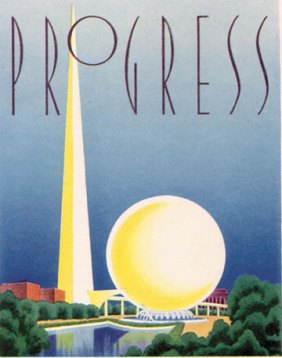 “The World of Tomorrow”—that was the theme of the 1939 NewYork world’s fair. Prior to 1939, the American fairs had been characterized by what historian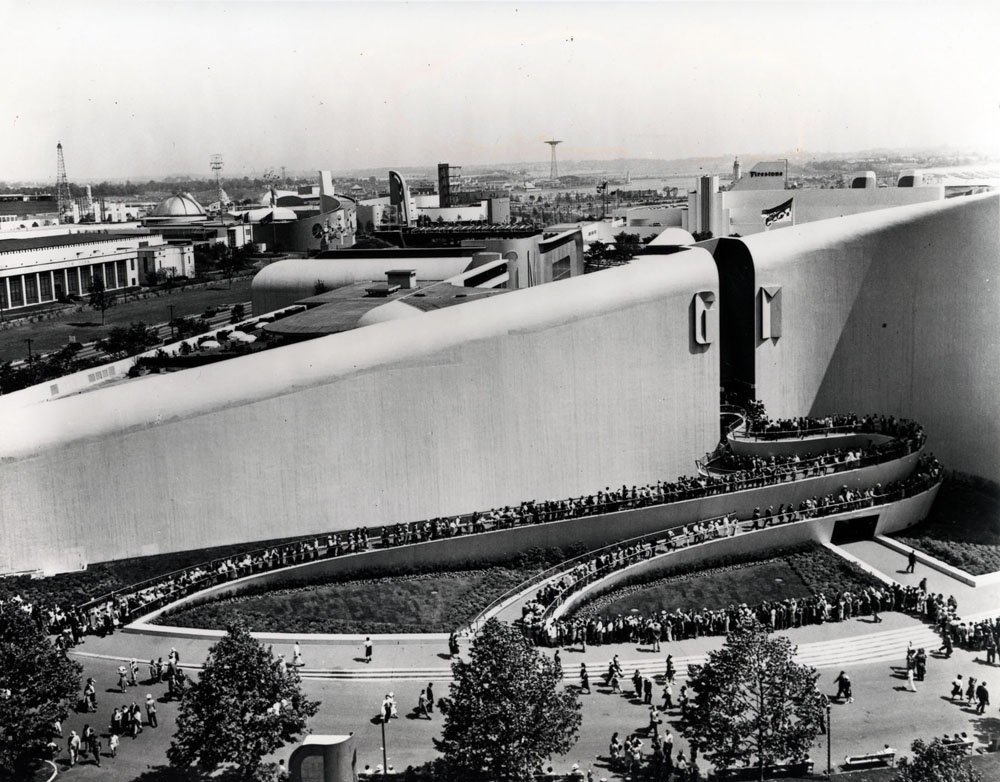


 L.M. Sacasas